Dragons, Zombies and Aliens
:
The Blog
|
|
|
|
The Poppy War by R. F. Kuang
When Rin aced the Keju—the Empire-wide test to find the most talented youth to learn at the Academies—it was a shock to everyone: to the test officials, who couldn’t believe a war orphan from Rooster Province could pass without cheating; to Rin’s guardians, who believed they’d finally be able to marry her off and further their criminal enterprise; and to Rin herself, who realized she was finally free of the servitude and despair that had made up her daily existence. That she got into Sinegard—the most elite military school in Nikan—was even more surprising.
But surprises aren’t always good. Because being a dark-skinned peasant girl from the south is not an easy thing at Sinegard. Targeted from the outset by rival classmates for her color, poverty, and gender, Rin discovers she possesses a lethal, unearthly power—an aptitude for the nearly-mythical art of shamanism. Exploring the depths of her gift with the help of a seemingly insane teacher and psychoactive substances, Rin learns that gods long thought dead are very much alive—and that mastering control over those powers could mean more than just surviving school. For while the Nikara Empire is at peace, the Federation of Mugen still lurks across a narrow sea. The militarily advanced Federation occupied Nikan for decades after the First Poppy War, and only barely lost the continent in the Second. And while most of the people are complacent to go about their lives, a few are aware that a Third Poppy War is just a spark away . . . Rin’s shamanic powers may be the only way to save her people. But as she finds out more about the god that has chosen her, the vengeful Phoenix, she fears that winning the war may cost her humanity . . . and that it may already be too late. No Spoilers! (Promise)
You know those books where, once you finally set them down, you think
WTF did I just read,
but in a good way? That's
Poppy War
.
This was largely because of the book's ending, which I will not get into because I have a strict no-spoiler rule on this blog. Suffice to say, even though the entire book has been leading up to that specific decision of the main character's, it still caught me off-guard. Because I'd never seen a book go that direction without warning before. The Poppy War centers around Rin, and is told almost exclusively from her point of view (third person limited). Right from the start she's an extremely captivating character, despite the fact that most of what she does is react, making her a passive character. Her taking the test, going to Sinegard, becoming a soldier and fighting in a war, all of those are her reactions to what the world throws at her. It's not until the very end that she acts first, forcing the world to react to her. Normally, I hate passive characters. They're boring. Best case scenario, they get dragged along with the plot and their primary function is to complain about how horrible the world is. But Rin is different, and it's the way she reacts that sets her apart. We learn very early that she doesn't do anything half-assed. Her foster parents tell her she's to marry someone three times her age for their criminal enterprise? She risks her life to steal opium to bribe a local tutor to help her study for the exam. Her period cramps are so bad that she's going to miss at least three days of school every month? Better drink a potion to make herself infertile so she doesn't have to deal with it. Enemies attacking the school? Burn the whole place down with newly-discovered magical powers! Rin is impossible not to watch. Half of the time, she knows the thing she's about to do is a horrible decision, but she does it anyway because, in her mind, the alternative is even worse. She's very self-aware, even though, as a teenager, she can still be kind of stupid. She's supported by a wide variety of supporting characters: her teachers, her rivals, and the few friends she manages to make. Several of these people die, because this book is definitely grimdark, and they're all very well crafted. I do wish that I could see more of Rin's young foster brother, largely because she feels guilty for leaving him when she goes to Sinegard and thinks about him later in the book. But we only get one scene with him, and that's when she leaves for the academy. Another scene or two showing them together would have gone a long way toward showing Rin's more human side that she becomes in danger of losing. The worldbuilding leaves something to be desired. Not the magic or the gods, those are fine, but the history and political climate need work. I'm not as well-versed in Chinese history as I should be, but even I knew after one glance that this "fantasy world" is basically 19th-century China. The real world saw two Opium Wars; this world has two Poppy Wars (poppy being the plant that opium is made from). Japan used to be militarily aggressive and constantly fought with China; in this universe they're the Federation of Mugen. China had an ancient strategist named Sun Tzu who wrote The Art of War ; Rin studies a guy named Sunzi who wrote The Philosophy of War, whose lessons and parables match Sun Tzu word-for-word. I am all for using history as a stepping stone in worldbuilding. Hell, I do that all the time! The most famous example is George R. R. Martin, who based his Game of Thrones series off of the Wars of the Roses. But there's a difference between using something for inspiration like Martin and just copy-and-pasting like Kuang. But that's honestly my only real complaint about this book. The characters and plot are both more than strong enough to carry the otherwise weak worldbuilding. The theme is also very well done. Kuang does not shy away from the horrors committed by the supposed "good guys." Considering the atrocities that Rin's nation and, eventually, Rin herself commits, the overall message is "war, oppression, and drugs really suck, guys, so maybe let's not?" But while Kuang's book laments the horrible conditions that war brings out, she doesn't use it as an excuse to dismiss the negative aspects of her characters. She puts the responsibility for the characters' actions squarely on the characters, not letting them fall into the "oh, it was just a bad time, so it doesn't really count as my fault" mindset. Rin herself admits that her actions are inexcusable, morally atrocious, while also, in her mind, necessary. One last thing, and this is probably one of the best things about this book: THERE'S NO ROMANTIC SUBPLOT. You could argue that Rin has a crush on one of her classmates, but that's a lot less romantic and a lot more hero-worship. I mentioned earlier: she destroys her own uterus as a teenager just to stay in school. Romance and family are the last things on her mind. The Poppy War is landing solidly on my Favorites page. I would recommend it to anyone who's looking for a non-traditional military fantasy story, and/or is looking for a femme protagonist of color, and/or likes it when things get set on fire, because that happens a lot .
0 Comments
Words of Radiance - Book 2 of The Stormlight Archive - by Brandon Sanderson
Six years ago, the Assassin in White, a hireling of the inscrutable Parshendi, assassinated the Alethi king on the very night a treaty between men and Parshendi was being celebrated. So began the Vengeance Pact among the highprinces of Alethkar and the War of Reckoning against the Parshendi.
Now the Assassin is active again, murdering rulers all over the world of Roshar, using his baffling powers to thwart every bodyguard and elude all pursuers. Among his prime targets is Highprince Dalinar, widely considered the power behind the Alethi throne. His leading role in the war would seem reason enough, but the Assassin's master has much deeper motives. Expected by his enemies to die the miserable death of a military slave, Kaladin survived to be given command of the royal bodyguards, a controversial first for a low-status "darkeyes". Now he must protect the king and Dalinar from every common peril as well as the distinctly uncommon threat of the Assassin, all while secretly struggling to master remarkable new powers that are somehow linked to his honorspren, Syl. Brilliant but troubled Shallan strives along a parallel path. Despite being broken in ways she refuses to acknowledge, she bears a terrible burden: to somehow prevent the return of the legendary Voidbringers and the civilization-ending Desolation that will follow. The secrets she needs can be found at the Shattered Plains, but just arriving there proves more difficult than she could have imagined. Meanwhile, at the heart of the Shattered Plains, the Parshendi are making an epochal decision. Hard pressed by years of Alethi attacks, their numbers ever shrinking, they are convinced by their war leader, Eshonai, to risk everything on a desperate gamble with the very supernatural forces they once fled. The possible consequences for Parshendi and humans alike, indeed, for Roshar itself, are as dangerous as they are incalculable. No Spoilers for Words of Radiance (pinky-promise)
It should come as no surprise that after I reviewed the first installment of
The Stormlight Archive
,
The Way of Kings
, I immediately went and got the second book. (And am now currently waiting for Amazon to deliver book three.) This is shaping up to be an excellent series, and I know for a fact that, as soon as I finish book three, I'm going to be a burning mass of rage and impatience while I wait for book four in 2020. (Fun fact: there are ten books planned for this series.)
While Way of Kings focused primarily on Kaladin's story, with flashbacks to him growing up and joining the military, Words of Radiance focuses on Shallan. This makes sense as, out of the three main characters in series so far (her, Kaladin, and Dalinar), she's the one who undergoes the greatest change in this book. A lot of it is her learning how to use her magical abilities, the way Kaladin learned to use is. While Kaladin's powers are about "Lashing" and strength, Shallan's powers are kind of like Loki's from the MCU. She can create illusions. The problem is she needs to be able to balance the lies she tells with what the truth is, which involves delving into some pretty nasty secrets in her own past. Also, she finally meets the other characters (after a shipwreck that delays her for half the book) and gets an arranged betrothal to Dalinar's son Adolin. Now, this little rom-sub is really cute. Adolin likes how Shallan is different from the other girls, Shallan likes how Adolin is hot and a decent human beings--unlike all the other men in her life--and they're just really adorable together. What is not cute is the hints Sanderson is throwing about a possible love triangle with Kaladin. I want to give a firm no on that for multiple reasons, the first being that love triangles are inherently lazy, and Sanderson is better than that. The other reason is that Kaladin and Shallan work amazingly well as pseudo-siblings, not a romantic couple. Kaladin's first positive thought about Shallan is that she reminds him of his brother. And him silently stewing like an older brother while Shallan and Adolin make kissy faces at each other is the funniest thing. But that's a problem for another time. As I said, Sanderson has only hinted at that, and there are eight more books in this series. Bottom line: this book is just as good as its predecessor, expanding on the world and characters. We see things from the Parshendi side for the first time, which is really fun. Kaladin has to decide whether or not they should assassinate the king--you'd think that'd be an easy answer, but while the king is no Joffrey Baratheon, he's definitely the cause of a lot of problems. Dalinar learns that running a country is similar to running a babysitting service. And Shallan goes from adorable cinnamon roll to adorable badass. It's a fun time all around. Guest Post by JD Byrne
Good fantasy has to be realistic.
Wait, what? I mean, that’s pretty counterintuitive, isn’t it. The whole point of fantasy is that you can make up anything you want. Whereas its close relation science fiction has to deal with, well, science, fantasy is only limited by the imagination of its writer. So why worry about it being realistic? One reason is that it’s practical. Unless you’re writing something really avant garde and creating a different world from the ground up, even the most fantastic stories take place in a world that looks a lot like ours. Middle Earth may have hobbits, dwarves, and orcs, but it still has a world that works basically like ours - people need to eat and sleep, have to figure out ways to get from one point to another, and figure out how to get along with each other. All of those things are rooted in our experiences of our real world. After all, you can’t have a second breakfast without a concept of breakfast, right? Another reason is that details matter when it comes to the most important part of speculative fiction - suspension of disbelief. In fantasy, more so than science fiction, the author is basically asking readers to trust them, to come along with whatever weird stuff is going to happen just because. Still, there are things, little details, in any story that can kick a reader right out of a state of disbelief (I’ve written before about what I call “flying snowman” moments , after a John Scalzi blog post). Maybe your fantasy heroes are riding horses into battle after they rode 100 miles in two days without any mention of food, water, or rest. For some readers that might kick them out of the story. It’s not that you can’t have something in your fantasy world that does the job of a horse but doesn’t need rest or nutrition, but you have to build that up on its own. There’s a difference between getting a fantasy element “wrong” - if such a thing is possible - and getting mundane real world details that are still relevant to your world wrong. A two-foot tall pixie probably can’t wield a five-foot long steel sword, but who says the sword has to be made of steel? It doesn’t, but you need to lay the foundation for that. It’s sort of like the old saw about learning the rules before you can break them - you need to know why you’re doing it differently and consider whether it’s worth it. While research is necessary to write good fantasy, it doesn’t have to be a chore. In fact, sometimes doing the research can open ways to deepen your world and help make the story better. Let me share a couple of examples where that’s happened to me. In my novel The Water Road a pair of characters are out in the woods searching for a mythical city in the trees when they’re set upon by bandits. One of them, Rurek, takes an arrow in the leg from the bandit leader, Spider. I never intended the wound to be fatal, so once it was in Rurek’s leg I had to figure out how to get it out. I’m so glad I did some research rather than just going with my gut. Turns out how to deal with an arrow wound is largely dependent on the kind of arrowhead is involved and there are some really nasty ones out there, ones designed to inflict maximum damage if taken out incorrectly. That made me think - what kind of arrow would a guy like Spider use? It made me drill deeper into the character than I had initially. He only shows up for this scene, after all, and was hardly that important in the grand scheme of things. But using an arrow designed to do maximum harm, particularly to someone who would react as I had (pull the damned thing out!), is precisely the kind of guy he was. The research allowed me to complicate Rurek’s situation even further (and allow a new, important character, to show some knowledge and skill) and give some idea of just what an evil person Spider was. In my short story “The Destiny Engine” (which you can only get by signing up for my mailing list ), the main character has a massive steampunk contraption that, he says, can see a person’s other possible futures. He has to input data into the machine at some point, so I initially had him sitting down at a typewriter-style keyboard. A beta reader wondered whether such keyboards were in wide use in late 19th-century Wyoming where the story was set. I looked into it and, as it turns out, keyboards were a thing back then, but they hadn’t standardized into anything like we know today. Instead, there was a wide range of size, design, and functionality. I found a picture of one that was basically a brass globe with keys sticking out the top on long stalks, so typing on it looked kind of like giving a robot a scalp massage. So while it wouldn’t have been wrong to put my main character in that story in front of something that looked like a typewriter, how much cooler was it to have him manipulating a brass robot skull! Since research is important for writing fantasy, what’s the best way to go about it? There are several options, depending on what it is you need to know. First, you can draw on your own knowledge of whatever area it is you need to research. That’s kind of cheating, but a knowledge base is a knowledge base, regardless of where it comes from. When it came time to write the battle scenes in The Endless Hills (the second part of The Water Road trilogy) I fell back on the reading I’d done my entire life about battles from various conflicts in the 18th and 19th centuries. I looked up a couple of things, but it was to confirm more than learn from scratch. This is as good a place as any to amplify a piece of advice I’ve heard almost every writer give - that to be a good writer, you need to be a serious reader. I’d expand that to say it’s important for writers of fiction to read a lot of nonfiction, too, to learn about the world around them. Not only do you broaden that internal knowledge base you can use while writing, sometimes history or science or whatever can provide some pretty good fuel for future stories. A second good place to go for research is other writers. Writers each bring their own experience and knowledge to the table, which can be a powerful resource to tap into. The example I gave above of needing to know how to get an arrow out? When I went to Google to find the answer the first result it returned to was to a subsection of a writers’ forum where people shared their expertise. Writers tend to be a helpful bunch, so make the most of what those around you know. Third, you can take advantage of the knowledge of experts in whatever field you’re looking into. Sci-fi writers routinely consult with physicists, rocket scientists, and the like in order to get the science in their stories right (or at least plausible). Fantasy writers can do the same. Setting a story in a world that’s based on feudal Japan? Find the nearest college or university that teaches Japanese history and reach out to the professor. They might be happy to talk to someone about their subject who is writing a novel about it. Finally, when it comes to research, there’s always the option to hit the books, whether literally or electronically. Google is great, but be skeptical of sources and weigh competing information carefully. Books are even better, if you’ve got access to a good library somewhere close. You can even go and spent time in places that inspire the world you’re building. Want to set a story in a castle - go visit one! It’s easier said than done, of course, but it can be done. Research sounds a lot like work and sometimes it is. Sometimes you’ll find out things that torpedo an idea or a particular story element. More often, you’ll shore up your own world, deepen you characters, and maybe even find something to spark your creativity even further. It’s worth the effort and your readers will thank you. 
JD Byrne was born and raised around Charleston, West Virginia, before spending seven years in Morgantown getting degrees in history and law from West Virginia University. He's practiced law for more than 15 years, writing briefs where he has to stick to real facts and real law. In his fiction, he gets to make up the facts, take or leave the law, and let his imagination run wild. He lives outside Charleston with his wife and the two cutest Chihuahuas the world has ever seen.
The Way of Kings by Brandon Sanderson, book one of the Stormlight Archive
No spoilers. (Promise.)
This was a 1,200 page monster that I just could not put down. Which is impressive considering the fact that I had no idea what was going on for the first two hundred pages. It's not that Sanderson introduced too many people and concepts at one time--he didn't. The pacing of this story and the exposition are excellent. It's just that there's
so much
going on, so many characters in a world that is so unique and alien that it's a lot to digest. But if you can get through those first two hundred pages, then you're all set. And trust me, it's worth it. This book is absolutely stunning.
My attention was drawn to this series by one of my favorite YouTubers, Hello Future Me . In addition to being a super-geek, he also does some writing videos (which is why he's mentioned in my For Writers page). It was during one of these videos--I forget which one--that he mentioned the world-building of the Stormlight Archive . In addition to the unique geography, Roshar also has a social structure I had never seen before. It's a pseudo-patriarchy that is extremely binary, nothing new there. But while men are pushed toward "masculine" traits such as leadership, military, labor, et cetera, the women have their own equally important "feminine" traits, such as architecture, science, engineering. Reading is, in and of itself, a feminine art. None of the men in this story--Kaladin, Dalinar, the king --know how to read! It's hilarious, but it also launches women into leadership roles themselves, as they're the advisors and creators of their society. This, of course, begs the question: what about the people of the LGBT+ community? So far there has been no mention of same-sex relationship or genderqueer people, and I will be disappointed but unsurprised if that holds true for books two and three. But if, by chance, Sanderson has added them, then I imagine they'd be facing a lot of social adversity. On a related note: romantic subplots are near non-existent! There's one with Dalinar and the king's widowed mother that's a little cliched, but it serves as some character development for Dalinar and introduces another awesome woman to the story. Even though he uses the word "beautiful" to describe her way too much. (We get it! You think she's hot! Maybe focus on some other traits, or at least pick up a thesaurus to mix it up a little.) The story, at first, seems to be everywhere. It doesn't help that the novel is chopped up into parts that are divided by short stories. These stories seem random (except the ones about the Assassin in White, as he's very important despite his minor appearances), but they are very helpful in establishing the world itself and the political and social rules that influence the main characters. When one of the short stories includes a couple of scientists studying a type of magic, that type of magic becomes very important later in the book. A couple of servants talk about a mysterious woman who specializes in another type of magic, she ends up being the answer to a mystery that plagues one of the main characters. It's a very handy type of exposition. After about two or four hundred pages, you see how all the different threads--Kaladin, Dalinar, Shallan, the Assassin--all start to weave together. There is some predictability; it's not like Game of Thrones where you have almost no clue which main character is going to get slaughtered next. But it's the good kind of predictability, the kind that drags out the tension. ( Oh no, one of the major characters is in critical danger in the climax of the story, and only this other major character can save them, but only if they get over the major internal issues that have plagued them the whole book...WHY IS THIS TAKING A WHOLE CHAPTER. GO GO GO! ) It helps that all of these characters are very different from each other. Kaladin and Dalinar are probably the tropiest (most trope?) of the bunch, being the depressed hero with rotten luck and the super strict yet kind lord, but they're still extremely engaging. I cared about them, I worried about them, I cried with them through all their ups and downs. (Although, content warning, Kaladin seriously contemplates suicide relatively early in the book, and references it a few times later.) Shallan is a walking mystery; despite hundreds of pages we still know very little about her, and her last few chapters only raise more questions. Hell, the last fifty pages were dedicated to raising more questions and leaving cliffhangers, which is why as soon as I can, I'm purchasing book two. Well played, Sanderson. Well played. Who Fears Death by Nnedi Okorafor
No spoilers. (Promise.)
I've read and reviewed one of Nnedi Okorafor's other books before: her short sci-fi novel
Lagoon
about mystical aliens touching down in Nigeria. I was enraptured by her storytelling, and when I found out she had other books--many of them bestsellers--I added all of them to my wishlist, and had the opportunity to purchase
Who Fears Death
thanks to a Barnes & Noble gift card I got for Christmas. I had high expectations for
Who Fears Death
because of everything I'd heard, both about it and about Okorafor herself.
And I was not disappointed. It's rare--or at least, rare for me in my little corner of America--to find popular SFF books that have a post-apocalyptic or fantasy setting outside of the U.S., or even Europe. So the setting itself of a fantastical, post-apocalyptic Africa was intriguing to me. I wish Okorafor had gone into just what, exactly the apocalypse was that completely reshaped the world and set up whole new religions and ethnicities, or even just the history of the world in general. We're given the religious version that everyone is told growing up and that main character Onye has little respect for, but not a definitive This is what happened, and this is why the world works this way now . But that's probably just the history major in me. The magic system used is very unique and interesting. It's a soft magic system, which is the kind that basically allows the author to make it up as they go along (kind of like Tolkien or Game of Thrones), compared to the hard magic system where the rules are explained and strictly adhered to (i.e. Avatar: the Last Airbender and Fullmetal Alchemist ). But while Onye and the other sorcerers' powers are many and varied, there's no deux ex machina that goes on. She still has limitations, especially in the beginning when she has no control. The story itself starts out pretty slow. Onye is obviously very special and eventually has to set out to topple the unjust system of oppression and war that her mother's people is subjected to. But she and her friends don't start their journey until halfway through the book. The first half is Onye coming to terms with who and what she is (for the most part, at least), worldbuilding, and describing the struggles and conflicts between Onye, her mother, and everyone around them. So even though the pacing of the overarching story is very slow, there's still a lot that goes on that kept me turning the pages. Oh, and in case you didn't get the hint from the book description, this story is not something to flippantly give to children. More on this later. There are a lot of characters here. While the entire story is told in first person point of view by Onye, she runs into a lot of characters. There's her beau, Mwita, another sorcerer who knows more about magic but isn't as powerful as she is and functions as team healer. She has three best girlfriends, her mentors, her mother, her stepfather, and of course, her rapist father. Who is a real piece of work. Just...wow. All of these characters are deeply flawed. Onye has some severe anger issues that are a direct result of how horribly her society treats her and her mother, leading her to do several things that she almost immediately regrets. The friends she sets out on her journey with turn out to be less than ideal travel companions, given that half of them abandon the quest out of fear. (Though the one that sticks around, while not magical in any way, is a total badass.) Mwita himself has some inferiority complexes. I mentioned that he's not as powerful as Onye is, and while it's clear that these two characters deeply love and go to great lengths for each other, Mwita has some sexist views that come out every now and then. He believes that he should be the sorcerer while Onye hangs back as the healer. Needless to say, this is a bit of a conflict between the two of them. In addition to expert storytelling, captivating worldbuilding, and engaging characters, Okorafor also weaves in several themes throughout this story. And when I say several, I mean all of them . I thought I was impressed by how many topics she was able to cover in Lagoon , but that's nothing compared to when she has an extra three hundred pages to play around with. Who Fears Death unflinchingly talks about rape, war, slavery, genital mutilation, misogyny, racism, religion and tradition used as tools of oppression, love, hope, death, and probably a dozen others that I missed in my first reading or just can't think of right now. Bottom line, this is an amazing book. It is a bold, beautiful story that deserves to be on bookshelves everywhere. DZA Marie's personal favorite romantic subplots in sci-fi and fantasy
Ah, early February. Living in Minnesota, I can see why Hallmark decided this was the prime time to start a romantic holiday: it's too cold outside to do anything other than snuggle with your significant other. (-50 degree windchill. Thanks, climate change.)
Now obviously, in the spirit of the holiday, the next couple of blog posts and this month's video will be relationship-oriented. However, I do not read romance novels. I read romance fanfiction , but in my movies and published novels I vastly prefer hard sci-fi and fantasy. Luckily (or unluckily, as this month's YouTube video will argue) you cannot open an SFF book or movie without there being at least a 95% chance of a romantic subplot popping up. And while most of them are very annoying and have no place in the story at all, some of them are downright adorable. So, I have gathered a list of my personal favorite romantic subplots in the sci-fi, fantasy and superhero genres. They're not really in any particular order, and the biggest qualification is it has to make me go "Awwww" with a bare minimum of eye-rolling. Nakia & T'Challa ( Black Panther )
Most blockbuster movies with romantic subplots--especially superhero movies--tend to either ignore the woman's growth and character development, or make said growth and development all about the love and romance she bares for the hero.
This is not the case with Black Panther . Nakia is a fully fleshed-out badass who doesn't have so much of a narrative arc so much as the moral of, "Bitch, you should have listened to me from the start. Would've saved you a lot of trouble and Killmonger wouldn't have had a chance." Also noteworthy is the fact that, at the time the movie starts, Nakia and T'Challa are exes. And while it's clear that T'Challa still has strong feelings for her, he does not whine and cry about it. They both act like adults, both respect each other, and they have a strong friendship that they then use to re-build their romance. (While they never go into it, I'm pretty sure the break-up came from clashing ideologies and world paths. Nakia wanted to go out and save the world, T'Challa wanted to hide behind his vibranium walls. That's not going to create a very stable relationship.) Rapunzel & Eugene ( Tangled )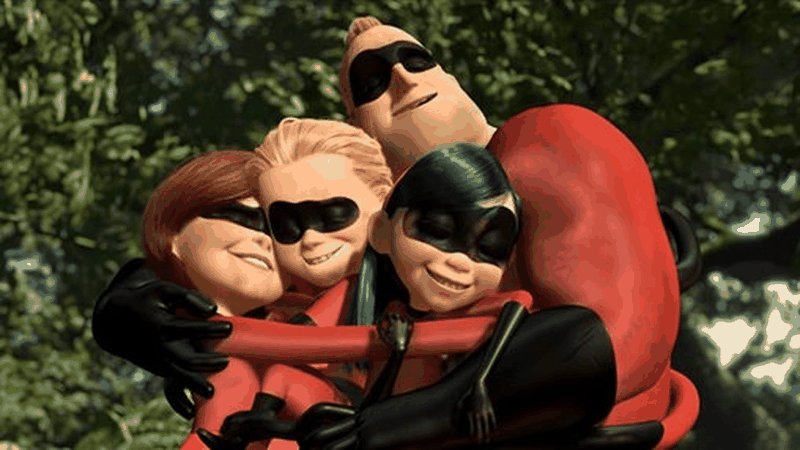
Disney has several really good relationships, especially in recent years: Tiana and Prince Naveen, Kristophe and Anna, Mulan and Captain Shang...but my favorite is Rapunzel and Eugene (a.k.a. Flynn Rider). A lot of it has to do with Eugene's character development. Rapunzel manages to influence and change him into a better person, without going out of her way to "save" him. In fact, no romance starts until most of this change happens. At the same time, Eugene helps and encourages Rapunzel into taking charge of her own destiny.
Then there's the fact that Disney broke its own "married within three days of meeting each other" rule in order to clearly state that Eugene and Rapunzel didn't get married until years after the fact. Rushed marriages rarely work. Cinderella and Prince Charming probably got divorced three months after their wedding. But Rapunzel and Eugene? That's going to last forever. Also, "You were my new dream." *cries* Will Solace & Nico di Angelo ( Percy Jackson series)
Fanart from Kai on Tumblr http://kingofghosts.tumblr.com
This relationship doesn't actually get started until the very, very end of
The Blood of Olympus
(book five in the
Heroes of Olympus
series), and we only see pieces of it in the first
Trials of Apollo
book. It's utterly adorable and one of the few romantic subplots that I really, really want to see more of.
This one gets points for being an LGBT relationship rather than the usual hetero stuff, without it being such a big freaking deal. We find out Nico is gay and had a crush on Percy in House of Hades , both of which he tried to ruthlessly squash down (the kid's from the 1930s, so it was definitely ones of those yikes moments for him). Blood of Olympus is him not only coming to terms with his sexuality, but also coming to terms with who he is as a person. You see, the son of Hades has had it in his head for a long time that nobody likes him, people are scared of him, everyone will be much happier if he just stays away, et cetera. But, by the end of Blood of Olympus , he's come to realize that while some people may be a little scared and even freaked out by him, nobody actually hates him. He can have friends. He can even have a boyfriend. And that's exactly what he gets. Will Solace doesn't get nearly as much character development. He just kind of pops up and calls Nico out on all of his shit, and then enables bad behavior and rule-breaking when they start dating. So if there was one thing I'd change about this relationship, it'd be more insight into Will's frame of mind. Edward & Winry ( Fullmetal Alchemist )
(Please note: I'm going off of the manga and the anime
Fullmetal Alchemist: Brotherhood
. Not the anime that's just
Fullmetal Alchemist.
Yes, they are very different.)
This one is kind of weird. Primarily because, while both characters admit to themselves that they have a crush on the other, they never get to the point where they're actually dating before the end of the story. But while we're not entirely sure how they would act in a romantic relationship with each other, we still get a pretty good idea. Edward would continue to be an obnoxious (short) badass, while Winry would call out his obnoxiousness, fix his metal limb when he breaks it, and also be badass. One of my favorite moments between these two is during Winry's breakdown, when she meets Scar and realizes he was the one who killed her parents. Edward has to stop her from trying to kill him, largely because he knows that she'd never forgive herself for it, even if that execution is arguably well-earned. It's a moment that shows that these two have each other's backs and bring out the best in each other. Tormund & Brienne ( Game of Thrones )
Fun fact: the show's writers never intended for Tormund or Brienne to be interested in each other
at all
. This was purely the actors and how they interacted with each other without any dialogue in season six. The writers saw that and thought, "Welp, guess this is going to be a thing," and wrote it into season seven (and hopefully season eight!).
Tormund is obviously head-over-heels in love with Brienne. She, on the other hand, does not seem to return his affections at all. But I'm really hoping she'll change her mind, and here's why: Brienne has been scorned all her life because she's not beautiful, she's good with weapons, and she doesn't take anyone's shit. She's grown up in a society that idealizes the women who are pretty, demure, obedient, et cetera. Worse, she's learned that any time a man does show interest in her, he's just making fun of her, or (in the case of the books) trying to win a bet. Tormund, on the other hand, did not grow up in that society. In wildling culture (for the most part), the women are encouraged to be big, strong fighters just like the men. No wonder Tormund fell in love at first sight: Brienne is a powerfully-built, amazing fighter who's smart. That is the ideal wildling bride. And hopefully, Brienne will realize that all of the aspects that make southern men hate her are exactly what draws Tormund to her and return his affections. Aang & Katara ( Avatar: the Last Airbender )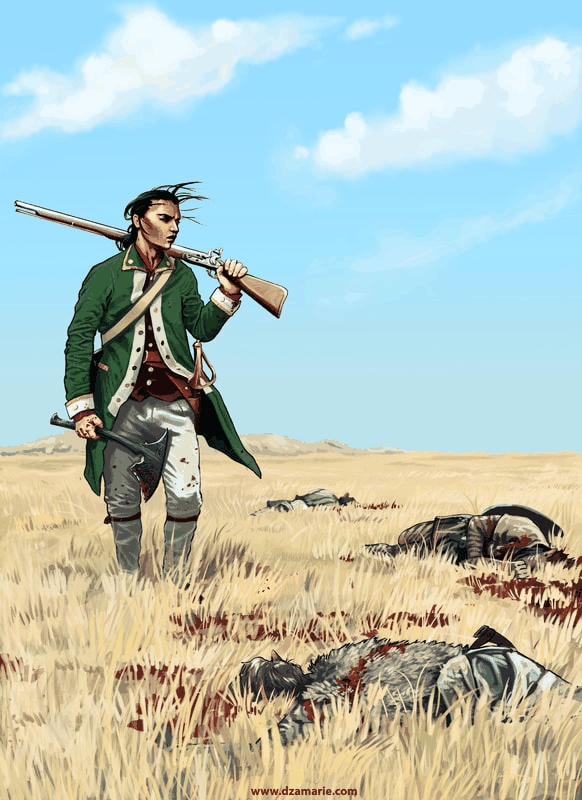
I am
not
going to get into the Zutara debate. We're sticking with canon here. (And frankly, I prefer Katara and Zuko as really good friends. He need more friends than girlfriends.)
All of ATLA's relationships (all of ATLA's everything ) are really great: Suki and Sokka, Sokka and Yue, Zuko and Mai...but the one that the writers spent the most time on is, of course, Aang and Katara. For a kids' show (well, "kids' show," just like Pixar is "kids' movies"), their relationship moves at glacial speed, even though it's obvious that Aang's harbored a crush on Katara since the first episode. And while Katara loves him as a friend, she seems pretty oblivious to the romantic side and doesn't seem to reciprocate for a long time. We get a little "did they kiss, they probably kissed" moment in season two, but they don't have a first actual kiss until the Day of Black Sun in season three. And how does Katara react? She slaps the "pause" button like a whack-a-mole because they're in the middle of a war and she doesn't have time for this shit , a decision that Aang--after some minor protest--respects. He doesn't persistently nag her, or keep flirting with her, or spite-date someone else in the hopes that she'll get jealous. He gives her space to work things out, and doesn't make another move until she instigates. Also, in the post-series comics, they call each other sweetie . And my parents call each other sweetie . It's just really cute. Bob & Helen Parr ( The Incredibles )
This relationship is so strong it can handle all of Bob's issues in two consecutive movies. First his overwhelming desire to relive the glory days of his superhero youth, and second his jealousy at Helen being able to do that before him. There's obviously a lot of character development that happens with him--and he would've gotten a divorce at the end of the first movie if there wasn't--but if their relationship and commitment to each other had been any weaker than it was, then they wouldn't have lasted.
Also, these movies get huge props for having the main romantic subplot center around a married couple that have been together for fifteen years. Most romances happen when the two characters are pining for each other and trying to start a relationship, or at the height of "maximum drama" (someone cheated, they just broke up, et cetera). While their relationship has to weather some storms, the relationship itself is not the storm, if that makes sense. There's the minor blip where Helen thinks Bob is cheating on her with Mirage, but for the most part, all the problems they face in The Incredibles and The Incredibles 2 stem from Bob's personal issues and bad guys trying to destroy the world. Which is a good thing, because everyone knows that beating up the villain of the week is great couples' therapy.
What's the best romantic subplot you've ever seen/read in a sci-fi/fantasy/superhero story? Let me know in the comments so I can check it out!
Blade of Memories , Book One of the Black Shadow series, by Tina Hunter
While it won't be landing on my Favorites page anytime soon, Tina Hunter's
Blade of Memories
was quite good, and a joy to read. There weren't a whole lot of surprises, and there were a few parts of the book--like the whole thing with Lynn's ex--that had little to no relevance to the actual plot and only existed to set up future books. That's understandable for the first installation of a series, but it tried my patience when all I wanted was to get on with the actual story.
The pacing is excellent. It starts with a smaller heist that Lynn barely pulls off, introducing us to magic when she has to use enchanted crystals to scale walls and heal her broken arm. Funny enough, while magic crystals that anyone can use is widely accepted, people with innate magical abilities are harshly discriminated against. Which makes a certain amount of sense, as those with innate abilities are much more powerful than someone with a fancy glowing rock. There are a few different cultures in this world that are very distinct and believable, and the magic system Hunter sets up is followed to the letter. I was intrigued to see that the setting is not based on Medieval Europe like 95% of epic fantasy. The existence of pistols and the costuming suggests something closer to the Victorian Era, though there is no steampunk element. The world-building is definitely an aspect that I want to see fleshed out in future books. Lynn's relationship with Dorjee--the young runaway she takes under her wing--is an absolute treasure. In fact, every relationship Lynn has with each character is unique, complicated, and very real. Lynn herself is a good protagonist to root for: she's smart, crafty, compassionate, and we're empathetic to her because of the deck stacked against her. The only time I rolled my eyes at her character was near the beginning, when she agrees to undergo this impossible, extremely dangerous heist to get...a necklace. Maybe I'm just too practical for sentimentality, but even if it had belonged to her deceased mother, going through all of that hell for a hunk of rock just seems really stupid. Later we find out that it has magical value, but at the time of the deal Lynn doesn't know that. If she had even the vaguest idea, then it would have made it a much stronger MacGuffin and seemed like a more realistic reason to go through with everything. Once the necklace-triggered plot gets started, though, it's a fun ride. Lynn has to try to lead a team of people who want nothing to do with her, encounters several family members who are involved and each have a stake in this, and has to find a way to pull of the heist to get the necklace without actually giving her boss the stolen goods, because she knows he's going to do something absolutely horrible with them. I would recommend this for light summer reading, something fun to distract yourself with when you're recovering from the crippling death of a beloved character from another story. I will be picking up book two when it comes out. My Favorite SFF Books Read in 2018
Christmas was, of course, last week. If any of you readers are like me, you asked for--and hopefully received!--a lot of books for the holiday this year. Never mind that I'm a Buddhist and don't believe in God or their controversial demigods, I will take any excuse to beg for books. And spend time on family, I guess.
For me personally, 2019 seems to the be the year that I should really consider getting an extra bookshelf rather than just piling all the books in my room. But before we move forward, I thought it would be fun to look back on the best sci-fi and fantasy books I personally read and reviewed in 2018. Note: these are in no particular order. Don't ask me to choose my singular favorite or to even vaguely list them. That'd be like torture. Another note: these are all books that I read in 2018. While some of them did come out this year, some are a few years older. But they're included in this list because it's my blog and therefore follows my rules of time, space, and physics. Enjoy! Throne of Glass Series
The Adventure Zone Graphic Novel
Red Queen
By Fire Above
Trials of Apollo: The Burning Maze
The Nemesis series
Archangel
Lagoon
What were your favorite books from this year? Let me know in the comments so I can add them to my reading list!
Kingdom of Ash ( Throne of Glass series) by Sarah J. Maas
I've had conflicting views on this series as a whole, which I've made very clear in my
overall series review
and my LSQ article
"How NOT to Write Romantic Subplots,"
and all of those views and emotions came to a head in this book.
Mind-bending plot twists? Check. Aelin being awesome along with Maeve being a bitch? Check. Unnecessary use of romantic subplots that honestly make me wish several of these characters would just die already? Check and mate. If you follow my YouTube channel , you may have caught my review for Laini Taylor's Daughter of Smoke and Bone series , where I was endlessly frustrated not just by the books, but the fact that all of my problems with those books were major spoilers. So I kind of had to dance around them in my review while making it clear that there were some major issues. Well, it's the same thing with KoA: all of my complaints are spoilers, and I pledge myself to spoiler-free reviews. Which means this review is going to be short, with no small amount of frustration on my end. So let me just say this: Sarah J. Maas needs to learn to kill off major characters. She uses the "saved by last-minute reinforcements" trope a few too many times in this book, and it kills the tension. Not to mention it makes this book incredibly crowded. When she does kill a character, it loses its impact because there are a dozen other characters for us to root for. To be completely honest, this is a big problem in the series as a whole. The only major characters she's killed this entire series are Nehemia and Sorscha. Remember them? I sure don't! Because there are too many goddamn characters! And that...is my only real complaint, other than the usual "too many romantic subplots, not enough murder" bickering that's usually in my reviews, and I've already slammed into Maas for it on my BitchShelf column . As usual, Maas has excellent characterization and pacing. I think my favorite part of this book is the temporary team-up between Dorian and Maeve. Yes, you read that right. Dorian and Maeve team up for a few chapters against Erawan, and it is incredible. I love the "bad guy and good guy are forced to work together against a worst guy" trope, and seeing Dorian and Maeve trying to manipulate each other while also manipulating Erawan was the highlight of my day. I'll stop now because I'm dangerously close to spoiler territory. Bottom line: I do recommend this book and the series as a whole. It has it flaws, but it's still a good read. Anyone who's into YA fantasy will want this on their bookshelf.
With an excerpt from her upcoming novel Incantation
This week, the blog is being taken over by author and blogger Stephanie Barr. Last week she was kind enough to invite me onto her blog
Rockets and Dragons
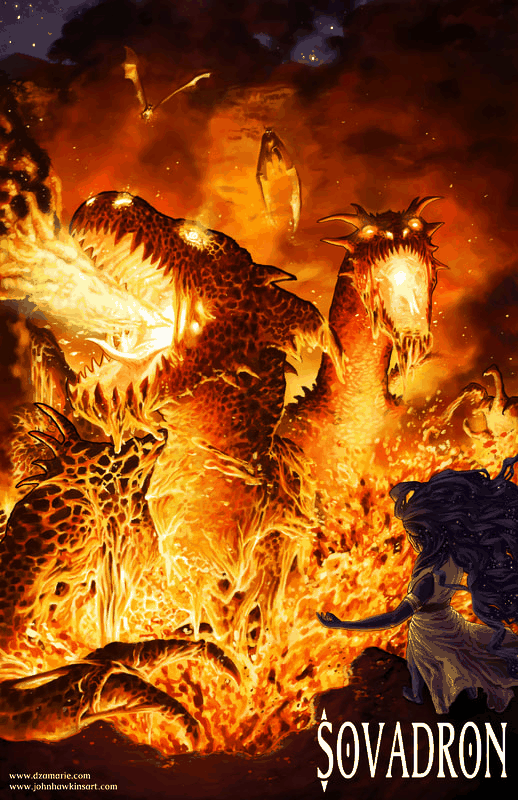
for a post about
Sovadron
. So today, we’re going to be talking about the book Stephanie wrote with Mirren Hogan:
Incantation
. Including an excerpt from the novel itself!
Sure, you love magic and intrigue and, y'know, dragons. But there are plenty of reasons NOT to read the book I, Stephanie Barr, wrote with Mirren Hogan,
Incantation
:
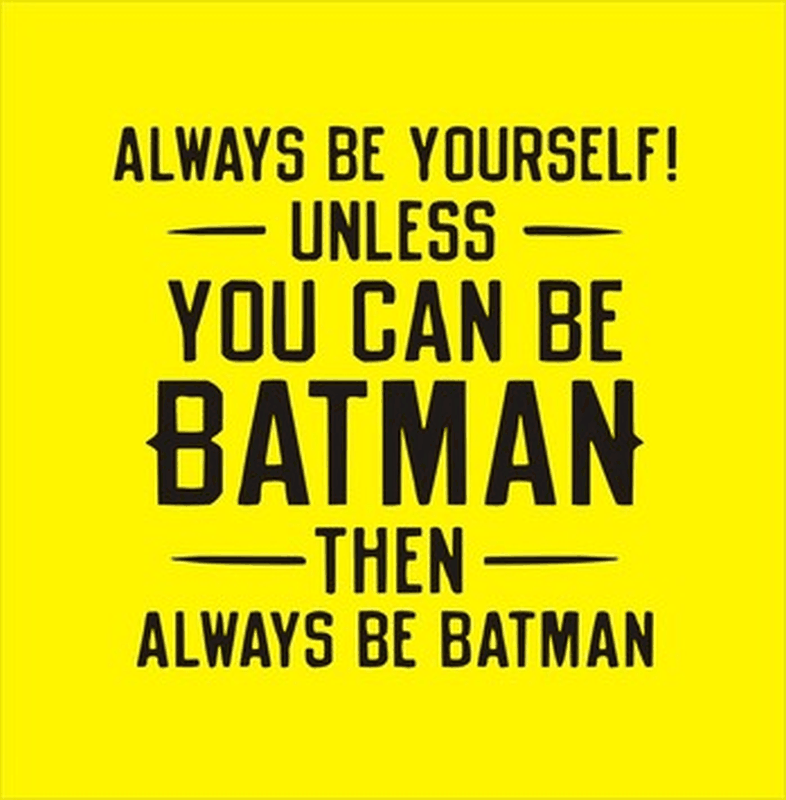
Not to mention the fact that you can only find it in the book bundle
Rite to Reign
, which is a steal for 99 cents, because you also get more than twenty other great books by best-selling and award-winning authors.
And if you preorder it, you can get fifteen books and a custom spell book written by the authors. #ritetoreign And hey, here's an excerpt: "I have just want you need." She ran to a large trunk in the back and began rummaging through it throwing this and that out over her shoulder. Some of the items were recognizable but plenty were a mystery. "This!" She trotted back, a carved crystal bottle between her withered hands. "What is it?" "Elixir of regeneration. One sip, and your magic will replenish. But only take one. If you take a second one in less than a month, you'll likely explode with the power." David reached for it. "That will be twenty-five gold. Elixir doesn't come cheap you know." David scrounged in his pocket and had to fish a few extra pieces from his other pocket. She handed him the bottle with a flourish, then turned her beady little eyes on Henry. "Now, for you." He took a step back. "I don't know. I think maybe I'm fine after all." He didn't feel like exploding from using something wrong. He could endanger himself perfectly well without help. "Come, come, the price has already been paid. You need only choose a card." Henry sighed, but turned his face and tugged a card free. "It better not be the death card." He knew enough about tarot to know it only meant change, not literal death, but he still didn't want to see it. "Strength," she said, her eyes brightening. "Aren't you the hidden treasure? Well, well." She gripped his hand before he could return the card. "Yes, yes, I feel it. So much strength. You only need the key. The key!" She tossed his hand aside and fetched an ornate jewelry box off the shelf, cackling to herself. Henry wound a hand in the air near his ear, gesturing to David that he thought maybe she was at least a little bit crazy. They might be too, for listening to her. "What kind of key?" he asked, not bothering to try to sound like he bought it. "Well," David whispered to him, "she did know control is one of my weak spots." "A-ha!" she exulted, swinging a silver chain over her head. "It's here," she said with great portent. "The key." And there it was, a tiny silver key on a long thick silver chain. "Well it's a key," Henry replied. "What does it do?" It looked like the kind which opened a child's diary, not a magical artifact of any actual use. She ignored his reluctance and slipped the chain over his neck. "When the time is right," she said in a whisper with a blast of smoky breath, "it will let you open up the heart of your power." "How much," said David, fishing the last of the coins from his pocket. She waved a hand. "You've been such good customers. Call it a bonus." Henry shrugged. “Thanks, I guess.” It probably wouldn’t do anything anyway. “We should get going.” David nodded, but thanked the creepy old woman a little too warmly. Then, just before he left, he said, "Hey, do you know what unicorns eat? Is it the same as regular horses?" "Of course not. Unicorns eat shit. They like cow and horse shit, but nothing makes them happier than dragon dung." "Really?" David said before he was jerked out the front door. "I think she was full of shit," Henry said, once they were out of earshot. "Who ever heard so much rubbish?" -- So, if you want to read more, despite all the reasons not to, you can find it here . And, if you do, don't forget your freebies: https://www.subscribepage.com/RitetoReignGift
|
What's This?The first Dragons, Zombies and Aliens blog was started in 2015. Somewhere between college coursework, paying rent with door-to-door sales, and keeping up with my sorority sisters, I wrote reviews, rants and commentaries on books, TV shows, and movies. Now, this blog has moved, improved, and the sky's the limit! Categories
All
Archives
July 2019

|

 RSS Feed