Dragons, Zombies and Aliens
:
The Blog
|
|
|
|
|
A couple of years ago, I started a YouTube channel--also titled
Dragons, Zombies & Aliens
--that is now starting to get some traction. To the point where I've started doing weekly videos every Sunday.
The unfortunate fact is I cannot keep up with both a weekly YouTube channel and blog. So I am officially moving my weekly rants, reviews, and lists to YouTube. This website will still be kept up-to-date, the newsletter will still be set out, and I'll still likely use this blog platform to make announcements as needed. I just won't post anymore blog posts. Check out my YouTube channel here . If you want to know what I'm filming ahead of time, as well as early access to the videos, join the community on Patreon !
0 Comments
May 4th is the third anniversary of the
Dragons, Zombies & Aliens
blog. I have been truly privileged to be able to share my passion with the world, and I want to thank everyone who's been with me on this journey with free ebooks!
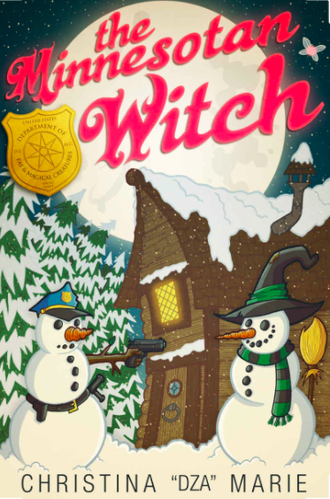
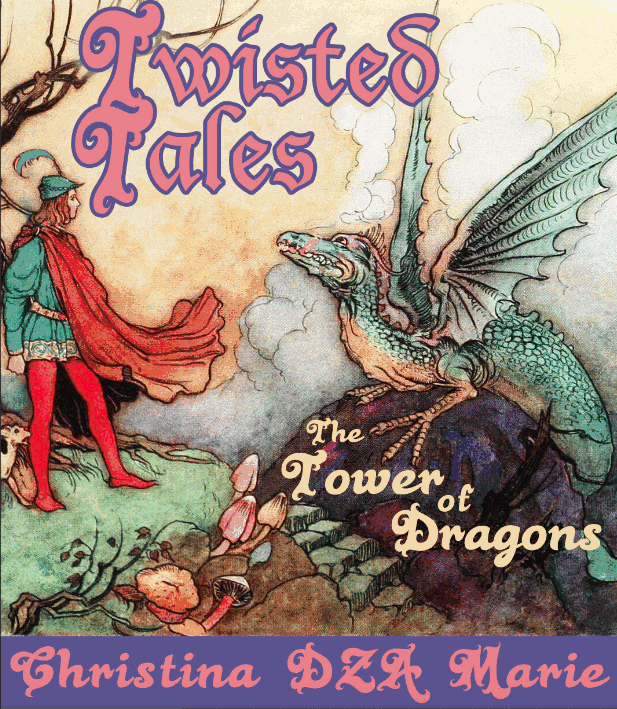
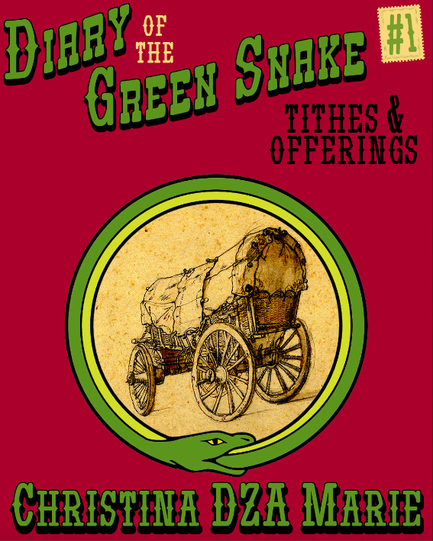
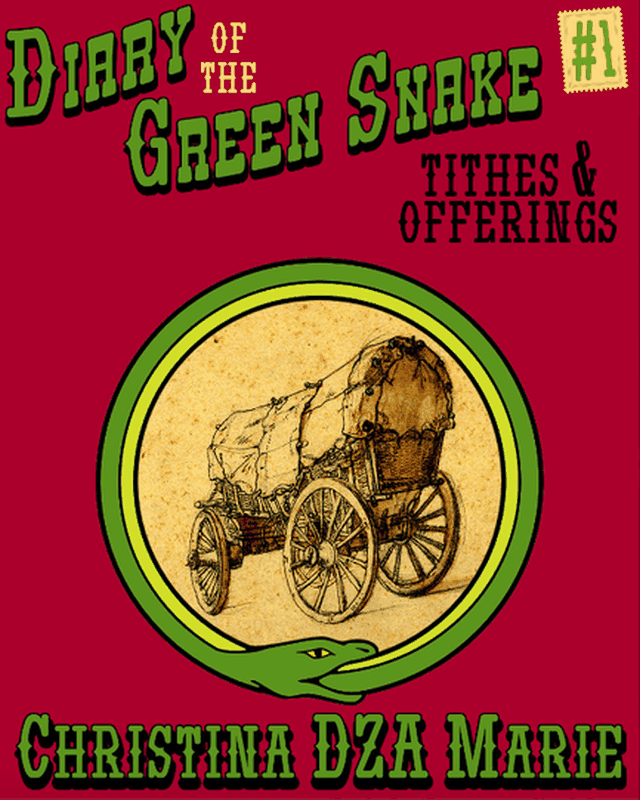
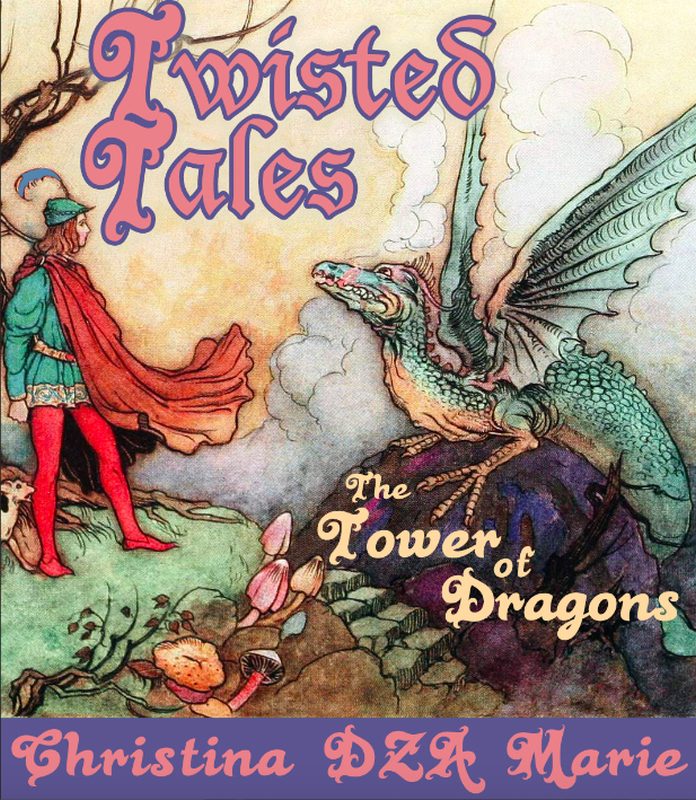
Through May 30th, everyone who enters the giveaway will have the chance to win four of my digital stories: The Minnesotan Witch: a novella
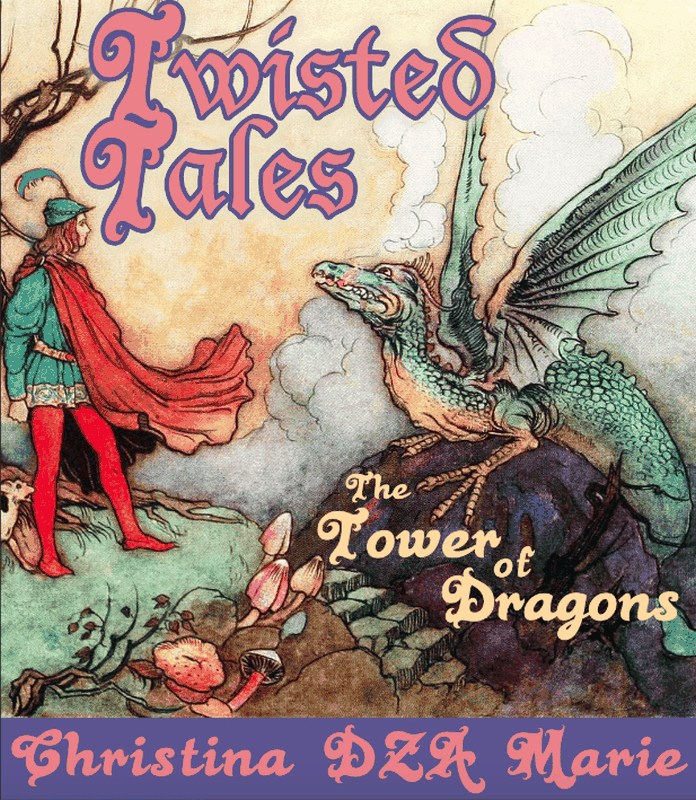
"Tower of Dragons"
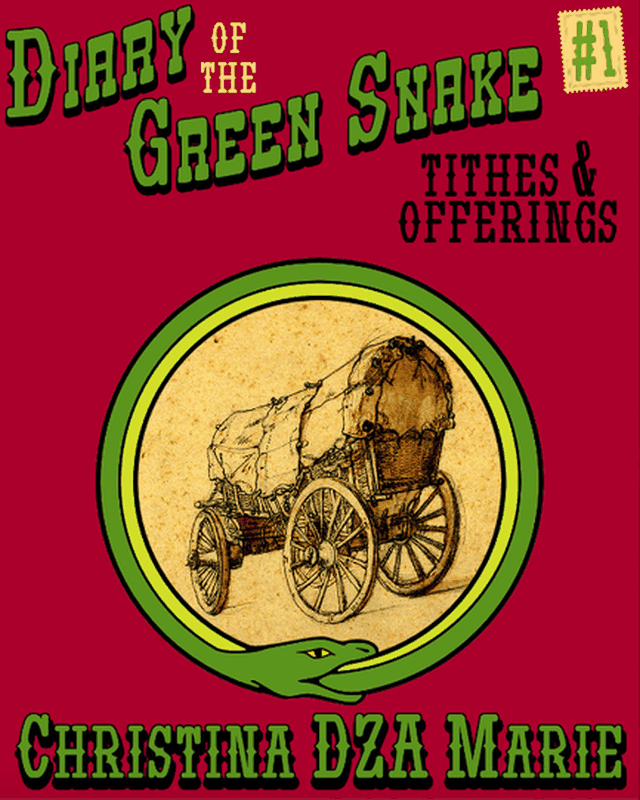
Diary of the Green Snake : "Tithes and Offerings"
Soulmate's Song
How to Enter
To enter, all you have to do is sign up for the weekly
Dragons, Zombies & Aliens
newsletter. That's it! If you're already subscribed to my newsletter, then you're already entered to win!
Ten winners will be randomly selected from my newsletter list, and they will be contacted and announced on May 31st, the day after the giveaway closes. So make sure the email you enter is one you check.
If you want to read
Short Tales from Earth's Final Chapter
, you can purchase it on Endless Ink's website
here
. It's available in both
digital
and
paperback
formats. It's also available to my $5+ patrons on my
Patreon page
.
New Dragons, Zombies & Aliens Podcast
The Hero's Journey
This month's podcast is all about story structure. Specifically, the Hero's Journey.
Rejection letters are a staple of the writing career. It doesn't matter how good you are, how amazing your story is, or even if you've already got several publishing contracts under your belt. A little while ago I interviewed my mother,
Maryjanice Davidson
, on this blog, as she's a New York Times bestselling author herself. One thing she says all the time is, "I've gotten so many rejection letters that I could make a wallpaper from them and cover every wall of my old Boston apartment."
And before you ask: yes. Twenty plus books on the NYT Bestseller list and she still gets rejection letters. And that's okay! Rejection is a part of life, after all. It's just a slightly bigger part of a writer's life. So get comfortable with it, because this relationship is going to stick around for a while. The first thing you need to do: stay calm.
Getting rejected by a publisher is not the end of the world, and it's not the end of your writing career. It just means that you haven't found the
right
publisher for
your
particular manuscript.
Think of finding a publisher as house-hunting. There's a lot of time spent online doing research, you're probably going to want to find an agent to act as your guide, and there's going to be a lot of rejection. Sometimes it's because you don't like the house. Sometimes someone else swoops in right before you can sign the paperwork. Sometimes you find out you can't afford it. Feel free to grumble, complain, and vent. Then once you've got that off your chest, go back to the computer and find another publisher to submit your manuscript to. Remember that it's nothing personal.
Editors get a
shit ton
of manuscripts every day, and they can only accept a limited amount. This is why, when you get that dreaded rejection letter, it's usually very short and vague. It's all, "We can't accept it at this time" or "It's just not a good fit." There's rarely any constructive criticism or feedback that we, as authors, could potentially use to improve the story. There's just not enough time in an editor's day to do that. (This, personally, drives me up a wall. Even though I get
why
editors cannot possibly give such feedback to every 'script they reject, I'm a sucker for constructive criticism and hate it when I don't get it.)
How do editors decide which 'scripts make the cut? Well, that's a little complicated. I'm no editor myself, but here's what I've heard second-hand: 1) They want what's going to sell. Editors want to read a good book, for sure, but quality isn't that important. At least, not in the way it is to us artsy-brained writers. You could submit the most intense, insane, engaging novel, but if the editor doesn't think their publishing house is going to be able to sell a lot of copies, you're going to get rejected. A lot of it has to do with the market. Remember when vampire stories were freaking everywhere ? The audience for that was huge. But now? Not so much. It's all about supply and demand. Editors look for types of stories that are in high demand, whether that's grimdark/realism or more light-hearted fantasy. So long as it fits in with the needs of their publishing house. Speaking of which... 2) They want manuscripts that are best for their publishing house. This is why researching a publisher before you submit anything is so important. Let's say you have a post-apocalyptic YA novel. Would you submit that to a publishing house that specializes in historical dramas? Of course not. Genre is very important. Just as writers specialize in specific genres and stories to tell, publishers specialize in specific genres and stories to sell . So the historical drama house rejected your 'script. Shocker. But that's okay! You've found another publishing house, this one specializing in YA novels that have a lot of action, adventure, and cute romantic subplots, all of which your book has in abundance. You submit it and think, They're going to love this! Aaand you get rejected. But why? You've matched the genre to the right house, and even the type of story they like. Well, the thing is, this publishing house has been doing a lot of post-apocalyptic books. They don't want their readers to get bored, so right now they're looking for YA urban fantasy novels. Does it suck? Yes, it does. And getting rejection after rejection does wear on you. This is why finding a literary agent is so important: they can help you side-step a lot of these issues. You'll still run into them, but not as much. Do not give up.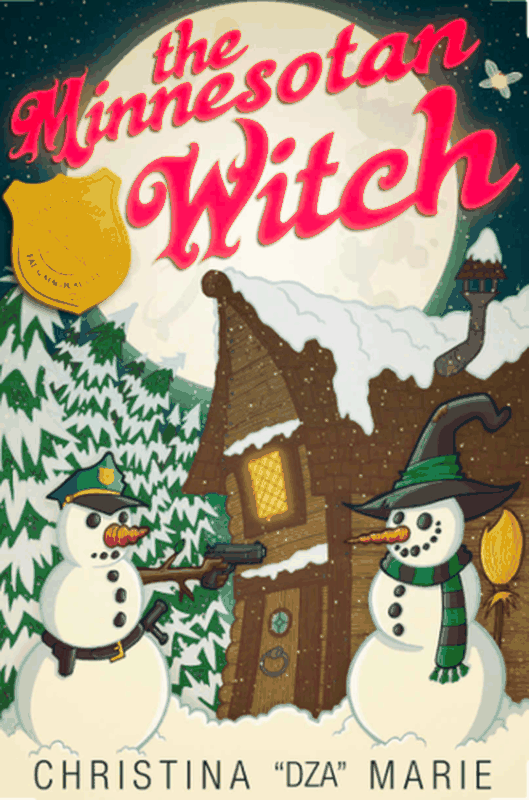
I'll give you a personal example.
One of the publishing houses I've worked with in the past, Less Than Three Press (I wrote a novella for them that got in one of their anthologies ), recently came out with a call for submissions. They wanted stories about shifters--i.e. werewolves, werecats, etc.--with disabilities. Any disability. And since they specialize in queer fiction, several major characters had to be a part of the LGBTQ+ community. I was all over this . I've spent the last two years working as a community support staff--that is, a job coach and PCA for people with disabilities. I'm always down to write about characters in marginalized communities. And I've worked with LT3 before and knew that not only do they pay well, they're also very competent. Now unfortunately, these calls for submissions have deadlines. Although I heard about it relatively early, there was still only two months for me to write, and I work two other jobs, plus this blog and YouTube channel. Nevertheless, I managed to crank out a fun story about an ordinary, asexual human trying to survive college who finds out that the girl with social anxiety that he has a crush on is a werewolf, and she's playing cat and mouse with a hunter a god complex. I sent it in the day of the deadline and went to take a long nap. About a month later I got an email from the editor. It was a rejection letter. BUT. But, this rejection letter had something so few of its brothers have. It had constructive criticism. The editor found two glaring flaws that barred it from acceptance, suggested that I fix them now that I wasn't adhering to any type of deadline, and told me to re-submit as a general submission. Now remember: editors don't have time to do this kind of thing. So when they do take the time to offer some feedback on your manuscript, you shut your mouth and listen. I took a few more months to fix the story, going over not just the problems the editor pointed out, but others that I found and just didn't have time to address with that pesky deadline. Once I was satisfied, I re-submitted. About a month later I got an email from the editor. It was a contract! So now the good people at LT3 are editing my 'script, and soon enough I'll be bugging you guys with promos about my new ebook tentatively titled Hunted . Rejection letters suck. They can wear on your self-esteem like a river cutting a ravine. But they're also what separates the "aspiring authors" from the actual authors. Take criticism seriously and apply it to your story. Keep looking for agents. Keep submitting to publishing houses. Just keep going .
(By the way, I highly recommend you guys check out LT3's
website
and stay tuned for further calls for submissions. They do them
constantly
, and while they're pretty strict about focusing on queer characters, they accept pretty much any genre. It's a great way for new authors to step into the game, or veteran authors to try something new. Also, the books are really good and really cheap, so it's a playground for readers, too.)
On May 4th, 2017, I finished the final project for my social justice senior capstone at Hamline University (basically it was the final course required to get my social justice major). What was the project, you may ask? A professional website/online portfolio. Our professor
Valerie Chepp
wanted us to have something that we could actually use in the real world after graduating. The idea was that it could be an online resume of sorts that we could use to apply for jobs or grad school.
Beyond some baseline requirements--it had to have our C.V., a complete biography, a written article on our chosen field (this was the first blog post on this site)--we were free to do pretty much whatever we wanted. And since I'd wanted to return to the DZA blog I'd started on Blogspot and then abandoned when college got to be too much, I decided this was the perfect opportunity. I adhered to those requirements in order to get a passing grade, and as soon as I had my bachelor's degree (in both social justice and history), made some changes. The C.V. was ditched in favor of the Published Works pages, the biography was rewritten, and blog posts became a bit shorter and more fun. Two years have passed since then, and it's been a blast! I am truly honored to be able to write about amazing books I've read, and to share the tips and insights I've learned in my own writing over the years with other authors. Given the occasion, I wanted to take the opportunity to do a check-in of sorts. This blog has covered a variety of topics, and I wanted to make sure that everyone is getting what they want out of this website. So I've got a short survey for you guys. It would really mean a lot if you would answer the questions and leave any comments/concerns you have. This way I know what you want to read more about and I can deliver! Thank you!
A little while ago I put a call out on Facebook (which is a goldmine for connecting with other authors) asking for interviews and guest posts for this blog. The response was a veritable tsunami of talented sci-fi and fantasy writers that resulted in my inbox being packed with interviews. Seriously, there's almost twenty of them there.
Normally, I try to do one interview or guest post a month, posting on Friday like I do every week. But given the sheer number of interviews I have sitting in my inbox until I either get rid of them or forget about them, I figured that it was time to open the blog up to twice-weekly posts. Every Friday will be the usual: a book review, a top ten list, some writer's tips, or whatever else I manage to scrape together on Thursday night. Every Wednesday will be an interview or guest post with a sci-fi/fantasy author. (This is in addition to the monthly YouTube videos every first Sunday and the monthly Bitch Shelf column on Luna Station Quarterly.) This week we're starting with Ryan J. Hodge, author of the military sci-fi Wounded Worlds , and the fantasy adventure Luck & Loose Ends . Author with Ryan J. Hodge
Can you tell us about what you're currently working on?
I’m actively working on two projects in particular at the moment. One of them is an adaptation of my first novel, Wounded Worlds: Nihil Novum , the other is a fantasy novel called Anima . The WW project is something that I’m really excited for. It’s the sort of story I always thought would be best brought to life through a visual medium and now I get to work with my artist friend to make that happen! WW’s story follows two people as they navigate the aftermath of a galactic war. They meet, they fall in love, but there’s one problem: they were on opposite sides! One is tasked with hunting down collaborators, the other must cover her tracks before she’s found out, and both leave a lot of bodies in their wake. It’s not a story about ‘good guys’ or ‘bad guys’! The best either of them can hope for is some sliver of redemption amid the unrelenting violence. Issue #1 is still in preproduction, but we’re aiming for an official release in Summer of 2019. If you can’t wait, follow the link to get the original novel! *** Anima is the sort of YA fantasy story that I wish someone would write (so, I guess I’ll have to). Oh sure, there’s a ‘Chosen One’, an ‘Army of Darkness’, and a ‘Prophesy’ but it most definitely IS NOT the sort of story that you’ve read or watched a dozen times already! This is not the archetypal ‘Hero’s Journey’, and in fact the entire point of the project is to tear those tropes down to their bones and remake them into something unique. To say anything more at this point risks spoilers, but I will mention this: Werecrocs beat Werewolves every time! Have you ever written characters that you truly despise? Why or why not? Actually, I haven’t and I’m really not sure that I could. It isn’t because I haven’t written villains or characters who’ve committed despicable acts; it’s that I find irredeemable characters… well… boring. I think the best villains--and the best heroes, for that matter--allow the audience to catch a glimmer of themselves with regard to character motivations. Perhaps an incompetent officer was simply given too much power too fast. Perhaps the cause that these otherwise good men found themselves fighting for was not as ‘noble’ as advertised. Perhaps you’ve got a character who ardently believes in himself so much that his charisma is magnetic despite his atrocities. Anyone who has seen the Star Trek: Deep Space Nine Episode Duet , knows what I’m talking about: https://www.youtube.com/watch?v=rVHR0UPHERQ I much prefer writing characters who are hard-to-love rather than easy-to-hate. *What is your biggest pet peeve in storytelling? Oh good heavens, where to begin!? If I had to slap a single label on it, I suppose it would be ‘convenient incompetence’ or ‘when people who should know better don’t know better.’ It’s a trope so broad that I could give a dozen examples and still only scratch the surface, but I suppose the big ones are: --‘Protagonist must explain a very simple idea to supporting characters in excruciating detail because the writer thinks his audience is stupid.’ --‘Experienced professionals ignore all concepts of established method (and usually safety protocols) in order to rush a goal.’ --‘This environment is dangerous. Let’s take absolutely no precautions or establish a plan to increase survivability.’ Oh my god, stupid characters that should be smart. I know exactly what you mean. (See every horror movie ever.) Were you “born to write” or did you discover your passion for writing later in life? My talent for writing is definitely more intuitive than learned, but there was certainly an element of discovery as well. That discovery, as it happened, was quite by accident. During a freshman English class we were given an assignment to write a short story and, to be perfectly honest… I had nothing. Squat. No ideas. What I did have was a copy of Half-Life: Blue Shift and a fair amount of certainty that Mrs. Moore didn’t play video games. So, I adapted the opening levels into a written format. BAM! Easy ‘A’. Now some might find that action to be ‘academically questionable’ (to put it in the kindest terms), but here’s the thing: writing that adaptation was actually really fun! It sparked a desire to put into words what I was experiencing as a player and that turned out to be really good practice for a budding writer. To be clear: I’ve only ever published my own original work . But that discovery allowed me to devote an entire series of articles, Play/Write , to the examination of how elements of game design can actually inform the quality of a narrative. Yeah, writing fanfiction is a great way to get started. ;P Where did the idea of your story come from? Mainly the ideas come from what I wish I could read/see. I see a lot of stories whose tropes are so surface-level and cursory. Many people confuse this for ‘played-out’ concepts, but they’re really not… often times they just need someone to wonder about how we can reintroduce these ideas in new and daring ways. In many ways, I look at narrative the same way I look at Chess. You’ve got sixteen pieces, and everyone knows what they’re for. But there are some people out there who can literally change the way you see those pieces forever just by how they move them. Now, am I saying that I’m the Bobby Fischer of reinventing tired tropes? Yes! I am saying that! And if you want to prove me wrong, you’re going to have to buy my books! Hah! Are you an early bird writer or night owl? And do you have any must haves like coffee, chocolates, wine, music or something else required for your creative process? Total night owl. Nobody tell my wife, but I’ve snuck out of bed more than once to get a chapter in. Usually, my best ‘muse music’ are soundtracks (OST) from video games, movies, or anime. Right now, my current obsession is Nier: Automata . I’ve never played it, but its OST is legit! Do you have complete control over your characters or do they ever control you? I suppose what you mean by ‘control’ is ‘does what appears on the page sometimes feel like it’s not a conscious effort?’ To which I say: ‘not really’. This is not to say that my stories have not taken turns I didn’t expect them to. I will always agree that it’s important to ‘listen’ to your characters (for want of a better term). It sounds strange, but sometimes your characters can think of solutions to scenarios that you wouldn’t. To understand your character is to understand how they think; how they would approach a given situation absent any script. In some cases, it’s better to let your imagination run with this new solution rather than strictly adhere to the script. It will feel more authentic, and it would really speak well of your own talent as a writer. You are still in control, of course. But what you’re feeling--that sense of your fingers flying across the keys with barely any deliberation--is not a lack of ‘control’ but a lack of contrivance . It’s the best high you’ll get in this line of work. Believe that! A lot of authors are frustrated by readers who don’t understand how important reviews are. What would you say to a reader who doesn’t think his or her review matters? You’re right! Most likely, it doesn’t matter. No one f’ing cares. Let’s face it, people care about one thing: ‘is this interesting?’ They might nor even care if it’s crap –I mean, we’ve all seen Birdemic: Shock and Terror, right? Now, you might think that’s the entire point of a review… but let’s be real for a second, what’s more likely to convince you to buy something? Is it a mix of stars on Amazon, or is it someone on your Facebook feed gushing about the book they just read –or Instagram filling up with cosplays of characters you’ve never seen before? Look, I’m not saying I don’t like seeing a nice four or five-star rating showing up next to my book, but I’m willing to recognize that’s vanity on my part. It’s good for my ego and just about nothing else. I’ve never been able to track new sales against positive reviews. Those whom I owe my thanks to are the folks who went out of their way to say (and share) that they cared. A piece of fanart means more to me than a dozen perfect scores. Someone posting a selfie with a copy of one of my novels gains more interest than a well-considered four-star. I’m not saying to never post a review, but it does take a certain level of talent in order to craft one that’s actually useful. It takes no talent, however, to go on Twitter or Instagram or Facebook or… I don’t know, your local comic shop and say ‘Hey! I love this thing! Check it out if you’re curious!’ Because if I wanted you to check out In Crow’s Claws by Daniel Mattia, that’s exactly what I’d do rather than write a review. By the way, go check out In Crow’s Claws by Daniel Mattia. It’s a really interesting take on relating a narrative via epistemological story telling. What’s ‘epistemological story telling’ you might ask? Check it out , you’ll see. (No, not sponsored. I just like the guy and his story) (quickly adds In Crow's Claws to Amazon wishlist) What, in your opinion, is the worst mistake an author can make? Geez, ‘The Worst Mistake an Author Can Make’ will probably be the title of my biography. I honestly don’t know. I can’t pick just one. What I can tell you is the decision I’ve most regretted: I became more concerned with having my book become a success that I allowed myself to forget that I write because I love it. As it turns out if I don’t become rich doing this… I’m okay with that. I’d like to, of course. Rather, I wouldn’t dislike it, because who would turn down a big bag of money just to do what they love? But, and I say this with all sincerity, I’d rather have a hundred books that only a thousand people read than five books that set me up for life. So long as I can be proud of what’s in those hundred books… so long as they don’t suck … so long as most of the people who did read them were able to say ‘Wow! That’s really something!’ I will die happy. It is my biggest career regret that I ever allowed myself to forget that. 
If you could have a dinner with one fictional person, who would it be? Why?
Jesus of Nazareth. Free booze and guaranteed all-you-can-eat! Oh wait! The question was fictional person… um… you know what? I’m going to keep my answer. Because if there is a God and there was Christ… they sure as heck aren’t reflective of our limited conceptions of them. I’d personally like to iron out some of those details. Get some facts out of the fiction, as it were. I mean, I'm a Buddhist, so I'm right there with you. And on the free booze thing. If you could go to any fictional world, where would you go? Why? Star Trek’s Risa, duh. Anyone who tells you different is lying or has yet to hear of it. It’s governed by a Hedony. A Hedony ! Literally ‘our system of government is whatever gets tourists laid and wasted the most efficiently.' I dare you to tell me that you wouldn’t be guaranteed a good time! It’s also pretty much the only fictional world where you wouldn’t have to be able to cast at least a Level 1 fire spell in order to not instantly get murdered. Can you cast a fire spell? Well, technically all you need is a can of hair spray and a match... What are three things you think we can all do to make the world a better place? In the Scouts, they always told us to leave the campsite better than you found it. It was here before you came, it’ll be here long after you leave; and if everyone commits to ensuring that it’s improved with each iteration then it will always be better than it’s ever been. What an ‘improved’ world is will differ from person to person. Green energy? Space faring? Socially harmonious? There’s lots of different directions we could go (and some of them stand opposed, if we’re honest) but I think these are good ‘rules of thumb’: - Be the best version of yourself. Tired and trite, maybe, but true nonetheless and the most important thing to do first. It’s also probably the hardest and most painful thing to do. Being self-critical without being self-loathing is tough. The best advice I’ve ever heard on this topic is ‘treat yourself as if you were someone you were obliged to care for’. - Improve more lives than your own (or those whom you are obliged to care for). They say ‘teach a man to fish to feed him for a lifetime’. This is true. If you can give a stranger something valuable they don’t currently possess and can’t ever spend, lose, or destroy; that’s about the greatest gift you can ever give. - Don’t let your name die before you do. What do you want to be known for? I don’t mean ‘decent parent’ or ‘caring spouse’ or even ‘successful businessperson’, I mean if someone happened to look up your name 500 years from now; what is the one thing (or several things) you would want them to see? What’s the likelihood of that? Are you happy with those odds? What creature is better: dragons, zombies, or aliens? Aliens. First off, there are plenty of alien creatures in fiction that could answer for dragons… not to mention alien viruses that can cause Zombism. Also Risians are aliens, and I think we’ve well-covered what they’ll do for you what Zombies and Dragons won’t. 
Ryan J Hodge is an Eagle Scout, Chess Teacher, former Game Developer, and Co-operator of Jenn’s Pet TLC. When he’s not running San Jose’s premier pet care service alongside his wife, Jennifer, he writes books. He has always been enthralled with Fantasy and SciFi and he’s ready to show the world what he can do with those genres!
Connect: Twitter: @RJHodgeAuthor Instagram: rjhodgeauthor Minds: @RJHodgeAuthor
Hello lovelies!
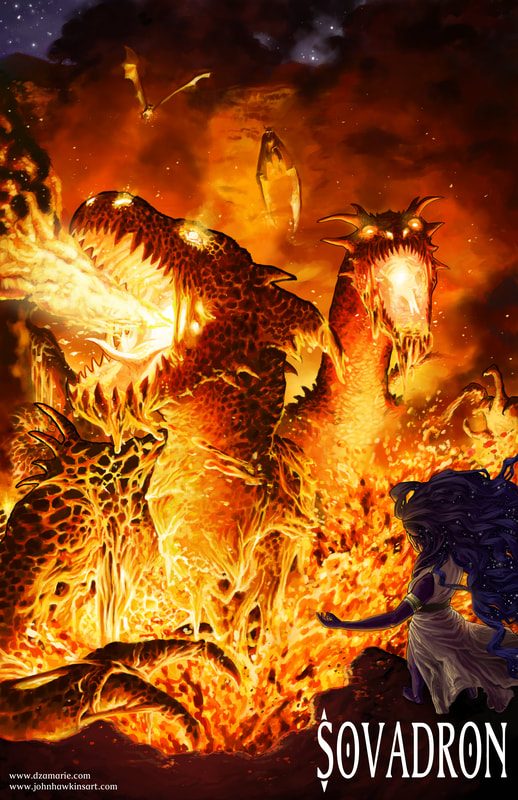
It has been a long-ass time. You’re probably wondering where it is I squirreled myself off to and why I dropped off the grid like that. Well, apparently, trying to start a blog, YouTube channel, and writing career while at the same time trying to hold down a full-time PCA job immediately after graduating college and moving into your first apartment...that was a bit more than I could chew. So I took a little break from blogging and vlogging to focus on my stories, as well as to try to figure out how to adult. (Still haven’t quite gotten the hang of that, but I’m getting there.) So, what have I been up to? A lot. Sovadron comes out in November, and is currently in illustrator John Hawkin’s hands. I’ve been plowing through the Throne of Glass series (a review of which will be coming out soon, along with book seven--yay!), and, subject to this week’s blog post, I’ve been self-publishing! Right now I have two small books available on Amazon. My collection of shorts Gary the Gecko’s Guide to Getting Your Humans to Get Together (and Other Short Stories) , and the urban fantasy novella The Minnesotan Witch .
I'll see you guys next week for my review of Sarah J. Maas's
Throne of Glass
series. :)
The Crowdfund Campaign for the Graphic Novel Sovadron is Up and Running!
|
What's This?The first Dragons, Zombies and Aliens blog was started in 2015. Somewhere between college coursework, paying rent with door-to-door sales, and keeping up with my sorority sisters, I wrote reviews, rants and commentaries on books, TV shows, and movies. Now, this blog has moved, improved, and the sky's the limit! Categories
All
Archives
July 2020
|
 RSS Feed