Dragons, Zombies and Aliens
:
The Blog
|
|
|
|
|
Summer is finally here! For those of you who have been suffering Mother Nature's wintry wrath with me in the Midwest, this has been a long time coming.
Now, it used to be that summer meant a lot more free time for me. School was out, I didn't have any bills or rent to pay, and only a handful of extra curricular activities to keep me on my toes. Therefore, I had a lot of time to read books that weren't dry, outdated school texts. And I loved it! These days, at age 23, it's a little different. Namely that I have a job instead of school, which doesn't end just because the weather's nice enough for a beach ball. Summer really just means dodging construction on the way to work. Still, there's something about summer that calls for a certain kind of book. Most people gravitate toward "cozy" or, as I like to call them, "fluffy" novels. I usually go more toward YA in general, content be damned. So with that in mind, here are my top seven recommendations for sci-fi and fantasy YA novels (or, I should say, novel series) for you to read this summer. They're in no particular order. Literally Everything by Rick Riordan
It's been a while since I've sung Riordan's praises. If you don't know, Rick Riordan wrote
The Percy Jackson
series, a five-book middle grade/YA book series about Greek gods and their children in modern New York. This was quickly followed by
The Heroes of Olympus
series, then a brief trespass into Norse mythology with the
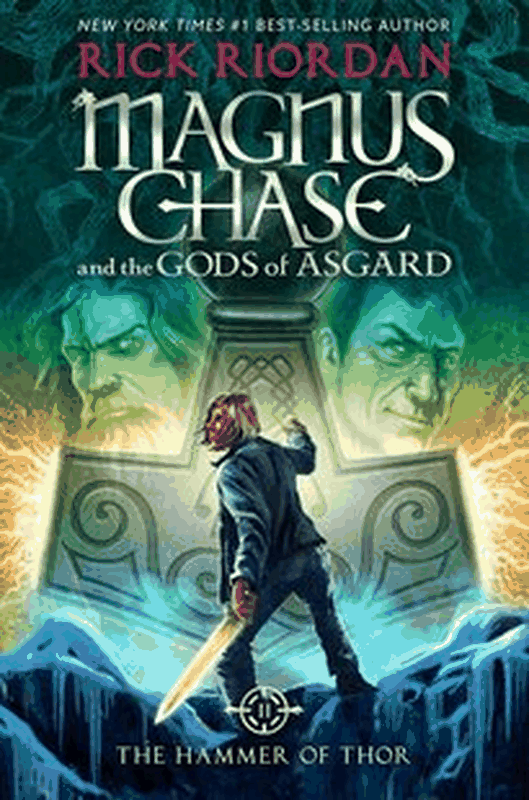
Magnus Chase
trilogy, and is now being wrapped up by the ongoing
Trials of Apollo
series. (He's also got a thing with Egyptian gods, but I haven't read that yet.)
Be warned: while Riordan's stuff is generally funny and light-hearted, each book has some pretty heavy moments. And the series overall gets a bit darker as you go on. This is probably because the characters--and subsequent audience--are all growing up and thus are dealing with more adult things. The latest book, The Burning Maze , even killed off a beloved major character from Heroes of Olympus. You can read a fuller review of one of the Magnus Chase books here , as well as two Trials of Apollo books here and here . Throne of Glass series, by Sarah J. Maas
I've written mixed reviews about Maas's
Throne of Glass
series.
On one hand
, the story itself is incredible, the world-building is insane, and the characters are very well-written. On the other hand, there are way too many goddamn
romantic subplots
, and Maas
stopped killing off
major characters when she should have at around book four. Not that there isn't any angst in later books; there is a
shit ton
of angst. But it's also undermined by last-minute saves and plot armor keeping everyone alive, if miserable.
Throne of Glass is also technically adult. It's one of those books that they market as teen and young adult and starts off that way, but right around book five is when you get to definitely adult , so fair warning on that. Still, all of the books are an excellent read and a great way to hide from the sun this season. The Spectre War Series by Margaret Fortune
So far there are two books out of this five-book sci-fi series. I won't go into what it's
actually
about because that's a major spoiler for book one,
Nova
(spoiler-free review
here
), so I'm sorry if this is a little vague.
Basically, it's way in the future, with spaceships and stations and whatnot, and some telepaths for kicks and giggles. Each book is an intense mystery that the main character (who that is changes with each book, by the way, which is really cool) has to solve before time runs out and everything goes boom. Literally. This has varying degrees of success; the characters do fail on several occasions, making it extremely intense. In book one, our MC Lia is essentially a human bomb with no memory, sent to blow up a space station, except she turns out to be a dud. Problem is, duds can still go off, you just don't know when. So she has to figure out who she is, why she was sent to destroy the space station, and maybe figure out a way not to blow up. The School for Good and Evil by Soman Chainani
This is the first book of a series, and I haven't gotten to the other books yet. It's an excellent YA fantasy that satirizes fairy tales while also doing homage to the genre.
The idea is that every major figure in fairy tales--Cinderella and her prince, Jack and the giant of the beanstalk, Snow White and the evil queen, etc.--all went to the same school, the School for Good and Evil, where they were explicitly taught how to be good or evil, depending on which side they were on. While that sounds fun on paper, the school itself is cruel and ruthless, eve on the "good" side, where the punishment for failure is cringe-worthy even to the bad guys. Two girls from the same isolated town--Sophie and Agatha--get snatched up to go to this school (by the way, recruitment isn't exactly voluntary). While Sophie believes herself to be "sugar and spice and everything nice," she ends up on the "evil" side while goth queen Agatha is forced to the Barbie-ized "good" side. While trying to figure out an escape, they end up blurring the lines between the two in more ways than one. Fullmetal Alchemist by Hiromu Arakwa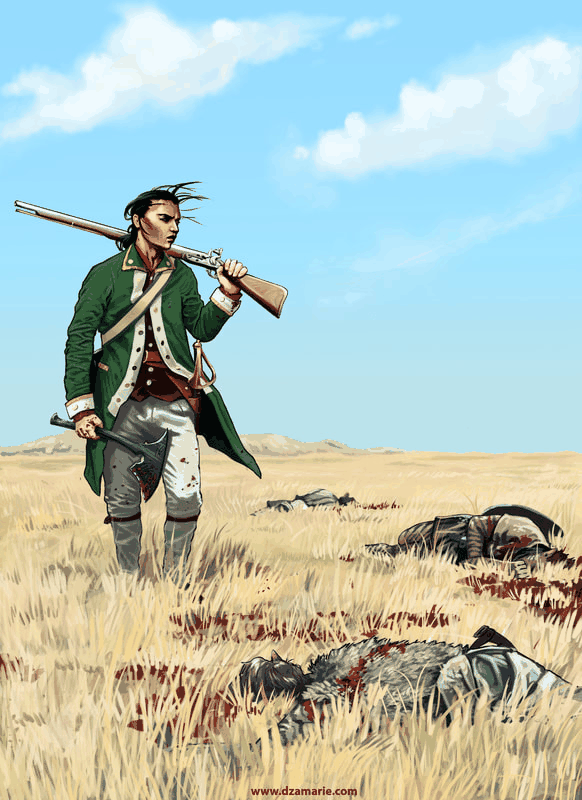
This is a fantasy manga (Japanese comic) that ended up becoming two animes (Japanese shows). If you want to watch the anime, go with
Fullmetal Alchemist: Brotherhood
, because it actually follows the manga, has more episodes, and has a much better ending.
In this world, the magic used is a rigid system of alchemy taught to an educated few that are almost all immediately recruited into the military of the dictatorship country of Amestris. The whole thing has a dieselpunk feel to it, and mechanical limbs are a common sight. The two main characters--the Elric brothers (Ed and Al)--broke a strict taboo in alchemy by trying to bring back their dead mother. The attempt failed, and left Ed down an arm and a leg and Al's soul stuck to a suit of armor. Now they travel all over Amestris trying to find the Philosopher's Stone, which they believe will restore their bodies. Kind of like Riordan: it's both goofy and heavy. If you like more science-based magic systems, then this is definitely the series for you. You can read it for free at MangaPanda.com. Dread Nation by Justina Ireland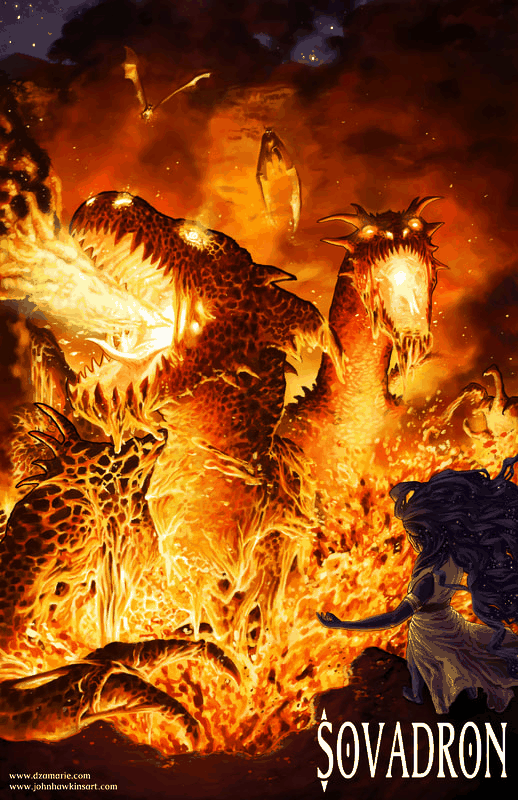
I went into a pretty in-depth (spoiler free!) review of
Dread Nation
already
here
, so I'll make this quick.
In the real world, the American Civil War lasted four years, which were then followed by the Reconstruction period. The Reconstruction period was supposed to piece everything back together and move on from the slavery and racism thing, and it failed pretty spectacularly. In Ireland's world, the American Civil War was interrupted by zombies. Eighteen years later, and the country is teetering on the brink of collapse, trying to fight armies of the undead while pretending everything is fine. It's very much like the meme: 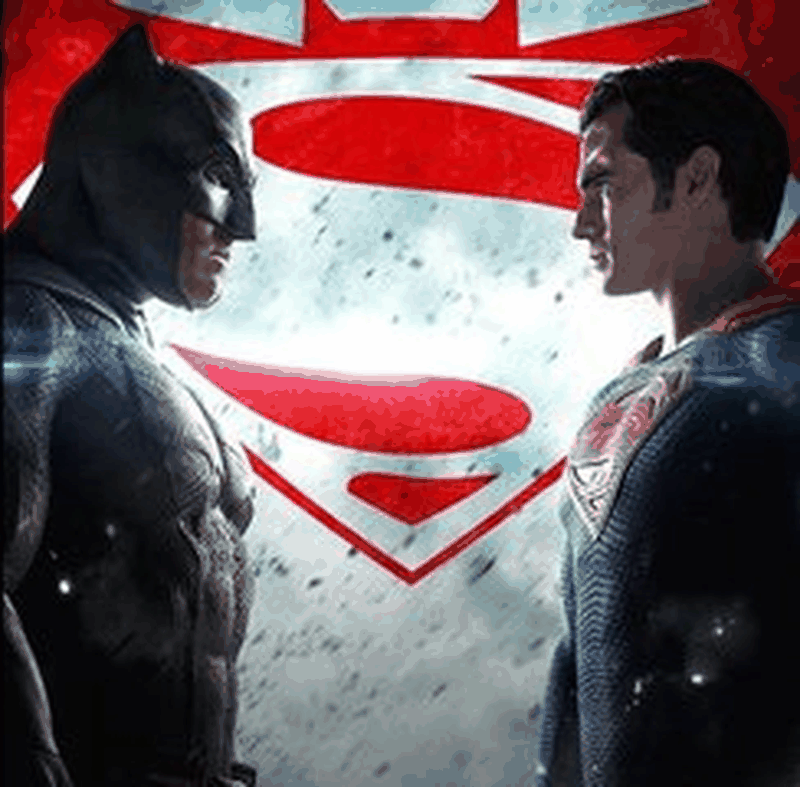
The Nemesis Series by April Daniels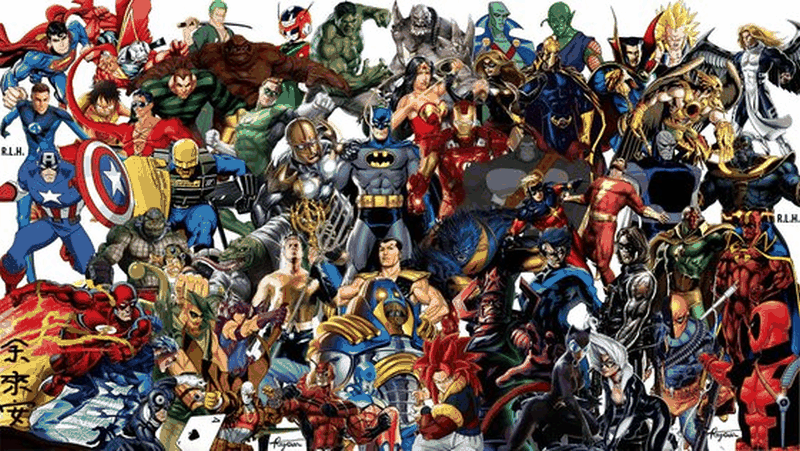
Also
reviewed
on this blog, the
Nemesis
series centers around Danny Tozer, a transgender superhero who has to deal with both the rotating supervillains of the week and a steady stream of transphobia. Oh, and anger and self-confidence issues due to the emotionally abusive upbringing. And being a teenager.
So far there are only two books, and I'm holding out hope that there will be more. Daniels manages to address several social issues without coming across as preachy, and book two ends with the beginnings of a really promising team of teenage superheroes.
What are your favorite YA summer reads? Let me know in the comments!
3 Comments
Jim Webster is a fantasy author who, among other things, writes short stories as inspired by old, "rustic" paintings and artworks. He currently has a short story series called
Rustic Pursuits
with this very concept on his
blog
, centered around a hapless poet named Tallis from the fantastical city of Port Naain.
Jim has generously agreed to share one with this for the following (terrifying) piece of art: 
Rustic Pursuits
Obviously as one’s fame grows, it’s inevitable that one will find oneself in
greater demand. This I had been promised by my elders. Yet I confess that
this fame seemed to take a long time to come. Admittedly Port Naain is a
large city with any number of poets, some of whom are perhaps my equals. And yet,
I always struggled to find patrons. Indeed I found that those patrons I had
valued my abilities as a master of ceremonies, able to maintain order in
their soirees, keeping the musicians sober, the singers chaste and everybody
appearing in approximately the correct order. The fact that I could engage
in witty banter, produce amusing verse when needed and could hold a room
spellbound with my stories and verses was merely a useful bonus.
Still, I did get offers of work, in Partann of all places. This area lies to the south of the city; the populace is rustic and unsophisticated. Indeed the further south you travel the more unsophisticated do they become, until finally they lapse into little more than barbarism. My offer of work came from the Tweil family. I didn’t know them; they almost shared a name with a prosperous Port Naain family, the Tweel. From what I could discover the two families may have been connected a couple of centuries back. Still, I received an invitation, on elegantly headed notepaper, to perform some of my latest works to an audience of family and invited guests. The only disadvantage was that their estate was perhaps forty miles out of the city and this was going to take me at least two days to walk. I had to set off immediately. So I bade my wife Shena a fond farewell, crossed the Paraeba Estuary on the Roskadil ferry and set off, on foot, into Partann. The first day I made good time. I slept in a stable, paying for my keep with a few romantic verses and some help with the chores. Next morning I set off, confident that I was in good time. It was about noon when I came upon a group of Urlan camped by the site of the road. I like the Urlan, although I confess I am always courteous in their company. Trained from childhood in arms, they are consummate fighters, chivalrous with a strong sense of honour, and if they do take offence, you can be dead before you even understood what exactly you’d said. Still these were a merry crew, none of them older than twenty, and some of the younger ones barely fifteen or sixteen. As an aside I would recommend the young Urlan to you. They can be so intensely serious, but their innate courtesy means they tend to be polite to artists. So when I mentioned I was a poet travelling to perform, they were genuinely interested. One maiden called Keikel, perhaps the youngest as she had no more than four shrunken heads hanging from her sword belt, asked where I was performing. I mentioned the Tweil estate. It was then they informed me that I’d spent that day marching in exactly the opposite direction. Instead of being a mere five or six miles from it, I was nearer twenty. I could have wept. Then the maiden suggested they lend me a horse. Their leader, a knight by the name of Brodan Vect, agreed with her. He pointed out that they were intending to travel in that direction for the hunting. They could camp near the Tweil estate, and when I left, I could meet up with them and regale them with tales of my successes, before leaving the horse with them and returning home. To be absolutely honest they didn’t actually say, ‘regale them with tales of my successes,' but they certainly said they’d be interested to know how I got on. They even suggested that, if it seemed appropriate, I ask the Tweil family whether they would mind the Urlan hunting across the estate. So I thanked them, mounted the horse I had been loaned, and set off at a canter. Now others might think that this would be a chance to disappear with the horse and sell it in Port Naain. After all I’d make more money on that than I would entertaining the Tweil household. Still anybody who suggests this course doesn’t know the Urlan. They live for war and for hunting. Hunting horse thieves is considered a particularly honourable pastime. Indeed, if it’s an Urlan’s horse the thief has stolen, that Urlan feels pursuing them to the ends of the earth and slaying them is almost obligatory. I arrived at the Tweil estate perhaps four hours after noon. I had been musing upon the origins of my horse. The trouble is that some of the Partannese aristocratic families are not enamoured of the Urlan. They feel that the Urlan do not treat them with the respect they deserve. Actually I think the real problem is that the Urlan do treat them with the respect they deserve. Still, having a mare with Urlan markings might not be tactful. So once I was in the grounds I picked my way slowly through the woodland, watered her at a stream and fastened her behind a spinney where she was screened from view, but had some decent grazing to keep her busy. Then I walked back through the grounds to the house. I was greeted with almost total disinterest from the maid who opened the door to me. She merely directed me down a corridor to the Morning Parlour. Even as I approached the parlour door I could hear somewhat discordant singing and I looked inside to see perhaps a dozen people standing around the room, clutching tankards whilst a young lady, elegantly attired, kept them all talking and simultaneously kept their drinks topped up as well. She saw me enter and beckoned me across to the table on which stood a punch bowl. Now I have seen many punch bowls in my time. Most of them are glass and are often very fine, with a matching ladle which will hold enough to fill a small wine glass. This allows even a grasping host to pose as wildly extravagant by offering you a second ladle full. On this occasion, whilst I call it a punch bowl, I’ve seen smaller cauldrons hung over fires cooking stew. The ladle she was using to serve punch with was better suited to serving porridge. She asked me my name, and ran her finger down a list which lay on the table next to the punch. Finally she found me, smiled and offered me a tankard of the punch. At this point she was called away by one of the other guests and I took the opportunity to glance at the list. Frankly I was a little put out; it was a collection of nobodies. A few of them I’d vaguely heard of. When I looked round I decided I might know some of them slightly, but none of them were persons of solid literary merit. In fact, if she had set out to create a list of those Port Naain would never miss, then with the obvious exception of myself, she had done a excellent job. I sipped my punch. I’m glad I did; if I had tried to drink off a mouthful or two, then I’d have had a coughing fit. The damned stuff was almost pure alcohol. I looked inside the bowl. There was a little fruit floating in the liquid, probably enough to flavour it, but not enough to threaten it with dilution. To be fair, it was pleasant enough, but not something to drink on an empty stomach. I moved away from the bowl and made an attempt to join in the nearest conversation. One has to be collegiate. I’m afraid it wasn’t really worth my while. The others had obviously been hard at the punch for some time and their conversation had frankly suffered. When the young woman came past to top up our tankards, I asked when we were to dine. Frankly, I was hungry. She glanced towards the clock and said she thought it could be three or four hours. As she moved to the next group I came to a decision: I had to get something to eat, if only as a defense against the punch. I had noticed that there was a door behind the punch bowl table, and det ected it led to the kitchens. So when I could see the lady was caught up in some discussion with another group, I quietly made my way to the table, surreptitiously emptied my tankard back into the bowl, and slipped through the door. I found myself in a short corridor leading to a large kitchen. Much to my surprise it was empty, and there was no sign of any cooking being done. On occasions like this, the kitchen should be the very centre of activity. Yet this was empty, there was no fire in the grate--indeed, the range was cold. I looked round. Stacked tidily next to the door there were a dozen empty bottles. I picked one up and read the label. It was ‘Urlan plum brandy,' produced by Grine Halstrop, Brewer and Dyer. Whilst Halstrop may not produce the worst beers in Port Naain, it is rightly a contender for that particular crown. It also produces a range of spirits which are just that, pure spirit. The only thing the Urlan would have done with this stuff was to use it to clean rust off armour. I looked round the rest of the kitchen, hoping to find something to eat. Eventually I’d assembled a small loaf, some sausage, and four bottles of excellent wine. These latter were so out of place I did wonder how they had come here. Now I felt that morally I owed one bottle to the maiden who’d lent me the horse. The other three could be sold to help me cover my out of pocket expenses; given there was no meal and everybody was drunk, I couldn’t envisage getting paid. So I decided to take the bottles out to my horse, stow them in the pack behind the saddle, eat the bread and sausage, and then return to the house. There, with the others, I could await developments. The kitchen door opened onto a small kitchen garden. On the other side of that was a low wall and on the other side of that I could see the woods where my horse was. I crossed the garden. To my left, towards the back of the house, there seemed to be a ruined building or two, and there was also a fire burning. I couldn’t see it, but I could smell the smoke. I left the kitchen garden by the gate which led to the woods, and once in the woods I made my way closer to the ruins. There I could see a considerable number of people, dancing and cavorting around a fire pit covered with a metal grill. This appeared to be the real party. Even as I watched, the dancing came to a halt, and the participants, in various states of undress, started instead to sing. Or perhaps they started to chant, because there was more rhythm than melody. As I watched and listened, the hairs on my neck started to rise. The whole thing seemed fey and unseemly. Then, out of the shadows of the ruin came the woman who had been serving punch. I didn’t initially recognize her because now she was dressed only in her shift. She was leading a man who was stark naked and very drunk. She led him to the edge of the fire pit and he stood there, swaying unsteadily, looking round in a confused manner. Suddenly she stepped behind him, grabbed his hair, pulled his head back and with one swift movement, slashed his throat with a knife . The man’s blood spurted out, and she pushed his body forward so it collapsed onto the grid. The chanting grew louder and more fervent, and the woman gestured towards the ruins. I saw two women bring out another victim, naked and almost incapacitated by drink. The crowd emitted a mighty ululation and one loathsome entity stepped forward out of the crowd, seized the victim, and carried him to the fire pit. There it opened its overly wide mouth, bit off the victim’s head and cast the corpse onto the grid. Making sure I couldn’t be seen, I made my way back through the woods to where my horse was waiting. Behind me the tone of the chanting grew ever more malevolent. Around me the woods seemed to grow darker, and I felt around me a growing sense of evil. I began to sense presences, to feel them rather than see them. I saw strange misshapen creatures, tenebrous in the shadows. They seemed almost but not quite men and women, moving through the trees near me. The chanting, and the blood poured onto the fire, were drawing them out of the woods and into the light. By the time I got to my horse the poor creature was wild eyed. Something far larger than a man was crashing through to underbrush towards me. I could hear it, but fortunately it was still out of sight. Hastily I mounted the horse, my plans for a meal forgotten. I left the bottles in my coat pockets, reached forward whilst still in the saddle to untie my mount, and then guided it back to towards the house. Unfortunately, as I came up to the ruins, it was obvious that things were building to a climax. Mixed now with the dancers were other stranger and more repugnant entities. They capered rather than walked, they yammered when they should have been silent. Indeed, one such burst out of the bushes behind me and lunged for me. The horse skittered sideways away from the threat, and then we were seen from the ruined window. The woman in her shift saw me and threw herself out of the window at me, whilst behind her, something darker and more terrible howled and charged towards me. I was saved by my horse. Whereas I was almost petrified with fear, sheer terror awakened in my gallant mount’s breast the urge to flee. Clinging desperately to her neck I gave up any attempt to control her. I occasionally risked a glance backwards to discover that the pursuit was close behind. Ahead I could see the gateway onto the road. The gate still stood open. We passed through at speed and without any prompting on my part the horse turned right, back the way we had come. Something grabbed my leg. Instinctively I groped for a weapon and pulled a bottle out of one of the deep poacher’s pockets in my coat. I turned and saw the woman in the shift was alongside me, running as fast as the horse. I gave no thought to how she might be achieving this but brought the bottle down on her head. She let go of my leg as she avoided the blow and I hastily abandoned the bottle, clinging once more to my gallant mare’s neck. Suddenly as we rounded a corner I saw a small force of horsemen across the road. My mare burst through a gap between two of them and stopped dead, quivering and shaking. I fell off her and groggily got to my feet. The Urlan were here but were dressed for war, not hunting. The late evening sun glinted on mail. Some wore steel helms; others had helmets with bronze face masks. Some, probably the maidens, had long hair hanging down from under the helmets. All wore totems, charms and the shrunken heads of their defeated enemies. One, in the second rank looked down towards me. “Stick close if you can.” I recognized the voice of Keikel, the maiden who had loaned me the horse in the first place. Slowly, I mounted the horse again and turned it to follow the others. As I caught up with her she smiled encouragingly at me and handed me a long dagger. I held it clumsily, but tightly. Now we were riding with lances raised. My pursuers came round the corner in a mob and stopped abruptly as they saw the force awaiting them. Keikel raised a horn to her lips and blew it. I heard answering calls in the distance, all from well ahead. As the notes of the horn died away a hideous demonic creature stepped forward from the mob. It raised above its head a sword which shone with an otherworldly light. Brodan Vect shouted, “Now!” and the line of horsemen, lances lowered, crashed forwards. I cannot claim to have witnessed everything. My horse just kept up with the others, and I did my best to say aboard. When we were moving more slowly I did attempt to keep hold of the reins. The leading demon moved with remarkable rapidity; it sliced through the lance coming towards it, then stepped aside to allow the horseman past. But this merely put it in the path of another horse which struck it so forcefully is was knocked sprawling. It leapt to its feet, still holding the sword, but then Brodan Vect started raining blows down on it and it was hard pressed to do more than parry. The rest of the horsemen had swept through the mob, riding many down and were swinging round to ride back. I had stayed back to avoid the demon. It was as I tried to get my horse to edge round the fight between the two champions that I saw the woman in the shift stand up from amongst the bodies. She had obviously thrown herself to the ground when the horsemen charged, and now she had a dagger drawn and was coming up behind the Urlan. Brodan’s attention was entirely given over to his demonic opponent, who had stopped giving ground and was starting to put in attacks of his own. I urged my mare towards the woman and swung. When she saw me coming she ducked down to avoid my blow. I lunged at her with the dagger , lost my balance, and fell off my horse on top of her. As she went to strike me, I grabbed her hand with the knife, and we wrestled in the dirt. She attempted to savage me with her teeth and twice I head-butted her in the face. Finally she manage to wriggle out from under me, turned to strike, and as she did she stiffened and collapsed forward. A n arrow had taken her between the shoulder blades. I glanced round. The rest of the Urlan had returned, two more had joined in the fight against the demon. The creature backed away from them, but only until it had its back to the trunk of a great tree. There it stood at bay. The Urlan landed blows on it, but the creature’s skin was tough. Not only that but it was covered in boils and pustules, and as the blades stuck, the pus which wept out would corrode steel and burn flesh. The fight continued. I t took three warriors to keep the beast in check. The Urlan made no sound, but the demon roared and cursed. Behind me I heard a voice: “Tallis, step back please.” It was the maiden Keikel, on horseback, with a great Urlan bow in her hands. Next to her was another Urlan who had discarded her lance but was now carrying what looked to be a great sharpened tree branch. As the creature roared, the Urlan bow sang, and an arrow hit the beast in the mouth, pinning the head to the tree. As her arrow struck, Keikel shouted “Now!" and the three men on foot threw themselves out of the way as the other rider charged through with the sharpened branch held in both her hands. With the weight of horse and rider behind it, the lance smashed into the creature. Even as it fell the other Urlan returned to the attack, hacking at the neck with their swords and cut the creature’s head off. As they did so, the body faded, leaving nothing but a dark patch on the ground where the grass was dying. Brodan Vect stepped away from where the corpse should have been, and saw me watching. He grinned at me. “Well, poet, you’ve witnessed an Urlan exorcism.” I bowed slightly. “Then sir, I thank Aea that I am a poet, not a theologian.” He laughed. There was genuine humour and good-fellowship in the sound. It heartened me and I think it boosted the others. He gestured and somebody fetched me my mare. As I approached her, I felt she looked at me with an air of reproach. To be fair, she was probably used to more martial riders. I mounted again, as did the rest of the Urlan. Keikel gestured for me to ride next to her. “What now?” She gestured ahead. “The other parties are in position, we heard their horns. They will be sweeping through the estate; we’ll take out anything they drive to us.” It was dawning on me that this was long planned. “So, why are you all here?” “Last autumn my brother was here on a hunting trip. Some of the peasants approached him with tales about what was happening on the Tweil estate. So he promised to help. We drifted here in small parties in the spring and did our reconnaissance. Then we gathered up the peasants, split them into three parties, each led by a couple of our sergeants, and they would be our beaters.” She smiled. “You were lucky. If you’d come through any other day, you’d have missed all this.” We rode forward, but we had no more fighting. By the time we arrived at the house, it was being thoroughly pillaged by the peasantry. I saw women staggering out with piles of bed linen and furniture. At the fire pit, the sergeants had a good fire going and were burning the bodies of the slain . We watched for a while as various creatures, some more or less manlike, were thrown into the flames and more timber was thrown on top. Finally word was given to set fire to the house as well. I shared my bread and sausage with Keikel and passed around the wine. We watched as the house burned. It was dawn before the flames died down. A man, whom I assumed to be some sort of village elder, finally came up to the Urlan. He took his hat off and bowed stiffly. “Our thanks for what you’ve done.” The Brodan Vect bowed back. “We do what we can.” The village elder gestured to his people. Four of whom then carried forward two bed sheets. They laid them down on the ground and opened them. Each was filled with the more valuable loot from the house. The elder said, “Take a sheet, the choice is yours.” Brodan gestured to the nearest. “That one will do.” The elder nodded and gestured for his people to take the other one away. He turned back to Brodan. “It’s an accursed spot. This house always brings trouble.” Brodan nodded. “Yes, it’s the second time our kindred have been here.” He pointed to the older ruins around the fire pit. “My mother’s grandfather burned that.” The elder didn’t look particularly surprised. “I trust we will not bother your family again in the future.” Brodan watched as two of his sergeants strapped up the sheet full of loot and fastened it to the back of the horse I’d been loaned. He turned back to the elder. “If you want my advice, I’d take the whole lot down, stone by stone, until nothing is left. Get rid of everything and just plough the site.” The elder half smiled. “And so your mother’s grandfather advised us. This time we will heed the advice.” And me? The Urlan decided they ought to camp to rest their horses and invited me to join them, which I felt was decent of them. I remember lying down and then I knew no more. When I finally awoke, they’d broken camp and departed, all save for Keikel who they’d left behind to keep an eye on me. When I awoke she passed me a parcel, and with that she rode off to catch up with the others. I opened the parcel. There was bread, cheese, a good wedge of meat pie and a smaller package. When I opened that I found a necklace, silver set with pearls. I walked back to Port Naain and gave Shena the necklace. She wears it occasionally. But not often, because it’s worth more than the barge we live on. But yes, I like the Urlan; they’re honourable and are, after a fashion, polite to artists.
The Devil's Guide to Managing Difficult People by Robyn Bennis
No spoilers (Promise)
Those of you who have been following this blog for a while may recognize the name Robyn Bennis, from the two
Signal Airship
novels I reviewed (
here
and
here
), as well as the interview I did with her
here
. She's a pretty new author, in that she only has these three books out so far and has been in the game a handful of years.
Of course, I've also only been getting published for the last handful of years, and none of my published works are novels. So, we're pretty much in the same boat, there. The Signal Airship books are enjoyable for a variety of reasons, and they're hard sci-fi/steampunk military dramas. The Devil's Guide is a huge departure, with Bennis deciding to try her hand at paranormal comedy. Where Signal Airship is a drama with a thread of comedy, Devil's Guide is a comedy with a thread of drama. (Well, more like two or three threads, but you get the general idea.) But while some authors would be completely unable to pull it off, Bennis does a pretty damn good job. Despite the fact that the Devil gives absolutely no instructions on how to manage difficult people. Jordan has basically lost her passion for life. She's kind of depressed, bored, honestly only looking forward to trying to date a guy that she's pretty sure is a spy (this suspicion is neither confirmed nor denied in the book, which I found kind of funny but also kind of disappointing, because that could have been a pretty good joke, like if he did work for a spy agency but was their accountant, or something). In short, she's leading a fairly unpleasant existence before Dee shows up. And Dee...kind of makes it worse. Oh, who am I kidding. Dee makes her hide a body within twenty-four hours of meeting her. In the name of making her life easier, of course. Each character is unique and goofy in their own way: Jordan has a dark sense of humor to deal with past trauma, her friend Gabby has a soup lawyer (that is, a lawyer who specializes in cases revolving around soup), and Dee is Dee. And they each have their own conflicts. Jordan's is sorting out her conflicted feelings for her late, abusive mother, a task that she would prefer to reschedule for the month of never, which Dee is not having. It's a page-turner, in part because it's such a fast pace, and in part because the situation gets so bad so quickly that you just have to know how it ends. It's like when a friend is telling a really funny story about the most embarrassing moment of their lives. You kind of don't want to know, but you have to. Normally I don't read comedies. But I'm glad I read this one. It's not as good as Signal Airship; Bennis set herself a pretty high bar with that one, and if asked whether I wanted her to write another comedy or write a third Signal Airship book, the answer would be a very solid "option B, please." But if you're looking for lighter read, something that will make you laugh at every other page and put your life in perspective, then I do recommend The Devil's Guide to Managing Difficult People .
A.R. Kavli is an author, gamer, historical fencing student, and second-generation U.S. Navy veteran. His earliest published works were writing sci-fi and fantasy for gaming companies. He currently lives in middle Tennessee with his wife and four children.
Interview with A. R. Kavli
Can you tell us about what you're currently working on?
I’m releasing a new book in a couple of months, With Our Dying Breath . If it had actually sold a few copies the first time around, I guess I would call it a re-release. I published it initially in 2016, but in 2018 I decided to take my author career more seriously and try to do things right. I hired an editor and basically rewrote the whole thing. The beta read finished at the end of February and I’ll do the final revision and release soon. I’ve also started getting into audio voice over narration and production. I’ve recorded some of my short stories with the idea being to practice and eventually produce my own audiobooks. There are some good online courses out there and I’m still learning, but I’m enjoying the process. I started just as a way to do some content marketing, but I’m really enjoying it! Or maybe I just like to hear myself speak. I’ll eventually be offering the short stories and audio shorts as content for a Patreon page, which is almost ready to launch. And I’m working on the marketing things. I’m learning about email lists, updating my author webpage, and I still need to get a more professional author photo made. Just in case an interviewer needs one for her blog or something. Ah. All the "fun" parts of being a writer. Welcome to the business, friend. Do you write under a pen name? If so, can you tell us why? I now write as A.R. Kavli, which isn’t exactly a pen name I suppose, but I did have to update my titles and Amazon page to reflect the change. In the course of learning the marketing side of things, including search engine optimization, I realized how many people misspell “Aaron.” Even people who’ve known me a long time write Arron or Erin. That comedy skit with the teacher shouting “Ay-Ay-Ron” hasn’t helped as much as I’d hoped it would. Using initials has other benefits too when facing possible reader biases. There are a couple of schools of thought about pen names and writing across genres. I’d like to write some historical fiction in connection to my study of Renaissance fencing and some would advise to use a pen name. If I decide to go that route, I do have a pretty cool name picked out, but I’m keeping it secret for now. Have you ever written characters that you truly despise? Why or why not? Not really. I don’t avoid writing despicable characters, but I try to write most characters—even those that do despicable things—as also being relatable on some level. That doesn’t mean they get a pass though. A well-written character can touch the monster inside all of us and we can even relate to that sometimes. What do you like best about the books you read? What do you like least? I like believable, well-written characters. And to me, any genre can have them. Even the pulpy, action-adventure stories can afford to have good characters. Generally speaking, if the characters aren’t interesting, I’m not interested in reading it. This doesn’t mean info dumps of back-story, though. The novels I’ve been listening too lately have done pretty well in that regard, I’m happy to say. On the flip-side of that, I dislike Superman / Mary Sue in all of his/her forms. Everyone likes an element of wish fulfillment in their stories, but characters that are basically walking deus ex-machina aren’t interesting to me and ruin a story. It’s an easy temptation to give in to though. Heroes are supposed to be bad-ass, cunning, and usually dead-sexy. Traditionally they stand out. Characters should of course be capable and have agency in the story, but in a world full of Bob’s and Lisa’s and the character is Ravenwing Silvermoon, or Silverwing Ravenmoon, with purple/yellow/silver eyes and commands limitless eldritch powers… well, as a reader, no thanks. Admittedly, that’s just my preferred reading. I tend towards the more realistic side of fiction so characters like that tend to ruin my experience. Like any sauce, too much ruins the meal. That’s not a dig at anyone, just my preferences. I also hate elves, which is probably related to my previous comments. I’m constantly in trouble with the Association of Elder Races and Fae People for my comments against them. What is your biggest pet peeve in storytelling? Villains who are evil for the sake of being evil. While I believe there are evil people in the world, interesting villains are those we can relate to. They should have an intelligent, internally consistent reasons to work cross-purposes to the heroes. Touching back on the question concerning despicable characters, villains don’t need to be bad guys per se . Characters who are jerks just to be jerks aren’t that interesting in fiction or real life. But the mom who’s willing to cross a line to make sure her child gets the scholarship over someone else’s child, that’s interesting. Or the rival scientist trying to earn the grant for his team. Why is the orc general rampaging? Because his people are starving or his shaman told him about a holy vision that touches his core world-view. Something more interesting than, “Well, that’s what orcs do.” Were you “born to write” or did you discover your passion for writing later in life? My earliest artistic inclinations were towards drawing, but it was usually telling a story as most kid art does. I started playing D&D and loved the story aspect of it and eventually was only happy being the game master because I enjoyed telling the story and coming up with NPCs. I’ve always had a passion for the story, but I didn’t seriously pursue it until my early 30’s. So I would say on that scale, I was born to write. Alas for all that time wasted! But I’m not sure I was really ready at that point to take being an author seriously. I didn’t have the drive or maturity back then and I viewed being a writer as being a starving artist. Things are very different for writers these days and the possibilities have reinvigorated me. Where did the idea of your story come from? With Our Dying Breath started kicking around in my head about 20 years ago as a Buck Rogers sort of pulp adventure with plasma pistols and high-adventure! I then imagined the story would work better if I explored its darker themes more seriously. My beta readers pointed out some aspects of that pulp leftovers, so there are few things to modify along those lines. What did you edit out of your book? Initially, I edited out the cussing because my young son made a comment about not being able to read the book. Having military aspects, I wrote it with the language I was familiar with in my time in the Navy. After my son’s comment, I tried inventing more benign curses. They never sounded right and my editor agreed, but my son sounded genuinely disappointed so I went with it. Afterwards he heard me talking about the ending and said that’s a stupid ending and he refused to read it ever. So the salty talk went back in and it really read better with it. My mistake was not realizing my young son wasn’t my target audience. It was a frustrating but illustrative object lesson. Do you have any advice for new authors? Get a job, hippie! Just kidding, sort of. Not every author can live on their writing earnings alone. Even well-known and successful authors today hold regular jobs. The good thing about writing as a sideline is that it is absolutely possible to find time to write during the week if you’re dedicated. And you probably already have the tools needed. What it takes is some good olde-tyme self-discipline and willingness to do the work. And part of that work is learning the craft. Read good books on writing. Take classes, on-line or live. Start off knowing that you’ll suck but that you’ll get better if you keep learning and practicing and producing. In general, writers tend to get overwhelmed by their “feelz” and it can be very discouraging. Go cry and cuss, blow your nose, realize every writer goes through the same, and get back at it. That may sound discouraging, but that’s not the goal. We all have certain expectations when we start any project. And unrealistic expectations, usually born of ignorance, can be spirit-crushers. They make us think we aren’t cut out for it, that we’re hopeless. In reality it’s like any other skill set. You have to learn it and you have to put in that time and effort, just like 99.9% of all successful authors out there. You’re not alone in that. I was sidelined for almost a decade because I had those rock-star expectations. The first novel I submitted to a publisher was accepted and I was riding high. And I’m still proud of that. But there was no crowd of fans and no giant check. It was a beginning and I was thinking of it as a meal-ticket. It was a small publishing house and my marketing packet was a one-page PDF with a few outdated ideas on it. I was going to have to do the work of selling my book and I had no idea what that even looked like. So I just checked “author” off my bucket list, I put my golden handcuffs back on, and writing went back to being just a hobby. Of course, I’m no great success yet, so just keep that in mind when reading any of my advise. If you could have one (real life) skill that you don’t currently have, what would it be? Why? How would you use it? Piloting. I was given an intro flight lesson when I was a teenager and that was one of the coolest things ever. When I joined the Navy, I had dreams of being a pilot. Fixing the avionics was close, but technicians don’t get their own cool theme music in real life. It’d be nice to be able to fly around and visit family, maybe start a business, and be the guy who safely lands the airliner when the pilot and copilot have the fish instead of the steak. If you could have one magical ability/superpower, what would it be? How would you use it? I'd love to be able to heal people, especially children. I'm not generally an emotional person, but as father of four, I hate see children with incurable diseases. Every time a crying parent comes on talking about their child’s condition, my heart goes out to them and I’m grateful it isn’t me. I would travel about and cure who I could. Of course, I still couldn't help everyone. I've actually thought about this enough that I have a story sketch of what it would really be like for such a person and what desperate people might do for their kids to get at the front of the line. I think it's probably best to not have that power, in reality. Being able to fly through space and explore the galaxy would be cool too. What is your Hogwarts House and why? I'm a muggle through-and-through and my muggle wand is a 9mm. As a rule, I don’t trust wizards and even the good wizards seem shady to me. I’m not a Harry Potter fan, but my daughter has read all the tomes and I know it has deepened her love of books, and for that I’ll always be grateful for the series. She doesn’t like being told she’s a muggle. What creature is better: dragons, zombies, or aliens? Aliens. Dragons are as shady as wizards and zombies are single-minded and sometimes downright rude. The aliens that don’t eat, enslave, or disintegrate us might be very helpful. And, aliens can be sexy. Each critter fulfills its role in our stories though. As I see it, the zombie is the personification of fear of disaster, death, and those things out of our control. Not to mention allowing a guilt-free opportunity to blow people away. Dragons, depending on the lore of course, are guardians of wisdom and powerful, mystical sages, whether good or evil. Aliens offer a hope of the future, of what humanity can become if we get it right. And they let us know we’re not alone, though we might prefer to ignored if they’re the “destroy the Earthlings” sort.
Rejection letters are a staple of the writing career. It doesn't matter how good you are, how amazing your story is, or even if you've already got several publishing contracts under your belt. A little while ago I interviewed my mother,
Maryjanice Davidson
, on this blog, as she's a New York Times bestselling author herself. One thing she says all the time is, "I've gotten so many rejection letters that I could make a wallpaper from them and cover every wall of my old Boston apartment."
And before you ask: yes. Twenty plus books on the NYT Bestseller list and she still gets rejection letters. And that's okay! Rejection is a part of life, after all. It's just a slightly bigger part of a writer's life. So get comfortable with it, because this relationship is going to stick around for a while. The first thing you need to do: stay calm.
Getting rejected by a publisher is not the end of the world, and it's not the end of your writing career. It just means that you haven't found the
right
publisher for
your
particular manuscript.
Think of finding a publisher as house-hunting. There's a lot of time spent online doing research, you're probably going to want to find an agent to act as your guide, and there's going to be a lot of rejection. Sometimes it's because you don't like the house. Sometimes someone else swoops in right before you can sign the paperwork. Sometimes you find out you can't afford it. Feel free to grumble, complain, and vent. Then once you've got that off your chest, go back to the computer and find another publisher to submit your manuscript to. Remember that it's nothing personal.
Editors get a
shit ton
of manuscripts every day, and they can only accept a limited amount. This is why, when you get that dreaded rejection letter, it's usually very short and vague. It's all, "We can't accept it at this time" or "It's just not a good fit." There's rarely any constructive criticism or feedback that we, as authors, could potentially use to improve the story. There's just not enough time in an editor's day to do that. (This, personally, drives me up a wall. Even though I get
why
editors cannot possibly give such feedback to every 'script they reject, I'm a sucker for constructive criticism and hate it when I don't get it.)
How do editors decide which 'scripts make the cut? Well, that's a little complicated. I'm no editor myself, but here's what I've heard second-hand: 1) They want what's going to sell. Editors want to read a good book, for sure, but quality isn't that important. At least, not in the way it is to us artsy-brained writers. You could submit the most intense, insane, engaging novel, but if the editor doesn't think their publishing house is going to be able to sell a lot of copies, you're going to get rejected. A lot of it has to do with the market. Remember when vampire stories were freaking everywhere ? The audience for that was huge. But now? Not so much. It's all about supply and demand. Editors look for types of stories that are in high demand, whether that's grimdark/realism or more light-hearted fantasy. So long as it fits in with the needs of their publishing house. Speaking of which... 2) They want manuscripts that are best for their publishing house. This is why researching a publisher before you submit anything is so important. Let's say you have a post-apocalyptic YA novel. Would you submit that to a publishing house that specializes in historical dramas? Of course not. Genre is very important. Just as writers specialize in specific genres and stories to tell, publishers specialize in specific genres and stories to sell . So the historical drama house rejected your 'script. Shocker. But that's okay! You've found another publishing house, this one specializing in YA novels that have a lot of action, adventure, and cute romantic subplots, all of which your book has in abundance. You submit it and think, They're going to love this! Aaand you get rejected. But why? You've matched the genre to the right house, and even the type of story they like. Well, the thing is, this publishing house has been doing a lot of post-apocalyptic books. They don't want their readers to get bored, so right now they're looking for YA urban fantasy novels. Does it suck? Yes, it does. And getting rejection after rejection does wear on you. This is why finding a literary agent is so important: they can help you side-step a lot of these issues. You'll still run into them, but not as much. Do not give up.
I'll give you a personal example.
One of the publishing houses I've worked with in the past, Less Than Three Press (I wrote a novella for them that got in one of their anthologies ), recently came out with a call for submissions. They wanted stories about shifters--i.e. werewolves, werecats, etc.--with disabilities. Any disability. And since they specialize in queer fiction, several major characters had to be a part of the LGBTQ+ community. I was all over this . I've spent the last two years working as a community support staff--that is, a job coach and PCA for people with disabilities. I'm always down to write about characters in marginalized communities. And I've worked with LT3 before and knew that not only do they pay well, they're also very competent. Now unfortunately, these calls for submissions have deadlines. Although I heard about it relatively early, there was still only two months for me to write, and I work two other jobs, plus this blog and YouTube channel. Nevertheless, I managed to crank out a fun story about an ordinary, asexual human trying to survive college who finds out that the girl with social anxiety that he has a crush on is a werewolf, and she's playing cat and mouse with a hunter a god complex. I sent it in the day of the deadline and went to take a long nap. About a month later I got an email from the editor. It was a rejection letter. BUT. But, this rejection letter had something so few of its brothers have. It had constructive criticism. The editor found two glaring flaws that barred it from acceptance, suggested that I fix them now that I wasn't adhering to any type of deadline, and told me to re-submit as a general submission. Now remember: editors don't have time to do this kind of thing. So when they do take the time to offer some feedback on your manuscript, you shut your mouth and listen. I took a few more months to fix the story, going over not just the problems the editor pointed out, but others that I found and just didn't have time to address with that pesky deadline. Once I was satisfied, I re-submitted. About a month later I got an email from the editor. It was a contract! So now the good people at LT3 are editing my 'script, and soon enough I'll be bugging you guys with promos about my new ebook tentatively titled Hunted . Rejection letters suck. They can wear on your self-esteem like a river cutting a ravine. But they're also what separates the "aspiring authors" from the actual authors. Take criticism seriously and apply it to your story. Keep looking for agents. Keep submitting to publishing houses. Just keep going .
(By the way, I highly recommend you guys check out LT3's
website
and stay tuned for further calls for submissions. They do them
constantly
, and while they're pretty strict about focusing on queer characters, they accept pretty much any genre. It's a great way for new authors to step into the game, or veteran authors to try something new. Also, the books are really good and really cheap, so it's a playground for readers, too.)
Both Amanda and Michael spent far too many years writing for other people and corporations before turning their work and imaginations to fiction. She used to work as a reporter and communication consultant, while he divides his time between writing, music, woodworking, and gardening.
Interview with Amanda K. King and Michael R. Swanson
What cool and exciting things have been happening in your life recently?
A manda : We published a book! That’s pretty much it. The whole process eats up free time like crazy. Free time? What free time? Is your recent book part of a series? If so, can you tell us a bit about where the story is heading? Michael: Things They Buried can be read as a stand-alone novel, though it is the first of our Thung Toh Jig stories. The Thung Toh are an independent organization of covert operatives in our world. They provide us an opportunity to create adventures that can be independent of one another. Some of the characters from this first novel will appear in other Thung Toh Jigs , though the reader should be able to jump into those without reading this one. The Jigs will not be the only releases from us, though. All our planned stories take place on Ismae, some will be serial, some stand-alone, and some will introduce other characters, cultures, and storylines as we move forward. Sounds like fun! Can you tell us about what you're currently working on? Amanda : The next release we’re working on is a six-part short-novel serial called The Long Game . We had originally settled on novellas, but as we wrote, that felt too restrictive. If one of them needs more than the standard 40,000 words, we don’t want to short change it just to fit into that category. The series follows up on some of the side storylines, characters, and events from Things They Buried . Each one will be a stand-alone adventure, but an overarching storyline ties them all together. Much like our debut novel, all of these will be heavy on the action/adventure. We’re also working on a couple other projects, one that follows up on a character who left Dockhaven at the end of Things They Buried. I don’t want to mention names and spoil that first novel for anyone. We’re also nearly done with the rough draft of another longer novel that features new (mostly) characters, but still takes place on Ismae. Have you ever written characters that you truly despise? Why or why not? Amanda : Orono, our primary villain in Things They Buried, is truly despicable with just about every nasty personality characteristic we could think of. Because our main characters are solidly grey/antihero, we needed him to be really terrible in contrast, though I don’t think readers will be seeing the same level of awful from most of our future villains. Our original draft featured scenes from Orono’s point of view, but we decided even that made him too relatable to the reader. No one will—or should—want to relate to this man. Ah, the pure evil villains. Good times. Where did the idea of your story come from? Amanda : We started worldbuilding fifteen years ago because we were bored with the stock fantasy universe. Our author’s index for Ismae is mammoth—hundreds of OneNote pages. In Things They Buried , we barely even begin to unravel all the detail already developed in the world. It can be a lot to keep track of but having all that keeps us from wondering what the next story should be about. If we write everything we already have planned, we’ll be busy for decades to come. 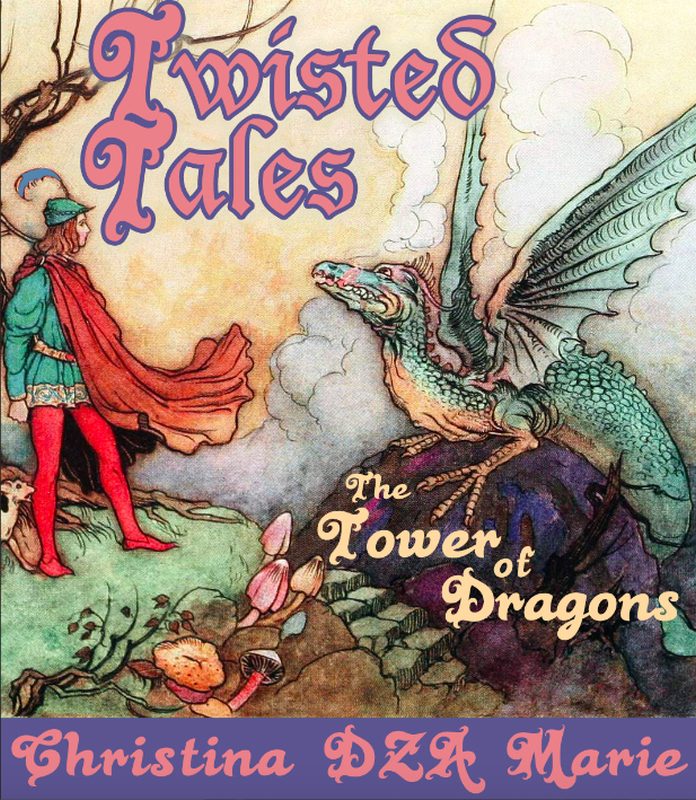
A lot of authors are frustrated by readers who don’t understand how important reviews are. What would you say to a reader who doesn’t think his or her review matters?
Amanda : I’d tell readers to remember the frustration of applying for a job in order to get work experience only to be told they’re not right for the position because they don’t have verifiable experience. As authors, we need reviews to be able to run promos with companies like BookBub, but we want to run those very promos in order to get reviews. Readers see our ads and social posts then check out the book but instead of downloading a sample, they bounce because no one’s reviewed it. Then Amazon can be persnickety about who they allow to post reviews, so authors can’t count on friends and family to get started. It’s like applying for that job—we need reviews to get reviews. I think nearly everyone can relate to that. What kind of impact do you want your book(s) to have on readers? Amanda : I want people to enjoy reading our books. I want the Ismae stories to take readers out of the mundane world and let them have fun, make them feel something, quicken their pulses. We had one reader tell us he got goosebumps at the end of part two of Things They Buried when he realized what was about to happen. That’s what I want. That makes me happy. Michael: Amanda pretty much covered it for me. The only thing I’ll add is that I don’t want readers to see reading a sci-fi/fantasy novel as a chore. The thousand-page multi-volume epics are often great, but there’s still a place for the two hundred to five hundred page novel. It’s very satisfying to turn off the viewscreen and read pulp for your entertainment fix at the end of a long day. And your Goodreads or LibraryThing annual challenge totals will be a heck of a lot more impressive if you are reading five shorter books in place of one giant volume. What, in your opinion, is the worst mistake an author can make? Michael: Give up. I’ve left a lot of projects unfinished in my life and those are the only ones I regret. I have partially completed musical instruments tucked away in many spots in our house and more than a few unfinished recordings. I guess I keep them around to mock me. Except for a couple of recordings that were released in the nineties, Things They Buried is my only creative project put out to the world at large. It was both the most difficult and the most rewarding creation I have ever completed. If you could have one (real life) skill that you don’t currently have, what would it be? Why? How would you use it? Michael: Kung fu. I always wanted to practice a martial art, but due to bad knees and poor discipline I haven’t yet. I’d use it for bit parts in low budget action movies. What might we be surprised to know about you? Amanda: I garden—raise the veggies from seeds annually and even can them in the fall. No lawn in the backyard, all garden. What creature is better: dragons, zombies, or aliens? Amanda: Zombies. I’ve never met a zombie movie or book I couldn’t at least enjoy. They’re a cultural metaphor disguised as a good scare and I love that. Though the xenomoph is just beyond awesome, too. Michael: I choose aliens. Unless that means grays only, then I’m with Amanda and it would be zombies. The Wolf in the Whale by Jordanna Max Brodsky
No spoilers. (Promise)
The Wolf in the Whale
has one of the most unique premises I've ever come across: a historical fantasy that combines Norse and Inuit mythology. And then there's the fact that it starred, what I thought, was a femme protagonist. But as it turns out, Omat is trans.
I actually changed the description up there. The actual description uses female pronouns for Omat, which makes no sense because he spends the majority of the book using male pronouns. In modern culture he'd probably be considered FTM transgender, except that implies that he was assigned female at birth. But despite having a "woman's body," he was raised as a boy, because he inherited his father's soul. The whole thing boils down to "This baby is trans because magic." #MagicTransBaby This of course leads to excellent conflict and exploration of gender, gender roles, and sexuality. One of the villains is a cis woman who is very masculine. One of the good guys is a cis man who is very soft, gentle, and therefore somewhat feminine. Omat goes from strictly adhering to gender roles in order to claim and verify his manhood to "fuck the rules, I do what I want." In terms of pacing, the book is a little slow. The first hundred pages are spent establishing Omat's world, the Inuit culture and mythology, and his magic and family dynamics. We don't even meet one of the main villains until page 103. Once the book gets going, though, shit gets real. Omat has to overcome a tall order of villains and obstacles in order to achieve his goals, which vary from survive to rescue my brother to save my people . There are Inuit villains, Norse villains, godly villains, and nature itself is a bit of a villain at times. One of the most interesting things about this book is its theme of sexual violence. Thanks to some transphobia and misogyny on the Inuit villain's part, Omat is raped. It's not graphically described, but it's still very upsetting. While it's the only time it happens to Omat, it's not the only time it's talked about in the book. It's also talked about from the other side: a rapist who is trying to seek forgiveness and redemption, and has to work for it. You rarely see that in fiction--or anywhere, really. Needless to say, even the "good guys" in this story are very grey. The whole cast of characters are amazing. The Inuit are a tight-knit group and adore each other, but they're willing to sacrifice Omat if the alternative is death. The Norse are fierce warriors and mostly considered villains, but many of them are victims themselves. The gods are a mash-up of good and evil, created by humans and in turn affecting humans in both positive and negative ways. (This book adheres to the rules of American Gods to a T.) I know shamefully little about Inuit culture and even Norse culture, but considering the fact that Harvard grad Brodsky goes ham on research by actually visiting the places she's writing about and (gasp! shock!) talking to people in those cultures, I think we can trust it. Maybe not the part about a vengeful god living on the moon and a massive snake wrapped around the world, but the more historical aspects. Honestly, my only complaint about this book is that it's exhausting. In a good way, but still. The book hangover is not appreciated. While there is no gratuitous violence, the story itself is brutal . Rape, character deaths, animal deaths all get thrown at Omat like a never-ending parade of misery. The poor kid just can't catch a break, and neither do we. I need a nap.
Gareth Hanrahan’s three-month break from computer programming to concentrate on writing has now lasted fifteen years and counting. He’s written more gaming books than he can readily recall, by virtue of the alchemical transmutation of tea and guilt into words. He lives in Ireland with his wife and twin sons
Interview with Gareth Hanrahan
What cool and exciting things have been happening in your life recently? There’s a six-day-old baby daughter in the next room. I don’t know if that counts as cool or exciting for anyone other than my family. At the very least, it explains why I’m running low on cool and exciting things recently. Actually, thinking about it, the launch of my first novel probably counts as cool and exciting, so I should probably mention that. However, it happened a whole month ago, and it’s been a really busy month involving very little sleep, so I can be forgiven for letting it slip my mind. (Also, I can be forgiven for initially mistyping “sleep” as “slepe” and staring at it for several minutes, trying to work out why there’s a little wiggly red line under it.) Do you...do you need a nap? You sound like you need a nap. Is your recent book part of a series? If so, can you tell us a bit about where the story is heading? THE GUTTER PRAYER is the first of the Black Iron Legacy series. The second, THE SHADOW SAINT, should be out late this year or early next year. Both books focus on surviving members of the Thay family, a once-influential family in the city of Guerdon who died in mysterious circumstances. In the first book, the alchemists of Guerdon create a god-killing weapon. The second book explores the consequences of that weapon… Can you tell us about what you're currently working on? Right now, I’m not working on anything for obvious reasons. THE SHADOW SAINT is drafted and with the editors. I’ve got a few short stories in various stages of production, and lots of novel ideas – I’m planning on starting a new book in the next month or two. Putting on my other hat of ‘roleplaying game designer,' I’m also working on a campaign for the FALL OF DELTA GREEN 1960s-spies-vs-the-Cthulhu-Mythos game, THE BORELLUS CONNECTION, while outlining THE BOOK OF THE UNDERWORLD for 13th Age. Have you ever written characters that you truly despise? Why or why not? Hmm. I’m stumbling on the ‘truly’ qualifier. I mean, I despise lots of my villains – THE GUTTER PRAYER is replete with fanatics, cruel tyrants, liars and outright monsters. However, a villain either (a) has a misguided sense of their own rightness according to their own moral schema, even if that’s as simple as ‘might makes right’ or (b) knows what they’re doing is wrong, and despises themselves – and both (a) and (b) can engender sympathy from me. Either they’re monsters, but don’t see themselves as such, or they’re monsters but feel bad about it – and in both cases, I can’t completely despise them, as I can see things from their point of view. I've gotta disagree on you there. There's definitely an option (c) where a villain knows what they're doing is wrong and either doesn't care that it's wrong or even relishes it (i.e. the "pure evil" villains, like the Joker). If you were to write a non-fiction book, what might it be about? Why? Probably something about story structure, and how it applies to writing novels, interactive storytelling, and game design. It would involve a lot of hand gestures and absurd similes. Storytelling is what I know, and hand gestures and absurd similes are 80% of how I communicate. (The other 20% is mostly apologies and offering to make a cup of tea.) Are you an early bird writer or night owl? And do you have any must haves like coffee, chocolates, wine, music or something else required for your creative process? Having “must haves” that aren’t absolutely fundamental (like, say, a keyboard and screen) is a bizarre concept to me. It’s putting up a barrier to your own productivity. I might prefer to write with regular cups of tea, internet disabled, VNV Nation or Halo soundtracks playing, in the early morning… but life is going to get in the way, so none of those things are required. I’ve gotten lots of writing done in hospital waiting rooms and playgrounds. You write when there’s time. (I should add that I’ve been a full-time writer for a long time; my instincts and opinions were shaped from years of frantically typing to make rent, so I come at questions like that from a very practical perspective.) Do you have complete control over your characters or do they ever control you? I’d phrase it as “the characters can make suggestions, and I’ll usually follow them.” I’ve found that my subconscious is a lot smarter than I am – if I write some detail or character quirk that I hadn’t planned, I often find that detail or quirk becomes much more important later on. At the same time, I have to keep a check on things, at least in The Black Iron Legacy books as they’ve got multiple POV characters – if I let every character run off and do completely unexpected things, the books would become unmanageable. So, any suggestions that I can’t incorporate into the overall plan for the story get ignored. What kind of impact do you want your book(s) to have on readers? I like labyrinthine books – books that are so full of possibilities that the story only touches on some of them, and there’s always the haunting feeling that if only the characters had turned left instead of right, there’d be another novel, another story there too. Books that you can reread and find new elements, books that you think about after you’re done. Books that don’t tie everything up so neatly that it feels like everything was engineered to fit together and there was never any other possibility of how the story might go. I’d like readers, therefore, to feel a little lost in THE GUTTER PRAYER. What, in your opinion, is the worst mistake an author can make? Giving really pretentious answers, like the one above. I thought it was fine! Do you have any advice for new authors? Writing is digging. It’s primary industry, like mining or farming. It’s often hard and frustrating, and some days all you do is smash through worthless rocks or dig fruitlessly in mud. But you’ve got to put the work in. You’re extracting raw materials from the noosphere, and that’s a worthy thing to do. If you could have a dinner with one fictional person, who would it be? Why? The computer Deep Thought, from the Hitchhiker’s books. I have several follow-up questions for it. If you could go to any fictional world, where would you go? Why? Iain Banks’ Culture. I mean, if I’m only getting one trip, I may as well go somewhere comparatively nice. If you could have one (real life) skill that you don’t currently have, what would it be? Why? How would you use it? Everything comes down to self-discipline. Hell, the ability to stop checking Twitter alone would be useful… Good luck with that. What might we be surprised to know about you? I’m almost entirely harmless. The part of that reply that’s surprising is left as an exercise for the reader. What are three things you think we can all do to make the world a better place? Be kind, be patient, and eat the rich. What creature is better: dragons, zombies, or aliens? Isn’t “alien” a category error here? I mean, given a choice between “awesome big scary flying fire lizard," “walking corpse” and “pretty much anything conceivable in the vastness of the interstellar depths," the last one is a no-brainer. Dragons > zombies, though. 
Worst Tropes: the Lone Vagina
|
What's This?The first Dragons, Zombies and Aliens blog was started in 2015. Somewhere between college coursework, paying rent with door-to-door sales, and keeping up with my sorority sisters, I wrote reviews, rants and commentaries on books, TV shows, and movies. Now, this blog has moved, improved, and the sky's the limit! Categories
All
Archives
July 2020
|
 RSS Feed