Dragons, Zombies and Aliens
:
The Blog
|
|
|
|
|
Avengers: Endgame
is just around the corner. I am both giddy with joy and absolutely terrified for my beloved Marvel characters. My family and I already have tickets for opening night. I know the date of Easter this year only in relation to the release date of
Endgame.
And it's not just me: the whole country is stoked for this movie, even people who haven't been into the Marvel Cinematic Universe. You can tell because this question keeps popping up all over social media:
"Which movies should I watch before Avengers: Endgame ?" It's...a really weird question. This isn't like Black Panther , which you can watch without ever seeing another Marvel movie and you'll still get what's going on without asking any questions. This is the sequel of sequels. The crowning jewel. The very last chapter of a story that's been going on for eleven goddamn years. What movies should you watch before Avengers: Endgame ? ALL OF THEM, YOU IDIOT. This is like asking to jump into Game of Thrones by starting with the season eight opener this month. You'll have no context. You won't know any of the characters, their motivations, or backstories because we've already spent the last decade going through all that. How will you know about the horrible bromantic break-up between Tony Stark and Steve Rogers that they'll have to reconcile in Endgame if you haven't seen Civil War ? How will you know about everything happening in Civil War unless you've seen Age of Ultron and The Winter Soldier ? And let's not forget the Guardians of the Galaxy, considering one of their teammates is Thanos's daughter. Now, I know with over twenty movies, it can be a little overwhelming for those new to the fandom. So here's this handy little chart that someone else made last year in preparation for Infinity War : 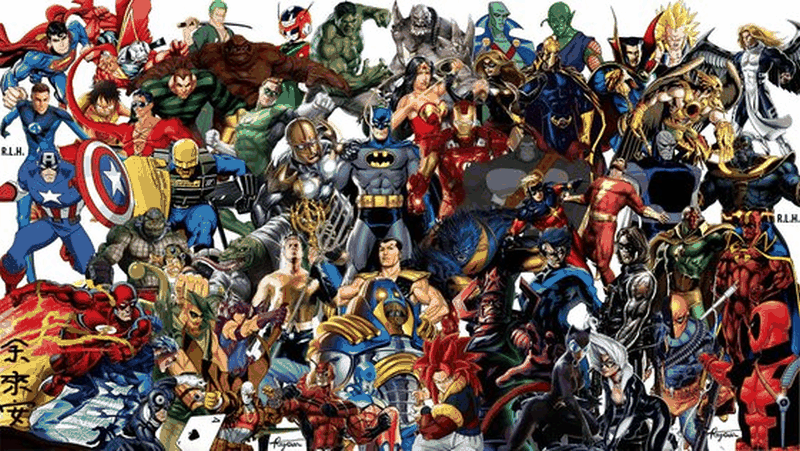
Since we've have a few new releases, I'm rewriting the list as follows:
Iron Man Iron Man 2 Thor Captain America: the First Avenger Hulk (honestly, this one's kind of optional) Avengers Iron Man 3 Thor: the Dark World Captain America: the Winter Soldier Guardians of the Galaxy Avengers: Age of Ultron Ant-Man Guardians of the Galaxy 2 Doctor Strange Thor: Ragnarok Spiderman: Homecoming Black Panther Avengers: Infinity War Ant-Man and the Wasp Captain Marvel So there you go. Every MCU movie you need to see before Endgame comes out. You have three weeks. Enjoy!
2 Comments
DZA Marie's personal favorite romantic subplots in sci-fi and fantasy
Ah, early February. Living in Minnesota, I can see why Hallmark decided this was the prime time to start a romantic holiday: it's too cold outside to do anything other than snuggle with your significant other. (-50 degree windchill. Thanks, climate change.)
Now obviously, in the spirit of the holiday, the next couple of blog posts and this month's video will be relationship-oriented. However, I do not read romance novels. I read romance fanfiction , but in my movies and published novels I vastly prefer hard sci-fi and fantasy. Luckily (or unluckily, as this month's YouTube video will argue) you cannot open an SFF book or movie without there being at least a 95% chance of a romantic subplot popping up. And while most of them are very annoying and have no place in the story at all, some of them are downright adorable. So, I have gathered a list of my personal favorite romantic subplots in the sci-fi, fantasy and superhero genres. They're not really in any particular order, and the biggest qualification is it has to make me go "Awwww" with a bare minimum of eye-rolling. Nakia & T'Challa ( Black Panther )
Most blockbuster movies with romantic subplots--especially superhero movies--tend to either ignore the woman's growth and character development, or make said growth and development all about the love and romance she bares for the hero.
This is not the case with Black Panther . Nakia is a fully fleshed-out badass who doesn't have so much of a narrative arc so much as the moral of, "Bitch, you should have listened to me from the start. Would've saved you a lot of trouble and Killmonger wouldn't have had a chance." Also noteworthy is the fact that, at the time the movie starts, Nakia and T'Challa are exes. And while it's clear that T'Challa still has strong feelings for her, he does not whine and cry about it. They both act like adults, both respect each other, and they have a strong friendship that they then use to re-build their romance. (While they never go into it, I'm pretty sure the break-up came from clashing ideologies and world paths. Nakia wanted to go out and save the world, T'Challa wanted to hide behind his vibranium walls. That's not going to create a very stable relationship.) Rapunzel & Eugene ( Tangled )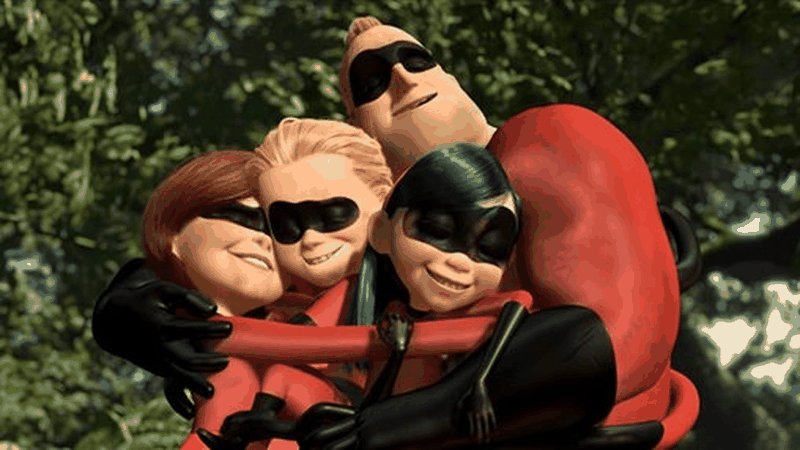
Disney has several really good relationships, especially in recent years: Tiana and Prince Naveen, Kristophe and Anna, Mulan and Captain Shang...but my favorite is Rapunzel and Eugene (a.k.a. Flynn Rider). A lot of it has to do with Eugene's character development. Rapunzel manages to influence and change him into a better person, without going out of her way to "save" him. In fact, no romance starts until most of this change happens. At the same time, Eugene helps and encourages Rapunzel into taking charge of her own destiny.
Then there's the fact that Disney broke its own "married within three days of meeting each other" rule in order to clearly state that Eugene and Rapunzel didn't get married until years after the fact. Rushed marriages rarely work. Cinderella and Prince Charming probably got divorced three months after their wedding. But Rapunzel and Eugene? That's going to last forever. Also, "You were my new dream." *cries* Will Solace & Nico di Angelo ( Percy Jackson series)
Fanart from Kai on Tumblr http://kingofghosts.tumblr.com
This relationship doesn't actually get started until the very, very end of
The Blood of Olympus
(book five in the
Heroes of Olympus
series), and we only see pieces of it in the first
Trials of Apollo
book. It's utterly adorable and one of the few romantic subplots that I really, really want to see more of.
This one gets points for being an LGBT relationship rather than the usual hetero stuff, without it being such a big freaking deal. We find out Nico is gay and had a crush on Percy in House of Hades , both of which he tried to ruthlessly squash down (the kid's from the 1930s, so it was definitely ones of those yikes moments for him). Blood of Olympus is him not only coming to terms with his sexuality, but also coming to terms with who he is as a person. You see, the son of Hades has had it in his head for a long time that nobody likes him, people are scared of him, everyone will be much happier if he just stays away, et cetera. But, by the end of Blood of Olympus , he's come to realize that while some people may be a little scared and even freaked out by him, nobody actually hates him. He can have friends. He can even have a boyfriend. And that's exactly what he gets. Will Solace doesn't get nearly as much character development. He just kind of pops up and calls Nico out on all of his shit, and then enables bad behavior and rule-breaking when they start dating. So if there was one thing I'd change about this relationship, it'd be more insight into Will's frame of mind. Edward & Winry ( Fullmetal Alchemist )
(Please note: I'm going off of the manga and the anime
Fullmetal Alchemist: Brotherhood
. Not the anime that's just
Fullmetal Alchemist.
Yes, they are very different.)
This one is kind of weird. Primarily because, while both characters admit to themselves that they have a crush on the other, they never get to the point where they're actually dating before the end of the story. But while we're not entirely sure how they would act in a romantic relationship with each other, we still get a pretty good idea. Edward would continue to be an obnoxious (short) badass, while Winry would call out his obnoxiousness, fix his metal limb when he breaks it, and also be badass. One of my favorite moments between these two is during Winry's breakdown, when she meets Scar and realizes he was the one who killed her parents. Edward has to stop her from trying to kill him, largely because he knows that she'd never forgive herself for it, even if that execution is arguably well-earned. It's a moment that shows that these two have each other's backs and bring out the best in each other. Tormund & Brienne ( Game of Thrones )
Fun fact: the show's writers never intended for Tormund or Brienne to be interested in each other
at all
. This was purely the actors and how they interacted with each other without any dialogue in season six. The writers saw that and thought, "Welp, guess this is going to be a thing," and wrote it into season seven (and hopefully season eight!).
Tormund is obviously head-over-heels in love with Brienne. She, on the other hand, does not seem to return his affections at all. But I'm really hoping she'll change her mind, and here's why: Brienne has been scorned all her life because she's not beautiful, she's good with weapons, and she doesn't take anyone's shit. She's grown up in a society that idealizes the women who are pretty, demure, obedient, et cetera. Worse, she's learned that any time a man does show interest in her, he's just making fun of her, or (in the case of the books) trying to win a bet. Tormund, on the other hand, did not grow up in that society. In wildling culture (for the most part), the women are encouraged to be big, strong fighters just like the men. No wonder Tormund fell in love at first sight: Brienne is a powerfully-built, amazing fighter who's smart. That is the ideal wildling bride. And hopefully, Brienne will realize that all of the aspects that make southern men hate her are exactly what draws Tormund to her and return his affections. Aang & Katara ( Avatar: the Last Airbender )
I am
not
going to get into the Zutara debate. We're sticking with canon here. (And frankly, I prefer Katara and Zuko as really good friends. He need more friends than girlfriends.)
All of ATLA's relationships (all of ATLA's everything ) are really great: Suki and Sokka, Sokka and Yue, Zuko and Mai...but the one that the writers spent the most time on is, of course, Aang and Katara. For a kids' show (well, "kids' show," just like Pixar is "kids' movies"), their relationship moves at glacial speed, even though it's obvious that Aang's harbored a crush on Katara since the first episode. And while Katara loves him as a friend, she seems pretty oblivious to the romantic side and doesn't seem to reciprocate for a long time. We get a little "did they kiss, they probably kissed" moment in season two, but they don't have a first actual kiss until the Day of Black Sun in season three. And how does Katara react? She slaps the "pause" button like a whack-a-mole because they're in the middle of a war and she doesn't have time for this shit , a decision that Aang--after some minor protest--respects. He doesn't persistently nag her, or keep flirting with her, or spite-date someone else in the hopes that she'll get jealous. He gives her space to work things out, and doesn't make another move until she instigates. Also, in the post-series comics, they call each other sweetie . And my parents call each other sweetie . It's just really cute. Bob & Helen Parr ( The Incredibles )
This relationship is so strong it can handle all of Bob's issues in two consecutive movies. First his overwhelming desire to relive the glory days of his superhero youth, and second his jealousy at Helen being able to do that before him. There's obviously a lot of character development that happens with him--and he would've gotten a divorce at the end of the first movie if there wasn't--but if their relationship and commitment to each other had been any weaker than it was, then they wouldn't have lasted.
Also, these movies get huge props for having the main romantic subplot center around a married couple that have been together for fifteen years. Most romances happen when the two characters are pining for each other and trying to start a relationship, or at the height of "maximum drama" (someone cheated, they just broke up, et cetera). While their relationship has to weather some storms, the relationship itself is not the storm, if that makes sense. There's the minor blip where Helen thinks Bob is cheating on her with Mirage, but for the most part, all the problems they face in The Incredibles and The Incredibles 2 stem from Bob's personal issues and bad guys trying to destroy the world. Which is a good thing, because everyone knows that beating up the villain of the week is great couples' therapy.
What's the best romantic subplot you've ever seen/read in a sci-fi/fantasy/superhero story? Let me know in the comments so I can check it out!
My Favorite SFF Books Read in 2018
Christmas was, of course, last week. If any of you readers are like me, you asked for--and hopefully received!--a lot of books for the holiday this year. Never mind that I'm a Buddhist and don't believe in God or their controversial demigods, I will take any excuse to beg for books. And spend time on family, I guess.
For me personally, 2019 seems to the be the year that I should really consider getting an extra bookshelf rather than just piling all the books in my room. But before we move forward, I thought it would be fun to look back on the best sci-fi and fantasy books I personally read and reviewed in 2018. Note: these are in no particular order. Don't ask me to choose my singular favorite or to even vaguely list them. That'd be like torture. Another note: these are all books that I read in 2018. While some of them did come out this year, some are a few years older. But they're included in this list because it's my blog and therefore follows my rules of time, space, and physics. Enjoy! Throne of Glass Series
The Adventure Zone Graphic Novel
Red Queen
By Fire Above
Trials of Apollo: The Burning Maze
The Nemesis series
Archangel
Lagoon
What were your favorite books from this year? Let me know in the comments so I can add them to my reading list!
Marvel's First Supervillain Movie
So.
Infinity War
. That happened.
Is anyone else still recovering from the shock? It's not just that most characters we thought we going to die--like Steve Rogers and Tony Stark--ended up surviving. Or even that every character we thought would survive--Bucky Barnes, T'Challa, even freaking Peter Parker --ended up dying. It's the fact that the bad guy won . Well, for now. There is still that unnamed Avengers film that comes out in 2019, after Ant-Man and Wasp and Captain Marvel . Because Spider-Man is getting another movie (also in 2019), and Black Panther is getting his sequel, it's safe to say that these two characters--and hopefully a few others--will somehow be resurrected. Speaking of future movies, it will be interesting to see what Thanos's universe looks like in Ant-Man and Wasp and Captain Marvel . Half of the population up in smoke (including Nick Fury; no!), and the world's going to keep on chugging. At least until Tony Stark finally makes it back to Earth, (hopefully) has that final confrontation with Steve Rogers we were all waiting for in Infinity War , and rounds up the remaining Avengers to kick Thanos's ass properly. But let's backtrack. Infinity War is a movie in the superhero genre. That gives the most screen time to the bad guy. That has the bad guy win. This is not a superhero movie. This is a super villain movie. Thanos is the main character, even if he isn't the protagonist; you don't want him to win. But you can't help but empathize him. He's a crazy, genocidal maniac who thinks slaughtering half of the population is the only way to save the universe...and he kind of has the evidence to back it up. His planet was destroyed by overpopulation. He talks about Gamora's home planet, how after he was done killing millions of people no one went to bed hungry, and now "It's a paradise." Too bad he never considered other alternatives to solving the problem, like terraforming other planets for the sole purpose of farming. Because his heart's (mostly) in the right place.
Book description for Nemesis Book One:
Dreadnought
:
Danny Tozer has a problem: she just inherited the powers of Dreadnought, the world’s greatest superhero. Until Dreadnought fell out of the sky and died right in front of her, Danny was trying to keep people from finding out she’s transgender. But before he expired, Dreadnought passed his mantle to her, and those secondhand superpowers transformed Danny’s body into what she’s always thought it should be. Now there’s no hiding that she’s a girl. It should be the happiest time of her life, but Danny’s first weeks finally living in a body that fits her are more difficult and complicated than she could have imagined. Between her father’s dangerous obsession with “curing” her girlhood, her best friend suddenly acting like he’s entitled to date her, and her fellow superheroes arguing over her place in their ranks, Danny feels like she’s in over her head. She doesn’t have time to adjust. Dreadnought’s murderer―a cyborg named Utopia―still haunts the streets of New Port City, threatening destruction. If Danny can’t sort through the confusion of coming out, master her powers, and stop Utopia in time, humanity faces extinction. -- Before I get into this review, I should get into how I came across this series. You know those sitcoms where a bunch of people who barely know each other move into an apartment together, and there’s usually that token gay guy or lesbian? Maybe even someone who’s transgender who lives down the hall? Well, in my apartment of three, I’m the token cis straight girl. One of my roommates doesn’t read much. The other, whom I went to college with and then somehow managed to convince her to move in with me (this being before I knew how much her cat would hate my furniture), is a bigger bookworm than I am. So she’s the one who loaned me Dreadnought . After reading it, I then proceeded to steal book two from her bookshelf before she could read it. I regret nothing! Anyway, going to the review itself, this series is amazing. April Daniels takes a very realistic approach to how supers would operate in the real world, and how they would react to the most powerful, iconic superhero coming out as transgender. All of the characters, even the villains, are intriguing and complicated, making me thirst for more. In fact, that is the only criticism I have of this series. Danny meets a lot of cool characters and fellow superheroes, like Kinetiq, Calamity, Calamity’s ex-supervillain mother, and a handful of others. But we don’t really get into their characters. Which is especially weird for Calamity, who’s Danny’s new best friend and eventual love interest. The cowgirl supersoldier is from a family of supers, and while she mentions the family dynamic a couple of times, we don’t really get a clear picture of it. Like, why exactly are they letting their teenage daughter run around the city and illegally fight crime? Her mother used to be a supervillain: what impact does that have on her? Come to think of it, why does Calamity want to be a superhero so much, anyway? And Kinetiq? We know next to nothing about them, except that they’re Israeli-American and gender non-binary. That’s it. We don’t even get a clear description of their powers! There will be a third book in this series (yay!), so hopefully Daniels will address some of these questions, and show us more of the supporting cast. Of course, the reason Daniels doesn’t spend much time on the other characters is because all of it is centered on the main character, Danny, who is fascinating . There are a lot of reasons to like and sympathize with this character, but her best moments are when she’s either being a sassy sarcastic bitch (like myself), or when she’s having a fangirl moment. Because she is a fangirl, through and through. Imagine a hardcore DC comic book geek who is sucked into the DC Universe and is granted Superman-esque powers. That’s Danny. It’s adorable. All in all, this is a fantastic story with some unique viewpoints on American society regarding gender, sexuality, race, economic class, politics, and pretty much everything else, all mixed together into a delicious smoothie digestible for young adult readers. It’s my favorite kind of book, in that it has amazing characters, an engaging narrative arc, and I was able to learn more about a real group of people different from myself. That is young adult literature at its best. -- I am now on Patreon ! Patreon is similar to crowdfunding, in that multiple people support a cause they love and get free goodies as a result. You can donate as little as one dollar a month, or you can give more and gets loads of cool stuff like sneak peaks and free books. Every penny goes toward giving you more good content. So if you like what you're reading, click here and help me continue to write for you! 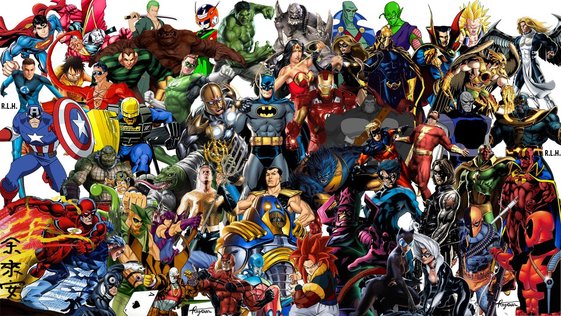
Awesome superheroes are awesome.
Everyone in my family loves superhero movies. In the last ten years we’ve seen almost every one of those blockbusters in theaters. If it’s a Marvel movie, we dutifully sit in the dark for twenty minutes for the end-of-credits scene. When we leave, we geek out in the car and argue over which was the better fight scene.
I loved seeing Steve Rogers get crammed into a tiny elevator with a dozen bad guys and say, “Before we get started, does anyone want to get out?” My heart was broken by Captain America: Civil War and again by Logan . I was enraptured by Heath Ledger’s performance in The Dark Knight . I saw Wonder Woman on opening day and am counting down the hours to Justice League . It doesn’t matter if it’s Marvel or DC. Superhero movies are just awesome. They also destroy young men by promoting toxic masculinity. Whoops! I'm a man-hater.
Before you start blowing up the comments, let me clear up some confusion. Everyone has their own personal definition of what is “masculine” or “feminine.” However, broadly speaking, masculinity is the cultural norm of how men “should” act. It’s
purely a social construct
. What’s considered masculine in China is going to be different from Rwanda, which is different from Brazil. Even within the United States there are differences. For example, the average guy from San Francisco is going to have a different idea of what it means to be a man than a guy from rural Texas.
Masculinity is constantly changing, but it has undergone its most dramatic change in the last few decades. For centuries, Western nations have defined a man’s role as being dominant, aggressive, the provider, the protector, and stoic. Compare this to a woman’s supposed role of being submissive, meek, weak, nurturing, emotional, etc. But with the invention of effective birth control, the women’s rights movement, the work of the LGBT+ community, and now third wave feminism, we’re in a gender limbo of sorts. People of my generation (re: millennials) are having a tough time figuring out the new gender norms . 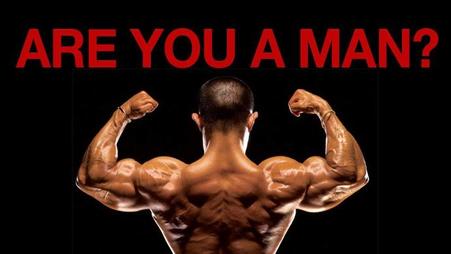
Hmmm...needs more muscle.
With me so far?
Masculinity in and of itself is not a bad thing.
It’s the defining characteristic of most men on the planet. When it’s defined to mean protecting loved ones, taking responsibility, and wearing sexy lumberjack shirts, it’s great (don’t judge me for my lumberjack love; I’m from Minnesota).
Let me repeat: being masculine or feminine is not a bad thing. And, conversely, being both or neither is not a bad thing. They’re just a part of human culture, a way to navigate gender. Most of us incorporate both aspects into our personalities. I use the thin line dividing the two as a jump-rope: my knitting and karate; the mixture of dresses and men’s pants in my wardrobe; my equal love for Metallica, Imagine Dragons, Avril Lavigne, and Florence + the Machine. But like all things, there is a dark side to masculinity. The gross, shadowy corner we’re going to be exploring is called toxic masculinity. What is toxic masculinity, anyway?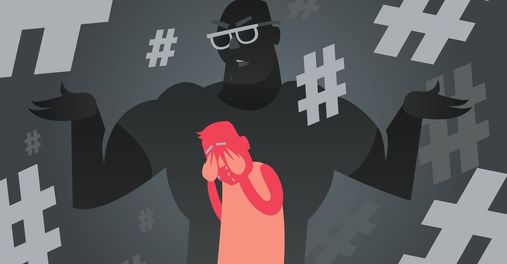
I'm too afraid of what my peers will say if I cry, so I'm going to be an asshole instead.
Toxic masculinity, otherwise known as hypermasculinity, is all the negative traits of what it means to “be a man” boiled together in a thick, nauseating soup. If masculinity is an apple, then toxic masculinity is a rotten apple. This is an excellent definition from
the Good Man Project
:
“ Toxic masculinity is a narrow and repressive description of manhood , designating manhood as defined by violence, sex, status and aggression. It’s the cultural ideal of manliness, where strength is everything while emotions are a weakness; where sex and brutality are yardsticks by which men are measured, while supposedly “feminine” traits – which can range from emotional vulnerability to simply not being hypersexual – are the means by which your status as “man” can be taken away.” Here’s another one from Yan Roblou’s article, “Complex Masculinities: the Superhero in Modern American Movies,” found in Culture, Society & Masculinities, Vol. 4 : “To be ‘masculine’ is not to be ‘feminine’, not to be ‘gay’, not to be tainted with any marks of ‘inferiority’—ethnic or otherwise.” This is the attitude most closely linked to domestic and sexual violence . The idea that emotions are “feminine,” therefore a weakness, is a big contributor to the suicide rate of men , which is three times higher than that of women. It’s the club that has all the “rotten apples” and “not all men, just those men” as members, all those “isolated” incidents that we like to think are just one-offs, when in reality they’re part of a much bigger problem. So what does this have to do with superhero movies?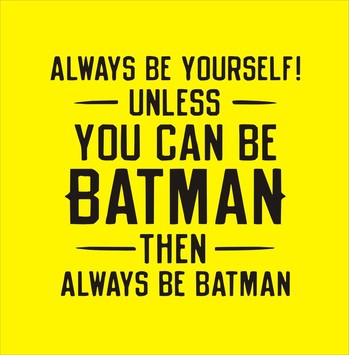
I prefer my parents alive, thank you.
Icons like Captain America and Batman are what set the standard for what it means to “be a man.” They’re our role models, our ideals. How many boys dress up as superheroes for Halloween? How many products read, “Always be Batman?” How many comparisons and compliments are given to men for looking or acting like Superman/Batman/Whateverman?
My recent articles, “Starfleet Miniskirts: Really?” and “How Sexism in Speculative Fiction Contributes to Rape Culture,” received a lot of criticism by men saying that Star Trek , James Bond, and Bruce Wayne are not real, that they’re just movies, so it’s not a big deal. But it is. What we see on screen, we emulate in real life. Hollywood has more power over our cultural and social norms than the White House. If the “ideal man” as seen on TV bottles up his emotions, solves problems with his fists, and interacts with women only for sex, then that’s what the fans are going to do . Don’t believe me? 1980s Ireland had horrible censorship laws, and a writer who grew up in that environment said: “In this fairly bleak landscape there were moments of brilliance that to this day stand out in my mind with crystal clarity. TV programmes that somehow escaped through the web of censorship and repression and talked about difference, love, equality, social justice and inclusion. Almost invariably, these programmes were science fiction, embodying an almost impossible vision of Utopian society and optimism about humanity. Hulk; Spiderman; Batman; Wonder Woman and of course, Star Trek. For better or for worse, my personal ideals and values and social justice dreams were set by utopian science fiction and the superhero genre , and I have never doubted the hugely important power of the media to teach and model.” As much as we try to deny it, we surrender an awful lot of power to our televisions. This is why we need to pay special attention to the messages it sends to us and our kids. Movies that promote toxic masculinity: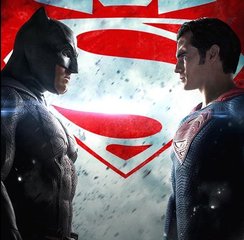
There's no way we can talk this out like rational adults, so we're going to try to kill each other instead.
Marvel and DC teach us that all problems are solved by punching each other in the face:
“A staple of the superhero genre is the tendency to concoct these elaborate scenarios in which the iconic “good guys” end up having to fight each other for some reason or another. This is often framed as a way to resolve their interpersonal issues before they can go beat up the “bad guys” and save the world. Look no further than Hulk’s rampaging brawl with Iron Man in the second Avengers film, or Batman’s upcoming cinematic showdown with Superman. They’re the blockbuster versions of kids arguing in the schoolyard about which superhero would win in a fight. The ultimate macho pissing contest. Who’s the toughest tough guy of them all? This is evidenced by the showcasing of fights between Thor and Iron Man, Bucky Barnes and Captain America, and so on and so forth. Heck, now we even have Kirk and Spock throwing punches at each other on the bridge of the Enterprise in the rebooted Star Trek movie, Starfleet protocols be damned.” ( Pop Culture Detective Agency ) The movies mentioned above (in order) are Avengers: Age of Ultron , Batman v. Superman , The Avengers (2012), and Captain America: the Winter Soldier . We also have the horrible Spider-Man 3 where Peter and Harry have to brawl each other before going after Sandman (I’m sorry, did I just remind everyone that this film exists? My bad). Oh, and there’s Ant-Man . His first interaction with Falcon was a fistfight, after which Sam Wilson apparently decided, “Yeah, he’s cool enough for #TeamCap.” Guardians of the Galaxy is another. All five of them were trying to kill each other before they teamed up to break out of prison. The list goes on. The Dark Knight Trilogy manages to avoid this trope, but it has an arguably worse flaw. Batman is supposed to be untouchable and stoic, being a symbol of justice and awesomeness and whatnot. Bruce Wayne, on the other hand, is a human being. And the only emotions we ever get from him as an adult are anger, occasional dry amusement, and...yeah, that’s it. The rest of the time he’s pretty much emotionless with a resting bitch face. We get one tiny scene of sadness after Rachel’s death (no tears, of course), and that’s it. Other action movies pose the same problem: the Die Hard series, the Fast and Furious franchise, the John Wick movies, etc. These men are getting shot and watching friends get killed before their eyes, yet they only dwell on it for a few seconds before moving on to the next bad guy. The message is loud and clear: if you have a problem, your first reaction should be to kill it, and you’re not allowed to cry, be cutely happy, be afraid, or be anything other than angry. Unless you have a vagina. Movies that fight toxic masculinity:
Always look for the silver lining.
Counter to Batman v. Superman , Captain America: Civil War at least ended on a realistic note. All the problems that started the inter-Avengers war are still there at the end of the movie, and they’re exponentially larger because of the fighting. It also does a much better job of coming up with a reason for why these two otherwise intelligent, adult men would want to beat the crap out of each other, unlike BvS . But even then, the only “acceptable” way to handle the situation as it escalates is anger and violence. Honestly, if Black Panther had done two seconds of research, he would’ve realized there was no way the Winter Soldier would be caught on camera during a mission, and was therefore framed. It’s been argued that Man of Steel takes a small step in the right direction. Earlier versions have Clark Kent erase Lois Lane’s memories whenever she finds out he’s Superman (because, apparently, he can do that?). In this version, however, he does not. He respects her enough and trusts her not to blab to the media, even as she works for the media and is in fact a better reporter than him. More than that, we see Clark get bullied and picked on, both during childhood as well as adulthood. Instead of stomping on those puny mortals to prove he’s tough, he stays rational and deals with it without resorting to violence. Iron Man 3 gave Tony Stark PTSD, which is an incredibly realistic response to trauma. You can’t tell me Hawkeye doesn’t have the same problem after Loki took over his mind. Tony’s breakdowns do not emasculate him. They show us that he’s human. They present a harsh reality that many real people go through and, if anything, they make us respect him more. But the real progress has been Wonder Woman . Granted, it certainly helps that it centers around Diana rather than the male lead, Steve Trevor. But Steve and his peeps are great around their Amazon ally. They help her rather than try to one-up her. Sameer flirts with her, but never crosses that line that separates “playful flirt” from “creep.” Charlie has two PTSD flashbacks, but his friends don’t see him as weak because of it. Even the villain, General Ludendorff, views his female partner Dr. Poison as an equal who deserves respect, and they’re not even romantically involved. What arguably does an even better job than Wonder Woman is Pixar’s The Incredibles (which came out in 2004) . Bob Parr (Mr. Incredible) is an emotional wreck, and it’s completely understandable. He loses the life he loves, has a chance to get it back, gets betrayed, then is told that his entire family is dead. Of course he’s going to break down. And of course he’s going to be remorseful when they’re all taken captive. Later, he tries to convince his wife to stay out of the fight because he’s afraid of losing her again. That plans lasts all of five seconds before the whole family takes down the giant killer robot. Is Mr. Incredible any less of a man for crying over his “dead” family, emotionally apologizing for screwing up, and then working with his wife to save the day? I don’t think so. 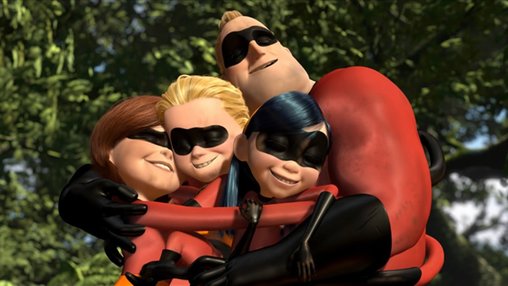
Pixar: showing us how it's done since 1984.
Now what?
Am I suggesting we have our heroes try to talk about their feelings with the Joker, or try to hug it out with Ultron? Of course not. The last time someone tried that with Joker, she ended up as his psychotic girlfriend, and if there weren’t big explosions and epic villain defeats we wouldn’t have these movies in the first place.
The problem is that so many of these male characters are essentially robots. They do all these great things, go through so much trauma, and the vast majority of them don’t even blink. If they do have an emotional response, it’s anger. These are the kinds of characters held as role models to modern men and young boys. Do we really want a twelve-year-old boy scolding his friend for crying because his heroes on screen never shed any tears? Do we want the ten-year-old dressed as Batman for Halloween to try to go through life alternating between emotionlessness and anger? Do we want these boys to learn that the only way to solve their problems is with their fists, or a bomb? Because that’s what they’re learning.
Monday Movies!
Reviews for new movies will be posted on Monday, assuming I can catch them on opening weekend. Minor spoilers for Wonder Woman . 
By now you’ve probably already heard the news:
Wonder Woman
is awesome. Moviegoers can’t stop raving about it. You may have also heard
the very few negative reviews
that focus more on Gal Gadot’s body, or the fact that the film is too “PC” to be a good superhero movie. Luckily, they’re vastly outnumbered.
My greatest concern for the movie when I stepped into the theater was that there would be a romantic subplot. Remember in Batman v. Superman , near the end, Wonder Woman says that “a hundred years ago I turned my back on mankind,” because of the horrible, bloody things we do to each other. Of course, it could actually mean that she turned away because her poor little heart was broken by a boy she liked. Everyone knew that Chris Pine’s character wasn’t going to make it. Would his BAMF death be the shallow reason Wonder Woman turns away from humanity, rather than the gas, the bombs, the disease, and all the other terrible travesties of war? That was my greatest fear. Obviously there is chemistry between Wonder Woman and Chris Pine’s character, the only British spy who does not have a British accent. They do have a short (and, to be perfectly honest, adorable) fling. But thankfully it’s an added bonus, rather than the focus of Diana’s character. We see her go from a fearless newbie who knows nothing about the world to a wiser, powerful superhero. The romance is an important factor in that transformation, but it is far from the only reason she changes. 90% of the movie is on-the-nose gender jokes and slow-motion, 300 -esque fight scenes. In other words, a standard superhero blockbuster. It was a great movie, and one that was long overdue. Wonder Woman was created in 1941, and this is her first-ever live-action, big-screen movie. With Captain Marvel scheduled to come out in 2019, it might be enough to convince Hollywood to make a few more woman-centered superhero movies.
What did you think of
Wonder Woman
?
|
What's This?The first Dragons, Zombies and Aliens blog was started in 2015. Somewhere between college coursework, paying rent with door-to-door sales, and keeping up with my sorority sisters, I wrote reviews, rants and commentaries on books, TV shows, and movies. Now, this blog has moved, improved, and the sky's the limit! Categories
All
Archives
July 2020
|



 RSS Feed