Dragons, Zombies and Aliens
:
The Blog
|
|
|
|
|
C.T. Phipps is a lifelong student of horror, science fiction, and fantasy. An avid tabletop gamer, he discovered this passion led him to write and turned him into a lifelong geek. He is a regular reviewer at The United Federation of Charles and the author of
Agent G
,
Cthulhu Armageddon
,
The Red Room
series,
Lucifer’s Star
,
Straight Outta Fangton
, and
The Supervillainy Saga
.
DZA: You’ve dabbled in almost every speculative fiction genre: horror, urban fantasy, post-apocalyptic, cyberpunk, superhero, etc. Is there any genre that’s your favorite?
C. T. Phipps: I love coloring outside the lines and it's been one of the keys to my success, I think. If you throw enough darts at the wall then you're bound to hit the bullseye eventually. You're also likely to develop a fanbase who is willing to follow you round from multiple fandoms. If I had to say what my favorite genre is, though, I'd probably say humor. No matter which universe I play in, I tend to have a lot of fun making fun of their conventions as well as history. I may not be the Mel Brooks or Terry Pratchett of genre fiction but I do consistently tell a funny yarn. Yes, even my horror novels are funny (See Straight Outta Fangton , Cthulhu Armageddon) . I once referred to Cthulhu Armageddon as my “serious” novel and David Niall Wilson (my publisher) said, “It’s one of the funniest novels I’ve ever read.” What have been some of the greatest inspirations for your work, and why? I have to say the biggest influence to my writing is Joss Whedon, but also Terry Pratchett, Stephen King (his On Writing is something every aspiring writer should check out), George Lucas, H.P. Lovecraft, and plenty of comic book creators. Really, my influences are expansive and myriad like all writers. I think the best influences on my writing are closer to home, though. The first was Jim Bernheimer, indie author of Confessions of a D-List Supervillain , who advocated that I try to write the kind of books I wanted to read versus what I felt would succeed. The second was David Niall Wilson; he introduced me to a lot of tricks that raised the quality of my books considerably. He also showed me how to reach a much larger audience. I credit him with helping turn me from someone dabbling in writing to a writer. Much of your work is indie-published, and all of them digital and audio. Why did you choose to go this route instead of traditional publishing? The market is not what it was twenty years ago and the entire way we interact with books has changed. Amazon and other online booksellers mean that the "shelf life" for books no longer has a set limit as long as you're able to keep it in the public consciousness. Books that went out of print decades ago can stay "in print" on Kindle and in warehouses forever. This has been a big boon to independents, self-published authors, and small presses. Audiobooks have also gone from a joke about "something blind people read" to the preferred method of reading for large chunks of the reading audience. Given the difficulties of making a living as a writer at the best of times, seriously don't quit your day job. Even awesome heroes of mine like Tracy Hickman have struggled to make ends meet. Still, independent publishing is a big chance to take control of your literary financial destiny. I especially got good results working with Crossroad Press. I feel audiobooks, especially, reach an entirely different audience from traditional publishing. A lot of your books are collaborative, working with one or more authors on the same story. What are some of the challenges and benefits of working with another author, and how did you choose who to work with? My experience with co-authors has been mostly positive, but the two I primarily work with--Michael Suttkus and Frank Martin--are both seasoned professionals who have done a great job balancing the workload with me. The trick is to be very clear about what you're going to do and carefully planning each chapter ahead of time. Usually, I alternate with them on the writing while also brainstorming the concepts. If you’re not clear about matters then you can easily run into differences in style, characterization, plot, and ideas. One of the biggest issues I’ve also run into is that it can be very easy to prioritize your own work over collaborations, and that’s unfair to everyone involved. Don’t do that if you decide to collaborate on a book. Let’s talk about your Supervillainy Saga . Most writers, when working in a superhero world, obviously choose a hero or anti-hero as their protagonist. But your main character decides to be a super villain . How did that happen? I felt like I was competing against the past hundred years or so of superhero storytelling. Despite doing this in novel form, I was still competing against the well-trodden storytelling history of comic book history. Instead, I looked for a new angle to explore the superhero-supervillain dichotomy, and it occurred to me that the origin of a supervillain might be an interesting one. I also liked the idea that Gary had a very romantic and idealized idea of what being an superpowered outlaw was in his world--an idea I gradually peeled back. Also, I think having a character gain great powers and deciding to abuse them for his own gain is something that automatically puts the audience in a somewhat sillier mood, which is great for a comedy like the Supervillainy Saga is. I’ve also discovered that I prefer writing antiheroes to straight up good guy characters. Agent G, Cthulhu Armageddon , Lucifer’s Star , and Wraith Knight all star protagonists who lean on the gray side of morality at best. I think it’s a great idea to use characters with extreme emotions and backstories to press the limit of what the audience is comfortable with. I think a lot of us are perfectly willing to go along with heroes who are not lily white and may even do the wrong thing when push comes to shove. You’ve done some editing, too, including the Blackest Spells anthology. What are some of the challenges of editing versus writing? Which do you enjoy more? Editing is my personal bugbear when writing as it's the least creative part of the creative process. However, every author needs to be able to do their own editing if they want to succeed in this business. As much as I advise every author to get a second, third, and fourth pair of eyes for their work--it is something that is fundamentally necessary. But editing anthologies is a different sort of beast. Maybe even fun. I love gathering together people's stories and choosing which ones to publish in things like the Blackest Knights and Blackest Spells books. Of all of your books, which has been the most fun to write? That's a very tough call, as all of my books are fun to write in different ways. If I had to choose I'd have to say The Rules of Supervillainy, I was a Teenage Weredeer , and my upcoming Psycho Killers in Love were my three favorites. The Rules of Supervillainy because it's a zany deconstruction of superhero tropes ranging from the Marvel Cinematic Universe to the so-called Dark Age of Comics. I was a Teenage Weredeer because it's a work that lets me talk about rural America, coming of age drama, and being a misfit in a small community that hits close to home. Psycho Killers in Love just because I'm a huge fan of 80s slashers and I enjoyed deconstructing horror tropes as much as I did superheroes. What can we expect in the future from you? As stated, I have an upcoming book called Psycho Killers in Love which is a loving homage to 80s slashers and horror movies in general. It's the story of the son of an immortal murderer who feels the same compulsion to kill, except he's decided to use it on other slashers because why not. He runs into a lovely Final Girl survivor of another killer's murder spree, now out for revenge. Such a fun pairing. I'll also be releasing The Horror of Supervillainy , which is the last of my "crossover" books for The Supervillainy Saga . Gary Karkofsky has decided to become a superhero and he's terrible at it. However, he gets the chance to prove himself by investigating the kidnapping of a prominent politician's daughter that takes him into a region full of cults, summer camps, mad swamp monsters, and more. It's an homage to 70s horror comics, meaning I'm in a bit of a mood. Finally, there's A Nightmare on Elk Street that is the third and final Bright Falls Mystery book. Jane Doe the Weredeer is invited to provide security on a movie set when the Boogeyman starts menacing her dreams. Is it just a lone monster or is she the center of a plot to take out Bright Falls, Michigan's only protection? Fun-fun!
A huge thank you to C. T. Phipps for taking the time to come to my blog! You can find him on his website
here
.
1 Comment
C. L. Polk
C. L. Polk
is the author of
Witchmark,
which has been nominated for the Nebula, Lambda, Locus, and Aurora, and is the winner of the World Fantasy Award. You can read my review of this stunning debut novel here. Its sequel,
Stormsong
, came out on February 11th.
A huge "thank you" to Polk for taking the time out of her busy schedule to do an interview with me! 
Interview with C. L. Polk
DZA:
Witchmark
and its sequel
Stormsong
take place in a sort of alternate universe where a land very similar to Victorian England has magic. Why did you decide on this particular aesthetic for your world, rather than the more standard settings like contemporary for urban fantasy or medieval for epic fantasy?
Polk: Honestly? It was the architecture. I am enamored with the aesthetic of city streets from the beginning of the 20th century. I was thinking about New York and Chicago streets - about how these buildings were getting taller, and the attention to the little details. I kept imagining a city with buildings like the Flatiron in New York - that look was what I wanted. How long did it take you to write Witchmark , and what were the challenges you faced in getting it published? I don’t really know how to begin counting. I had let the idea for the book percolate for a few months, and then I wrote a ragged, skeletal first draft in about six weeks in the late summer of 2014. I set it aside for a long while before I revised it, and I didn’t start looking for an agent to represent me until 2016. As for challenges, I think I had it pretty easy. I had to send out queries and wait, and that was all I had to do. Witchmark ’s main character, Dr. Miles Singer, made quite a mess at the end of the novel. The sequel Stormsong is going to be about his sister Grace dealing with the fallout. Why did you decide to change your POV character, and what unique challenges can we expect Grace to face? Well, Miles was in no shape to run around and protag, and I couldn’t see myself skipping to a point where he had recovered sufficiently to run up four flights of stairs and get into bicycle chases. I had to pass the POV torch to someone else - and Grace was the person who made sense. There’s potential for a great deal of political upheaval, and this is what Grace was raised to do--she’s just doing it in the middle of a great disillusionment. She thought her efforts were protecting and enriching the people of Aeland, and now she has to figure out how to put out multiple fires while her worldview has been completely shaken. I found Grace’s arc to be rather interesting in Witchmark . She starts the story thinking she’s an ally to people like her brother Miles, only to realize that she’s really not . Since throwing magic at the problem isn’t feasible in our world, how do you think we should handle fake allies like Grace in our lives? It’s a difficult question, really. There is so much psychic shielding and base misinformation that people learn to swaddle themselves with that makes it so difficult to break out of. It’s a horrible thing to wonder, “Am I wrong? Am I not the good person I think I am?” What if you aren’t? Goodness, how wretched it would be if you weren’t. And so pointing out that an action or behavior is racist, or homophobic, or ableist is often taken at an insult that attacks a person’s core moral vision of themselves. It’s genuinely frightening to consider, and so a lot of people will retreat back into that cocoon of ignorance and good intentions and flee the feelings (and the people) who upset them. It’s safe in there. It’s a hard prison to escape. I get it. But when it comes to dealing with people who are still centered on a fragile morality, I think that while everyone deserves your compassion, not everyone deserves your energy. I’m more concerned with the people who are actually oppressed than I am the people who are simply scared of what they’ll see in the mirror. Would I like them to change? Yes. But I have to conserve my efforts. So I will spare what I have left over for the people who are fighting, and learning, and facing the mirror. Most of that is writing stories that I hope lead people to think about their own lives and their own struggles to put hope and justice into the world. In Witchmark , you primarily go after two major themes: classism and mental health. In addition to The Kingston Cycle , you also have The Midnight Bargain coming out in Fall 2020, a fantasy novel that deals with reproductive rights, another major issue. Obviously these are very pressing and polarizing matters in the real world today. How do you use fantasy to contextualize these issues, and what are you hoping to communicate in these stories? Really, I’m just angry about these issues. I cannot believe we still have to battle every day for the most basic right to control your own body just because it happens to have a uterus. But in 2019 I was thinking about some of the unspoken implications of a magic system where the ability is inborn and hereditary. I barely brushed on it in Witchmark , but I started seriously thinking about what happens to people who are equipped to carry children through a pregnancy in a world where magical ability is inherited from the parents - and it made the top of my head hot. How much autonomy, how much agency would child-bearing people have in that kind of world? But I can’t just talk about that. I need a story. And so I took one of my favorite tropes, the springtime social season of London from regency and historical romance, and used that as the structural ticking clock that pushes Beatrice in her dilemma between choosing to scandalize society by becoming a magician, or denying her most heartfelt desire for magic by marrying the man she loves. Both Witchmark and Stormsong feature LGBTQ+ characters and same-sex relationships as their romantic subplots. What do you say to critics who argue that incorporating same-sex romance limits your audience, and/or alienates the conservative half of your readership? That criticism assumes a lot. In truth, I don’t have a conservative readership. They don’t want to read what I’m doing, so why exactly should I give a moment’s thought to people who aren’t going to like my stories anyway? And why should I shelve the things that I care about and want to express in my writing to pander to people who don’t like me regardless? People who don’t want to read queer feminist SFF are not on my list of people who need my labor. I like my limited audience. My energy is for them. And some of them might like one book I write, but not another, and that is fine. I know some people aren’t going to be as jazzed about The Midnight Bargain because the romance is cishet. That’s okay. Catch the next one if you feel like it; I’ll have more soon. What are some of the challenges you’ve faced in writing a sequel, and are you planning on writing any more books in The Kingston Cycle ? Writing Stormsong was the most difficult thing I’ve ever done (please remember that I don’t have kids and I never went to grad school, so those might be harder, I don’t know.) When I was writing my fanfics and Witchmark , I was just me: some woman with a copy of Scrivener and a complex, all-consuming vision in her head. There wasn’t anyone checking for me. I was nobody. I had perfect freedom. And then suddenly, there I am, trying to write a book to follow the surprising reaction people had to Witchmark , and suddenly I’m thinking about audience. About critics. About how I was writing a character some people loathed from Witchmark as the protagonist of Stormsong , and how that was going to be a hard sell. Those thoughts took up room in my head that I really needed for storytelling, distracted me from the art to yell about the commerce, and I had to do it all on a deadline. I cried a lot. I went to therapy and cried. I went to my writer’s group and cried. I managed to write the book, though. And I don’t think any other book is going to be such a perfect storm of stress and anxiety. I got through the ordeal, and no other book is going to be a stress-fest like that again. but I wrote The Midnight Bargain because I really wanted to return to that feeling of just being a writer with an idea that was without any expectations or pressure or deadlines. It rejuvenated me. I will probably sneak around on my obligations with a secret book idea again. As for Kingston , there is one more book. I passed the POV torch again, and Robin Thorpe is the protagonist who wraps up the series in Soulstar . In addition to Witchmark , you also have a blog to help other writers with their projects. Can you tell us how that got started? Oh, I should really update that ! I started writing blog posts on writing craft because I’m a craft nerd. I like to talk about the craft of writing just as much as I like writing, and sometimes when I get going, I wind up with a gigantic essay and I take the answer and put it on my blog. I haven’t done it in a while, though. You live in Canada. As someone who lives in Minnesota, I must ask: why? I live in an area of Canada that doesn’t get the kind of winter Minnesota gets. I don’t know if they call it an Alberta Clipper down there like they do in Manitoba, but that bone-chilling, nostril-freezing cold wind from the west? It starts as a warm wind here. Yeah. Sorry. And the geese? Yeah. Sorry about those too. 
Margret Treiber resides in Southwest Florida and is employed as a Systems Analyst. When she is not working with technology and writing speculative fiction, she helps her birds break things for her spouse to fix.
Her short fiction has appeared in a number of publications. Links to her short fiction, novel and upcoming work can be found on her website at http://www.the-margret.com . Interview with Margaret Treiber
What cool and exciting things have been happening in your life recently?
I was fortunate enough to be included in the anthology Challenge Accepted: A Charity Anthology which benefits the Special Olympics. Is your recent book part of a series? If so, can you tell us a bit about where the story is heading? My lasted collection, "Japanese Robots Love to Dance" is a rough prequel to "Sleepy Time for Captain Eris." The stories take place in a fairly dystopian near-future with superpowered individuals and a few AIs. I plan to add more stories and characters in future installments. Most of my characters are flawed antiheroes. Can you tell us about what you're currently working on? Currently, I'm working on a novel which I can't identify. What I mean is that this thing built up in my head, until I had no choice to write it. I'm not sure what it is, but it takes place in a space fleet with strange undisciplined people. I'm in editing now. Maybe I'll figure it out soon. Do you write under a pen name? If so, can you tell us why? Nope, well, er, I do have one I once wrote cell phone porn under. Yeah, I figured it needed to exist. It's called "Your Outlet or Mine." It's pretty bad. Have you ever written characters that you truly despise? Why or why not? Nope. I write complicated broken people. Some I really don't like, but I have pity on them. They all have reason for being asshats. What do you like best about the books you read? What do you like least? I like humor, sympathetic characters, and plots that don't make me want to kill myself at the end. I can appreciate a bad ending, but I don't like feeling worse about life than my baseline if I can avoid it. What is your biggest pet peeve in storytelling? Present tense and third person narration. Really? I'll steer you clear of my Homestead Hunts stories, then... Were you “born to write” or did you discover your passion for writing later in life? I started as a kid, wrote through college, quit in my twenties and started again in my late forties. I lost a lot of time. Where did the idea of your story come from? Some weird place in my head. All of a sudden, something generates in my consciousness and won't stop screaming at me until I write it. I'll get very depressed if I'm unable to get it out, but then I feel really empty after I do. What did you edit out of your book? Usually the smut. I write it. It embarrasses me. I take it out. If you were to write a non-fiction book, what might it be about? Why? Not clicking on things in email and pissing off your IT department. Are you an early bird writer or night owl? And do you have any must haves like coffee, chocolates, wine, music or something else required for your creative process? I'm an "anytime I can fit it in" kind of writer. As long as people don't screw with me, I can write almost anywhere. All I need is a comfortable word processor and keyboard. But there is a high incidence of people screwing with me. I also can't write when I'm sleeping. I can come up with plots in my sleep though. Do you have complete control over your characters or do they ever control you? It's a mixed bag. Some of them are me. A lot of authors are frustrated by readers who don’t understand how important reviews are. What would you say to a reader who doesn’t think his or her review matters? It's like getting a bad review at work by your boss. Your career can be sunk and as a result, you make less money and your reputation suffers. Only in this scenario, everyone on the internet is that boss who can destroy your career. What kind of impact do you want your book(s) to have on readers? I want them to be entertained. I don't expect them to achieve enlightenment or personal growth. I just would like them to enjoy the read. What, in your opinion, is the worst mistake an author can make? Give up. Hold onto your dream. Do you have any advice for new authors? Prepare for rejection, but know we all suffer through it. 
If you could have a dinner with one fictional person, who would it be? Why?
Kahn, because I suddenly feel fatigued. If you could go to any fictional world, where would you go? Why? The "Venture Brothers" universe. I belong there and would hench for life. If you could have one (real life) skill that you don’t currently have, what would it be? Why? How would you use it? Being fearless. I let my fears hold me back too much. If I were fearless, I would take more chances and achieve my goals or fail with grace. If you could have one magical ability/superpower, what would it be? How would you use it? There are so many good ones. Definitely NOT telepathy. Yuck. Flight's cool but so limited. Super strength/invulnerability, awesome, but not me. Maybe something like telekinesis. I think I would dig smacking people with random objects. What might we be surprised to know about you? I don't have a police record. What are three things you think we can all do to make the world a better place? 1) Don't be asses to our people. Remember their life is as shitty as yours is. 2) Give people the benefit of the doubt. They may not have meant to obnoxious. 3) Feed your coworkers. They are hungry. What creature is better: dragons, zombies, or aliens? Definitely aliens. Dragons hang out with stupid elves and zombies need a freakin clue.
Cameron Johnston lives in Glasgow, Scotland, with his wife and an extremely fluffy cat. He's the author of the fantasy novel
The Traitor God
and its recent sequel
God of Broken Things
. He is an enthusiast of archaeology, history and mythology, a builder of LEGO and owns far too many books to fit on his shelves. He loves exploring ancient sites and camping out under the stars by a roaring fire.
Interview with Cameron Johnston
What cool and exciting things have been happening in your life recently?
It’s been less than a year since my debut novel, The Traitor God , came out so that’s still a fresh, exciting and only mildly terrifying ongoing adventure. The sequel, God of Broken Things , is done and dusted and came out in June, so I’m very excited and nervous about the reception for that. On less writer-related things, I’ve been taking some blacksmithing lessons recently and so far I have forged a coat hook, a toasting fork, a bottle opener and a letter opener – it’s hard work but oh so much fun, and it turns out that hammering hot and sparking metal into shape really helps to relieve stress. As a history and archaeology fan, I’m also excited to be taking part in my second archaeological dig, this time helping out at an old churchyard filled with Viking graves. Luckily old bones don’t bother me in the slightest. How the hell is your ordinary life more exciting than your fantasy books? That's cheating. You're cheating. Is your recent book part of a series? If so, can you tell us a bit about where the story is heading? My first book, The Traitor God , came out last year and I was over the moon about the reception. God of Broken Things will finish off that duology by continuing on a few months after the devastating events of the first book with the discovery of why the ancient city of Setharis was attacked in the first place, and the secret of what really lies buried beneath the city. The threat is far from over, as that poor bastard Edrin Walker will discover... Have you ever written characters that you truly despise? Why or why not? I’m not sure I could ever despise one of my characters. Evil and twisted characters are some of the most fun to write, their malice positively oozing out over the page like a black inky stain. It’s even more fun if they get their comeuppance in some way later on. I can vividly imagine JK Rowling cackling away madly as she wrote Dolores Umbridge, knowing that the readers would utterly despise her in every way. That said, there are some awful acts that I would really not relish writing about, but fortunately I’ve never had to venture there with a character thus far, and probably never will. What is your biggest pet peeve in storytelling? I’ve read a few novels where the author does not give their readers enough credit. They are not stupid and don’t need to be constantly hand-fed long detailed descriptions of everything from belt buckles to weave of a dress - we do have imagination! Readers will remember things said previously, they will see through any deus ex machina plot device that appears from nowhere to save the day and they will not be impressed by the convoluted logic leaps used to justify it. Were you “born to write” or did you discover your passion for writing later in life? I was always creating my own stories and epic narratives when playing with toys (Transformers and LEGO were my big things), and I was always a library kid coming home with armfuls of books, so I suppose it came as no great surprise when I started to write things myself in and out of school. Despite many false starts and short stories and isolated scenes, I never really got past the beginning of a novel until my mid-twenties at which point I decided to do it properly and worked hard to finish my first full length novel. You will never see that novel, thankfully, but I did learn a lot and it stoked my creative fires that burn high today. What did you edit out of your book? Hah, mostly bad jokes, many of which amused me greatly but were far too obscure for readers. I did keep a whole bunch in though. I also had a lovely chapter featuring a tavern scene with some old drunkard locals that was packed full of flavour as they imparted some relevant information to the main character – alas my editor pointed out I could replace that entire chapter with a single paragraph in the previous chapter so I couldn’t really justify keeping it to myself when I really thought about it. Goodbye Jack and Bernard and the story of the pirate pickled in his own rum... Where did the idea of your story come from? I wanted to mix things up and write a short story that borrowed heavily from film noir: a swords and sorcery detective yarn featuring a magic user protagonist. That story, Head Games , just flowed out and the world and character came right along with it. That world was still a little rough around the edges but the idea seized me and demanded a full novel. The concept, world and character evolved with the novel of course, and it became something quite different to the origins in that short story. A lot of authors are frustrated by readers who don’t understand how important reviews are. What would you say to a reader who doesn’t think his or her review matters? That may be true of the big-name authors with hundreds of thousands or millions of readers, but for us little guys it can mean so much, especially for a newer novel. Hardly any people leave ratings or reviews, so when you don’t have huge numbers of readers to draw upon, that means our books can sometimes acquire a decent number of reviews very slowly. Even a little one-minute “I really enjoyed this” left can really help a book’s visibility with sites like Amazon’s algorithms and helps to persuade other readers to give it a shot. What kind of impact do you want your book(s) to have on readers? The most important thing for me is just to be entertaining, to take the reader into another world and show them things both wondrous and horrifying, to allow them to experience the sights and smells of another place that rears large in their imagination. And hopefully, to make them feel something: a character’s pain and anger, or perhaps a tender moment of loss and yearning, the lingering pang of a bittersweet victory...but mostly I just hope they have a good time reading it. Also, a nice reader who happens to be a movie exec looking to make a big-budget fantasy film would be very nice...well, I can dream! What, in your opinion, is the worst mistake an author can make? Writers are usually our own worst critics, and it’s easy to fall into doom and gloom and think everything you do is rubbish. I’ve read amazing things from some great writers who thought their work was awful, and I’m there shaking my head in bewilderment. Take some time out to recharge, or work on something else until you get back in the groove. Don’t succumb to that self-doubt and know it for what it is: something most of us feel at times. Do you have any advice for new authors? I would suggest you take all writing advice with a pinch of salt. There are so many ‘rules’ out there I’m happy to throw out the window. My general advice would be to just sit down and write, and to try and finish what you start – that’s how you learn how each of us writes and what works for you as an individual, since no two writers have the same method. Don’t worry if the story is coming out bad, wonky or clunky – the main thing is to keep the momentum going instead of getting bogged down in endless edits. So many first drafts are rough. Once you are done, revise, edit and polish it until it sparkles. For me, I wrote two whole unpublishable novels, then worked on short stories to learn self-editing and more skills - it’s much easier to discard a poor short story than a whole novel. Only once I felt I’d improved did I start writing novels again. It’s a craft, and much of it can be learned by anybody if they work at it. Beta readers or critique partners are invaluable with the learning process, and communities like AbsoluteWrite forums are an amazing resource I recommend to all writers at all levels of experience. 
If you could go to any fictional world, where would you go? Why?
Middle Earth – I really want to find out how Mordor’s infrastructure can support so many orcs. I mean, it’s a barren land...where do they get their crops and food from? I really want to know...and also, I would love to find out what happened to the Entwives. If you could have one (real life) skill that you don’t currently have, what would it be? Why? How would you use it? It would be nice to be a skilled musician - the flute or harp perhaps. It's something that I think would give me a lot of joy, but it's a shame I'm about as musical as a brick. Well, not entirely true, I was at the heady heights of 'barely adequate' with the recorder back in school... If you could have one magical ability/superpower, what would it be? How would you use it? It's probably one of the more a common ones - the ability to fly. Not only does it have all the practical applications of avoiding traffic, getting from A to B with ease, avoiding stairs etc, but it would allow me to see the world from an entirely new perspective. There's many a time I've seen a picturesque hill and wished I could just pop up to enjoy the view without embarking on a whole expedition up on foot, and who wouldn’t like to trail their hands through clouds as they lazily drift through. What is your Hogwarts House and why? I'd like to say Slytherin, because they are always getting crapped on with last-minute bullshit points awards and could do with a hand - it's no wonder they are all so bitter about it. Realistically I would probably be in Ravenclaw since I love learning and knowledge and don’t care much for quidditch shenanigans. What creature is better: dragons, zombies, or aliens? Aliens. Because they would have the technology to create dragons if they wanted to, and that's just cool. Check out Cameron's website , Facebook , and Twitter .
Laura Kehoe is a fantasy author from Washington State. When she isn't writing, she loves to read, snuggle with furry creatures, and drink copious amounts of coffee and tea.
Interview with Laura Kehoe
Can you tell us about what you're currently working on?
My current project is a fantasy novel, with portals and magic, and possibly dragons. I have just finished the general outline, so it will be a bit before the book is anywhere close to ready. But I think it could turn out really cool! Do you write under a pen name? If so, can you tell us why? Sort of. I started publishing books before I was married, so I used my maiden name. Even though my real last name is different now, I didn’t want to confuse anyone by changing my author name, so I stuck with Kehoe. What do you like best about the books you read? What do you like least? I love seeing what other creative minds come up with, especially when it comes to world-building. It’s so much fun to see what other crazy, exciting ideas are out there in the world. One of the things I like the least, however, is when characters are flat and uninteresting. If I don’t care about any of the characters, no matter how good the plot and world-building are, I most likely won’t like the book. Were you “born to write” or did you discover your passion for writing later in life? I do feel like I was “born to write.” Ever since I learned how to form cohesive sentences, I have been making up stories for myself and, later on, for other people. Where did the idea of your story come from? My books, Royal Thief and Redemption , were inspired from a mix of a couple different stories. The biggest influences were Christopher Paolini’s Inheritance series and Les Misérables . Do you have complete control over your characters or do they ever control you? It’s definitely a mix of both! When I talk to my non-writer friends and mention that my characters have minds of their own, my friends think I’m crazy! But it’s true that sometimes you can’t help following where a character leads you. A lot of authors are frustrated by readers who don’t understand how important reviews are. What would you say to a reader who doesn’t think his or her review matters? Reviews are incredibly important! I know a lot of people don’t get that, but to them I would say that reviews are the best way for other readers to learn about a book. Some sites, like Amazon, will give priority to books with a certain number of reviews, but even if that’s not the case, a review can give potential readers a glimpse into what exactly the book is like. They really are one of the most important tools a writer can have. What, in your opinion, is the worst mistake an author can make? I think one of the worse mistakes an author can make is writing a book they hate. Sometimes authors will write a book they aren’t interested in, but that they think readers will want to read, or are encouraged to write a book for some other reason. But I think in most cases, the author’s disinterest or dislike shows through in their book. And if they don’t like the book, how can a reader be expected to? Do you have any advice for new authors? I’m by no means an expert on writing, but one of the best pieces of advice I ever received is keep writing. What I mean is, even when you feel stuck, or when you can’t think of anything good to write, just write something. First drafts are supposed to be kind of bad. You can always edit things later when you go back through your work. 
If you could go to any fictional world, where would you go? Why?
I know it’s cliché, but I’m going to have to go with Middle Earth. Ever since I was a little girl, I have dreamt of traipsing through The Shire, exploring the magical forests of Lothlórien, and just going all over that land. It all seems so magical. I’d go just to hang out with Eowyn. If you could have one magical ability/superpower, what would it be? How would you use it? There are a lot of superpowers and magic abilities I wish I had! But I think the one I want the most is invisibility. I think it would be so fun to just watch people go about their lives without anyone judging me for staring too long at complete strangers. (I promise I’m not a stalker). Plus then I could get some quality, uninterrupted reading time without trouble! What is your Hogwarts House and why? I’m not at all embarrassed to say I’ve spent a bit of time thinking about this question! I have waffled between Hufflepuff and Ravenclaw, but I think I lean more towards Hufflepuff. Saaame! What creature is better: dragons, zombies, or aliens? That’s such a tough one! I have always loved dragons and aliens, but if I had to choose one above the other, I have to go with dragons.
Last month, I reviewed the grimdark historical fantasy book
The Wolf in the Whale
, which combines Inuit and Norse mythology and stars a gender non-binary character. This week, I got to interview the author, Jordanna Max Brodsky.
Interview with Jordanna Max Brodsky
You’ve written a lot of stories based on ancient mythology. What inspired your interest in that?
Like so many people, my first exposure to mythology came with D’Aulaires Greek Myths when I was a kid. One of the last pages shows a nighttime scene of broken columns and toppled statues and reads, “All things must come to an end. So too did the reign of the Olympians.” I always found that heartbreaking. But the beauty of writing is that you can create the world you want, not the one you have, so I decided to imagine a universe in which the gods hadn’t all died out after all. That became the Olympus Bound series. Once you start writing about mythology, it’s hard to stop. Most fantasy authors have to construct their worlds from scratch, but myth provides settings, costumes, ancient languages, poetry, legends, and religions. I didn’t need to invent places like Nunavut or Iceland or Athens—I could actually visit them. Yet, myths that exist in so many different versions that there’s plenty of room to find your own stories as well. The gods themselves, whether or Inuit or Norse or Greek, are quite different from our amorphous modern conceptions of the divine. They’re capable of supernatural feats but still profoundly human: full of rage, despair, love, jealousy, and laughter. It’s a fascinating paradox, the same one that draws us to superhero movies. At the same time, there’s a reason humanity has retold myths for so long. They touch on themes as compelling today as they were a thousand years ago: loyalty and betrayal, metamorphoses and murder, family and exile. Can you tell us about what you’re currently working on? I’m experiencing an authorial evolution. The Olympus Bound series is contemporary fantasy, a Percy-Jackson-for-adults thriller about the Greek goddess Artemis in the modern day. The Wolf in the Whale moved into historical fantasy, exploring both Inuit and Norse myth in their ancient context. Now I’m embarking on my first purely historical fiction project, with no fantasy in sight. But I’m still focusing on the challenges that women face when they defy their culture’s norms. The new book is set during the Civil War, and it follows an Irish immigrant who disguises her gender to enlist in the Union Army. It’s inspired by the true stories of hundreds of women who did the same thing, the vast majority of whom have been forgotten by history. There are unfortunately very, very few SFF stories that star a trans/non-binary character. Was making Omat, the main character in The Wolf in the Whale , trans/non-binary a conscious decision to combat this, or was it just a natural happenstance? Omat’s gender was actually one of the reasons I chose to write about Inuit culture in the first place. In the historical record, most of the conflicts during the Viking expeditions to North America occurred between Norsemen and the Beothuk Indians. There’s only a brief reference in one saga to a group who were likely Inuit. But that one evocative verse led me to start researching Inuit culture, and as soon as I learned about their conception of what scholars call the “Third Sex,” I knew I had my protagonist. It’s an identity that is not exactly the same as what we call transgender. Instead, Inuit children in traditional culture possess the name-soul of an ancestor. In rare occasions, the child was then raised in that ancestor’s gender, even if it didn’t correlate to their biological sex. This is something decided at birth by the shaman and the community, not an understanding that the child themselves comes to at some point later in life. To me, The Wolf in the Whale is more a story about an individual who wants to defy gender roles—the same way strong women have been doing forever—than it is about being specifically transgender. Perhaps gender non-binary is a more appropriate term for my protagonist, as Omat definitely lives in both genders, but it, too, implies a modern conception that isn’t entirely applicable to this ancient story. At the end of the day, I simply hope that The Wolf in the Whale can serve as yet another reminder that our understanding of gender and sexuality is infinitely varied and constantly evolving. Inuit and Norse mythology are two things that usually don’t mix. Why did you decide to bring them together in The Wolf in the Whale ? I’m always fascinated by the forgotten moments in history. Too often, we only learn the same few fundamental stories in school—America’s founding myths, you might say—and we forget that other cultures lived in this land long before our own. Few people even remember that the Norse “discovered” America five hundred years before Columbus. Even fewer know that one of the leaders of those Norse expeditions was a woman—Leif Eriksson’s sister, Freydis Eriksdottir. And almost no one talks about the fact that the Norse settlement eventually failed in part because the indigenous people, including Inuit hunters, successfully fought them off. Once I knew I wanted to write about the Norse and the Inuit, pairing their mythologies seemed only natural. Because both cultures evolved in similar maritime Arctic environments, their stories have some striking similarities. Both see the Sun as female and the Moon as male, an inversion of the Classical tropes. And both are full of ravens, wolves, and sea monsters. One fought with iron, the other with bone and slate, but these two parallel cultures make both well-matched adversaries and surprising allies. You’ve done a lot of traveling in order to research for your stories. What are some of the favorite places you’ve visited? For pure, unadulterated pleasure, I’d have to pick Crete, which I visited when researching Artemis’s ancient sacred sites for The Immortals and the Olympus Bound series. It’s hard to beat crystalline lagoons, pine-scented gorges, and the original Labyrinth. But for sheer awe, I’d go with Nunavut in subarctic Canada, where I traveled last year for The Wolf in the Whale . Granted, the temperature was near forty below with the wind chill, but watching the Northern Lights shimmer overhead in a psychedelic ballet of orange and purple and green made me forget the cold. I learned things on that trip that I didn’t realize I didn’t know. The Internet can show you how to construct an iglu, but it’s not until I actually snowmobiled onto the sea ice to build one with an Inuit elder that I appreciated the view from inside—like a perfect spiraled sea shell, with each snow block limned in sunlight. I’d watched half a dozen videos on lighting a traditional Inuit oil lamp, but never smelled the nutty, soothing scent of the burning moss wick, nor known the pleasure of staring into the steady mountain peaks of flame. The Wolf in the Whale examines sexual violence, but not just from the survivor’s side, it also explores the guilt and impact of the perpetrators of sexual violence. Why is that? I know many readers would prefer not to read about sexual violence, and I completely respect that position. For this particular book, however, I wanted to acknowledge that sexual violence was (and is) very much a part of many women’s lives—especially in the medieval world when their bodies and rights were even less valued than they are today. The fundamental Inuit myth I explore in the book—the formation of the Sun and the Moon—centers on an incestuous rape, so sexual violence necessarily plays a role in the larger story. When creating my male Viking protagonist, I definitely toyed with the idea of making him a pure soul who completely defied the stereotype of a raping marauder. But it simply didn’t ring true. Not all Norsemen were Vikings (a point I make clear in the book), but those that were certainly showed little mercy to the villages they attacked. They regularly took women as slaves and concubines. To ignore that fact was to ignore reality. So I decided the more interesting choice was to try to understand how a culture can teach a man to be a predator—and then to explore how he can come back from that. If you could have one (real life) skill that you don’t currently have, what would it be? Why? How would you use it? The ability to type for more than two hours at a time. Since writing my thesis in college, I’ve been plagued by tendonitis in my hands and wrists, making typing for long periods quite painful. I would write far faster if I could write for longer each day. So a note for aspiring authors: get yourself an ergonomic typing setup and keep stretching! You don’t want to wind up like me! Who in your life has truly inspired you? Juliet Marillier. Her Daughter of the Forest is what made me become a writer in the first place. I found that book so profoundly engrossing and emotionally gut-wrenching that I knew I had to try my hand at creating a world that could do the same for other readers. What creature is better: dragons, zombies, or aliens? Definitely aliens. Dragons and zombies, I’m afraid, just don’t exist. The fact that aliens actually might makes them infinitely more fascinating to me. I prefer to work reality into my fantasy. Also, since there’s nothing to say that aliens can’t take the form of zombies or dragons, you can have your cake and eat it too!
A big thank-you to Jordanna for coming onto my blog for this interview! Check out
my review
for her book
The Wolf in the Whale
. And I don't know about you guys, but I'm adding the Olympus Bound series to my Amazon wish list.
A.R. Kavli is an author, gamer, historical fencing student, and second-generation U.S. Navy veteran. His earliest published works were writing sci-fi and fantasy for gaming companies. He currently lives in middle Tennessee with his wife and four children.
Interview with A. R. Kavli
Can you tell us about what you're currently working on?
I’m releasing a new book in a couple of months, With Our Dying Breath . If it had actually sold a few copies the first time around, I guess I would call it a re-release. I published it initially in 2016, but in 2018 I decided to take my author career more seriously and try to do things right. I hired an editor and basically rewrote the whole thing. The beta read finished at the end of February and I’ll do the final revision and release soon. I’ve also started getting into audio voice over narration and production. I’ve recorded some of my short stories with the idea being to practice and eventually produce my own audiobooks. There are some good online courses out there and I’m still learning, but I’m enjoying the process. I started just as a way to do some content marketing, but I’m really enjoying it! Or maybe I just like to hear myself speak. I’ll eventually be offering the short stories and audio shorts as content for a Patreon page, which is almost ready to launch. And I’m working on the marketing things. I’m learning about email lists, updating my author webpage, and I still need to get a more professional author photo made. Just in case an interviewer needs one for her blog or something. Ah. All the "fun" parts of being a writer. Welcome to the business, friend. Do you write under a pen name? If so, can you tell us why? I now write as A.R. Kavli, which isn’t exactly a pen name I suppose, but I did have to update my titles and Amazon page to reflect the change. In the course of learning the marketing side of things, including search engine optimization, I realized how many people misspell “Aaron.” Even people who’ve known me a long time write Arron or Erin. That comedy skit with the teacher shouting “Ay-Ay-Ron” hasn’t helped as much as I’d hoped it would. Using initials has other benefits too when facing possible reader biases. There are a couple of schools of thought about pen names and writing across genres. I’d like to write some historical fiction in connection to my study of Renaissance fencing and some would advise to use a pen name. If I decide to go that route, I do have a pretty cool name picked out, but I’m keeping it secret for now. Have you ever written characters that you truly despise? Why or why not? Not really. I don’t avoid writing despicable characters, but I try to write most characters—even those that do despicable things—as also being relatable on some level. That doesn’t mean they get a pass though. A well-written character can touch the monster inside all of us and we can even relate to that sometimes. What do you like best about the books you read? What do you like least? I like believable, well-written characters. And to me, any genre can have them. Even the pulpy, action-adventure stories can afford to have good characters. Generally speaking, if the characters aren’t interesting, I’m not interested in reading it. This doesn’t mean info dumps of back-story, though. The novels I’ve been listening too lately have done pretty well in that regard, I’m happy to say. On the flip-side of that, I dislike Superman / Mary Sue in all of his/her forms. Everyone likes an element of wish fulfillment in their stories, but characters that are basically walking deus ex-machina aren’t interesting to me and ruin a story. It’s an easy temptation to give in to though. Heroes are supposed to be bad-ass, cunning, and usually dead-sexy. Traditionally they stand out. Characters should of course be capable and have agency in the story, but in a world full of Bob’s and Lisa’s and the character is Ravenwing Silvermoon, or Silverwing Ravenmoon, with purple/yellow/silver eyes and commands limitless eldritch powers… well, as a reader, no thanks. Admittedly, that’s just my preferred reading. I tend towards the more realistic side of fiction so characters like that tend to ruin my experience. Like any sauce, too much ruins the meal. That’s not a dig at anyone, just my preferences. I also hate elves, which is probably related to my previous comments. I’m constantly in trouble with the Association of Elder Races and Fae People for my comments against them. What is your biggest pet peeve in storytelling? Villains who are evil for the sake of being evil. While I believe there are evil people in the world, interesting villains are those we can relate to. They should have an intelligent, internally consistent reasons to work cross-purposes to the heroes. Touching back on the question concerning despicable characters, villains don’t need to be bad guys per se . Characters who are jerks just to be jerks aren’t that interesting in fiction or real life. But the mom who’s willing to cross a line to make sure her child gets the scholarship over someone else’s child, that’s interesting. Or the rival scientist trying to earn the grant for his team. Why is the orc general rampaging? Because his people are starving or his shaman told him about a holy vision that touches his core world-view. Something more interesting than, “Well, that’s what orcs do.” Were you “born to write” or did you discover your passion for writing later in life? My earliest artistic inclinations were towards drawing, but it was usually telling a story as most kid art does. I started playing D&D and loved the story aspect of it and eventually was only happy being the game master because I enjoyed telling the story and coming up with NPCs. I’ve always had a passion for the story, but I didn’t seriously pursue it until my early 30’s. So I would say on that scale, I was born to write. Alas for all that time wasted! But I’m not sure I was really ready at that point to take being an author seriously. I didn’t have the drive or maturity back then and I viewed being a writer as being a starving artist. Things are very different for writers these days and the possibilities have reinvigorated me. Where did the idea of your story come from? With Our Dying Breath started kicking around in my head about 20 years ago as a Buck Rogers sort of pulp adventure with plasma pistols and high-adventure! I then imagined the story would work better if I explored its darker themes more seriously. My beta readers pointed out some aspects of that pulp leftovers, so there are few things to modify along those lines. What did you edit out of your book? Initially, I edited out the cussing because my young son made a comment about not being able to read the book. Having military aspects, I wrote it with the language I was familiar with in my time in the Navy. After my son’s comment, I tried inventing more benign curses. They never sounded right and my editor agreed, but my son sounded genuinely disappointed so I went with it. Afterwards he heard me talking about the ending and said that’s a stupid ending and he refused to read it ever. So the salty talk went back in and it really read better with it. My mistake was not realizing my young son wasn’t my target audience. It was a frustrating but illustrative object lesson. Do you have any advice for new authors? Get a job, hippie! Just kidding, sort of. Not every author can live on their writing earnings alone. Even well-known and successful authors today hold regular jobs. The good thing about writing as a sideline is that it is absolutely possible to find time to write during the week if you’re dedicated. And you probably already have the tools needed. What it takes is some good olde-tyme self-discipline and willingness to do the work. And part of that work is learning the craft. Read good books on writing. Take classes, on-line or live. Start off knowing that you’ll suck but that you’ll get better if you keep learning and practicing and producing. In general, writers tend to get overwhelmed by their “feelz” and it can be very discouraging. Go cry and cuss, blow your nose, realize every writer goes through the same, and get back at it. That may sound discouraging, but that’s not the goal. We all have certain expectations when we start any project. And unrealistic expectations, usually born of ignorance, can be spirit-crushers. They make us think we aren’t cut out for it, that we’re hopeless. In reality it’s like any other skill set. You have to learn it and you have to put in that time and effort, just like 99.9% of all successful authors out there. You’re not alone in that. I was sidelined for almost a decade because I had those rock-star expectations. The first novel I submitted to a publisher was accepted and I was riding high. And I’m still proud of that. But there was no crowd of fans and no giant check. It was a beginning and I was thinking of it as a meal-ticket. It was a small publishing house and my marketing packet was a one-page PDF with a few outdated ideas on it. I was going to have to do the work of selling my book and I had no idea what that even looked like. So I just checked “author” off my bucket list, I put my golden handcuffs back on, and writing went back to being just a hobby. Of course, I’m no great success yet, so just keep that in mind when reading any of my advise. If you could have one (real life) skill that you don’t currently have, what would it be? Why? How would you use it? Piloting. I was given an intro flight lesson when I was a teenager and that was one of the coolest things ever. When I joined the Navy, I had dreams of being a pilot. Fixing the avionics was close, but technicians don’t get their own cool theme music in real life. It’d be nice to be able to fly around and visit family, maybe start a business, and be the guy who safely lands the airliner when the pilot and copilot have the fish instead of the steak. If you could have one magical ability/superpower, what would it be? How would you use it? I'd love to be able to heal people, especially children. I'm not generally an emotional person, but as father of four, I hate see children with incurable diseases. Every time a crying parent comes on talking about their child’s condition, my heart goes out to them and I’m grateful it isn’t me. I would travel about and cure who I could. Of course, I still couldn't help everyone. I've actually thought about this enough that I have a story sketch of what it would really be like for such a person and what desperate people might do for their kids to get at the front of the line. I think it's probably best to not have that power, in reality. Being able to fly through space and explore the galaxy would be cool too. What is your Hogwarts House and why? I'm a muggle through-and-through and my muggle wand is a 9mm. As a rule, I don’t trust wizards and even the good wizards seem shady to me. I’m not a Harry Potter fan, but my daughter has read all the tomes and I know it has deepened her love of books, and for that I’ll always be grateful for the series. She doesn’t like being told she’s a muggle. What creature is better: dragons, zombies, or aliens? Aliens. Dragons are as shady as wizards and zombies are single-minded and sometimes downright rude. The aliens that don’t eat, enslave, or disintegrate us might be very helpful. And, aliens can be sexy. Each critter fulfills its role in our stories though. As I see it, the zombie is the personification of fear of disaster, death, and those things out of our control. Not to mention allowing a guilt-free opportunity to blow people away. Dragons, depending on the lore of course, are guardians of wisdom and powerful, mystical sages, whether good or evil. Aliens offer a hope of the future, of what humanity can become if we get it right. And they let us know we’re not alone, though we might prefer to ignored if they’re the “destroy the Earthlings” sort.
Both Amanda and Michael spent far too many years writing for other people and corporations before turning their work and imaginations to fiction. She used to work as a reporter and communication consultant, while he divides his time between writing, music, woodworking, and gardening.
Interview with Amanda K. King and Michael R. Swanson
What cool and exciting things have been happening in your life recently?
A manda : We published a book! That’s pretty much it. The whole process eats up free time like crazy. Free time? What free time? Is your recent book part of a series? If so, can you tell us a bit about where the story is heading? Michael: Things They Buried can be read as a stand-alone novel, though it is the first of our Thung Toh Jig stories. The Thung Toh are an independent organization of covert operatives in our world. They provide us an opportunity to create adventures that can be independent of one another. Some of the characters from this first novel will appear in other Thung Toh Jigs , though the reader should be able to jump into those without reading this one. The Jigs will not be the only releases from us, though. All our planned stories take place on Ismae, some will be serial, some stand-alone, and some will introduce other characters, cultures, and storylines as we move forward. Sounds like fun! Can you tell us about what you're currently working on? Amanda : The next release we’re working on is a six-part short-novel serial called The Long Game . We had originally settled on novellas, but as we wrote, that felt too restrictive. If one of them needs more than the standard 40,000 words, we don’t want to short change it just to fit into that category. The series follows up on some of the side storylines, characters, and events from Things They Buried . Each one will be a stand-alone adventure, but an overarching storyline ties them all together. Much like our debut novel, all of these will be heavy on the action/adventure. We’re also working on a couple other projects, one that follows up on a character who left Dockhaven at the end of Things They Buried. I don’t want to mention names and spoil that first novel for anyone. We’re also nearly done with the rough draft of another longer novel that features new (mostly) characters, but still takes place on Ismae. Have you ever written characters that you truly despise? Why or why not? Amanda : Orono, our primary villain in Things They Buried, is truly despicable with just about every nasty personality characteristic we could think of. Because our main characters are solidly grey/antihero, we needed him to be really terrible in contrast, though I don’t think readers will be seeing the same level of awful from most of our future villains. Our original draft featured scenes from Orono’s point of view, but we decided even that made him too relatable to the reader. No one will—or should—want to relate to this man. Ah, the pure evil villains. Good times. Where did the idea of your story come from? Amanda : We started worldbuilding fifteen years ago because we were bored with the stock fantasy universe. Our author’s index for Ismae is mammoth—hundreds of OneNote pages. In Things They Buried , we barely even begin to unravel all the detail already developed in the world. It can be a lot to keep track of but having all that keeps us from wondering what the next story should be about. If we write everything we already have planned, we’ll be busy for decades to come. 
A lot of authors are frustrated by readers who don’t understand how important reviews are. What would you say to a reader who doesn’t think his or her review matters?
Amanda : I’d tell readers to remember the frustration of applying for a job in order to get work experience only to be told they’re not right for the position because they don’t have verifiable experience. As authors, we need reviews to be able to run promos with companies like BookBub, but we want to run those very promos in order to get reviews. Readers see our ads and social posts then check out the book but instead of downloading a sample, they bounce because no one’s reviewed it. Then Amazon can be persnickety about who they allow to post reviews, so authors can’t count on friends and family to get started. It’s like applying for that job—we need reviews to get reviews. I think nearly everyone can relate to that. What kind of impact do you want your book(s) to have on readers? Amanda : I want people to enjoy reading our books. I want the Ismae stories to take readers out of the mundane world and let them have fun, make them feel something, quicken their pulses. We had one reader tell us he got goosebumps at the end of part two of Things They Buried when he realized what was about to happen. That’s what I want. That makes me happy. Michael: Amanda pretty much covered it for me. The only thing I’ll add is that I don’t want readers to see reading a sci-fi/fantasy novel as a chore. The thousand-page multi-volume epics are often great, but there’s still a place for the two hundred to five hundred page novel. It’s very satisfying to turn off the viewscreen and read pulp for your entertainment fix at the end of a long day. And your Goodreads or LibraryThing annual challenge totals will be a heck of a lot more impressive if you are reading five shorter books in place of one giant volume. What, in your opinion, is the worst mistake an author can make? Michael: Give up. I’ve left a lot of projects unfinished in my life and those are the only ones I regret. I have partially completed musical instruments tucked away in many spots in our house and more than a few unfinished recordings. I guess I keep them around to mock me. Except for a couple of recordings that were released in the nineties, Things They Buried is my only creative project put out to the world at large. It was both the most difficult and the most rewarding creation I have ever completed. If you could have one (real life) skill that you don’t currently have, what would it be? Why? How would you use it? Michael: Kung fu. I always wanted to practice a martial art, but due to bad knees and poor discipline I haven’t yet. I’d use it for bit parts in low budget action movies. What might we be surprised to know about you? Amanda: I garden—raise the veggies from seeds annually and even can them in the fall. No lawn in the backyard, all garden. What creature is better: dragons, zombies, or aliens? Amanda: Zombies. I’ve never met a zombie movie or book I couldn’t at least enjoy. They’re a cultural metaphor disguised as a good scare and I love that. Though the xenomoph is just beyond awesome, too. Michael: I choose aliens. Unless that means grays only, then I’m with Amanda and it would be zombies.
Gareth Hanrahan’s three-month break from computer programming to concentrate on writing has now lasted fifteen years and counting. He’s written more gaming books than he can readily recall, by virtue of the alchemical transmutation of tea and guilt into words. He lives in Ireland with his wife and twin sons
Interview with Gareth Hanrahan
What cool and exciting things have been happening in your life recently? There’s a six-day-old baby daughter in the next room. I don’t know if that counts as cool or exciting for anyone other than my family. At the very least, it explains why I’m running low on cool and exciting things recently. Actually, thinking about it, the launch of my first novel probably counts as cool and exciting, so I should probably mention that. However, it happened a whole month ago, and it’s been a really busy month involving very little sleep, so I can be forgiven for letting it slip my mind. (Also, I can be forgiven for initially mistyping “sleep” as “slepe” and staring at it for several minutes, trying to work out why there’s a little wiggly red line under it.) Do you...do you need a nap? You sound like you need a nap. Is your recent book part of a series? If so, can you tell us a bit about where the story is heading? THE GUTTER PRAYER is the first of the Black Iron Legacy series. The second, THE SHADOW SAINT, should be out late this year or early next year. Both books focus on surviving members of the Thay family, a once-influential family in the city of Guerdon who died in mysterious circumstances. In the first book, the alchemists of Guerdon create a god-killing weapon. The second book explores the consequences of that weapon… Can you tell us about what you're currently working on? Right now, I’m not working on anything for obvious reasons. THE SHADOW SAINT is drafted and with the editors. I’ve got a few short stories in various stages of production, and lots of novel ideas – I’m planning on starting a new book in the next month or two. Putting on my other hat of ‘roleplaying game designer,' I’m also working on a campaign for the FALL OF DELTA GREEN 1960s-spies-vs-the-Cthulhu-Mythos game, THE BORELLUS CONNECTION, while outlining THE BOOK OF THE UNDERWORLD for 13th Age. Have you ever written characters that you truly despise? Why or why not? Hmm. I’m stumbling on the ‘truly’ qualifier. I mean, I despise lots of my villains – THE GUTTER PRAYER is replete with fanatics, cruel tyrants, liars and outright monsters. However, a villain either (a) has a misguided sense of their own rightness according to their own moral schema, even if that’s as simple as ‘might makes right’ or (b) knows what they’re doing is wrong, and despises themselves – and both (a) and (b) can engender sympathy from me. Either they’re monsters, but don’t see themselves as such, or they’re monsters but feel bad about it – and in both cases, I can’t completely despise them, as I can see things from their point of view. I've gotta disagree on you there. There's definitely an option (c) where a villain knows what they're doing is wrong and either doesn't care that it's wrong or even relishes it (i.e. the "pure evil" villains, like the Joker). If you were to write a non-fiction book, what might it be about? Why? Probably something about story structure, and how it applies to writing novels, interactive storytelling, and game design. It would involve a lot of hand gestures and absurd similes. Storytelling is what I know, and hand gestures and absurd similes are 80% of how I communicate. (The other 20% is mostly apologies and offering to make a cup of tea.) Are you an early bird writer or night owl? And do you have any must haves like coffee, chocolates, wine, music or something else required for your creative process? Having “must haves” that aren’t absolutely fundamental (like, say, a keyboard and screen) is a bizarre concept to me. It’s putting up a barrier to your own productivity. I might prefer to write with regular cups of tea, internet disabled, VNV Nation or Halo soundtracks playing, in the early morning… but life is going to get in the way, so none of those things are required. I’ve gotten lots of writing done in hospital waiting rooms and playgrounds. You write when there’s time. (I should add that I’ve been a full-time writer for a long time; my instincts and opinions were shaped from years of frantically typing to make rent, so I come at questions like that from a very practical perspective.) Do you have complete control over your characters or do they ever control you? I’d phrase it as “the characters can make suggestions, and I’ll usually follow them.” I’ve found that my subconscious is a lot smarter than I am – if I write some detail or character quirk that I hadn’t planned, I often find that detail or quirk becomes much more important later on. At the same time, I have to keep a check on things, at least in The Black Iron Legacy books as they’ve got multiple POV characters – if I let every character run off and do completely unexpected things, the books would become unmanageable. So, any suggestions that I can’t incorporate into the overall plan for the story get ignored. What kind of impact do you want your book(s) to have on readers? I like labyrinthine books – books that are so full of possibilities that the story only touches on some of them, and there’s always the haunting feeling that if only the characters had turned left instead of right, there’d be another novel, another story there too. Books that you can reread and find new elements, books that you think about after you’re done. Books that don’t tie everything up so neatly that it feels like everything was engineered to fit together and there was never any other possibility of how the story might go. I’d like readers, therefore, to feel a little lost in THE GUTTER PRAYER. What, in your opinion, is the worst mistake an author can make? Giving really pretentious answers, like the one above. I thought it was fine! Do you have any advice for new authors? Writing is digging. It’s primary industry, like mining or farming. It’s often hard and frustrating, and some days all you do is smash through worthless rocks or dig fruitlessly in mud. But you’ve got to put the work in. You’re extracting raw materials from the noosphere, and that’s a worthy thing to do. If you could have a dinner with one fictional person, who would it be? Why? The computer Deep Thought, from the Hitchhiker’s books. I have several follow-up questions for it. If you could go to any fictional world, where would you go? Why? Iain Banks’ Culture. I mean, if I’m only getting one trip, I may as well go somewhere comparatively nice. If you could have one (real life) skill that you don’t currently have, what would it be? Why? How would you use it? Everything comes down to self-discipline. Hell, the ability to stop checking Twitter alone would be useful… Good luck with that. What might we be surprised to know about you? I’m almost entirely harmless. The part of that reply that’s surprising is left as an exercise for the reader. What are three things you think we can all do to make the world a better place? Be kind, be patient, and eat the rich. What creature is better: dragons, zombies, or aliens? Isn’t “alien” a category error here? I mean, given a choice between “awesome big scary flying fire lizard," “walking corpse” and “pretty much anything conceivable in the vastness of the interstellar depths," the last one is a no-brainer. Dragons > zombies, though. 
There have been a lot of writers on this blog recently, which is absolutely awesome! But I thought it'd be fun to look at writing from the other side of the business. So lovelies, this week's interview is with one of the most feared creatures that make writers all over the world quiver in their boots: an editor.
Alex Khlopenko is a Ukrainian writer, freelance journalist, and Editor-in-Chief of a literary journal - Three Crows Magazine . He has a lot of opinions on fantasy books and publishing industry which he never hesitates to share on his twitter, his blog, and other people's blogs. Interview with Alex Khlopenko
What cool and exciting things have been happening in your life recently?
I moved to Poland from Ukraine, so everything is new here. The Three Crows editorial team is working on Issue 3 and there are so many interviews, stories, articles, and new design. Everything is exciting so far! Most people who love books dream of becoming writers and the hell that entails. What made you decide to become an editor? I’ve been a long-time fan of Asimov’s Science Fiction, Clarkesworld, and Grimdark Magazine (kudos to Neil Clarke and Adrian Collins), but at some point I became dissatisfied with their direction. So, I thought that my taste and enormous ego would be enough to start my own magazine, with me as a gatekeeper and changer of fantasy and science fiction landscape. Can you tell us about what you're currently working on? I'm currently working on Three Crows Magazine Issue 3 . We have a very particular vision for the magazine and want to try something different from what even the biggest SFF pro-markets are not daring to do – creating a platform for the oppressed and silenced voices, while giving a visual delight to the readers. We followed in the footsteps of the classics, but now our design will aim somewhere between La Boussole and 1920s soviet Futurists’ literary magazines. But with more dragons and cosmic horrors. What do you like best about the books you read? What do you like least? I love when the story I’m reading challenges me, challenges what preconceived notions and misunderstandings I had, even more – if it proposes a new way of thinking about a very established and too-big-to-fail concepts. For me these were novels by Ursula Le Guin (in regard to gender and ecology), Ian M. Banks (post-scarcity world), Steven Erikson (possibility of first contact), and China Mieville (limits of genre) that changed how I think about things I thought I knew. These novels are rare and usually leave a lingering aftertaste, where you come back to some concept or problem months, years, after you finished the book. What is your biggest pet peeve in storytelling? If we put aside obvious red flags like rape, racism, ableism, faux-feminism etc. I’d say - those goddamned awfully cliched fantasy intros, e.g. “In the year 476 of the Age of the Golden Dragon, in the Kingdom of Somethingness some nonsense happened…” Utter Bullshit. Waking up in the morning, arriving at a tavern, and “this was all a dream” follow in my top pet peeves. It shows that writers are not sure about the theoretical side of their story, did not sort out the priorities of their narrative, and thus waste the readers’ time with unnecessary information. What’s your biggest pet peeve in editing? When people who submit stories don’t read submission guidelines. Even worse when they don’t format their manuscripts and our editors have to bleed from their eyes all over the keyboard just to read the story before rejection. Proper formatting and following submission guidelines: more important than most writers think. Are you an early bird or night owl? And do you have any must haves like coffee, chocolates, wine, music or something else required for your creative process? Damn, why would you attack me like that?! :D My peak hours for writing and editing are before 11am, so I’m trying to start as early as I can, though it is torture. I’m doing my day job/freelancing and business side of the magazine over the rest of the day and try to catch up with the ever-growing TBR pile in the evenings. A lot of authors are frustrated by readers who don’t understand how important reviews are. What would you say to a reader who doesn’t think his or her review matters? Well, currently there are two sides to why we need reviews. First one – idealistic. We need readers’ reviews because nothing helps a book reach more readers than the word of mouth. Be it twitter, Goodreads, or Amazon, it helps people decide what goes next into their TBR, and this works better than any critique or magazine review – it is the opinion of people you trust. The more cynical aspect is that the number of reviews and ratings on Amazon and Goodreads drive the position of the book in the search results and recommendations, ad views and placement, and thus directly influence the sales of the book. This is truer for self-published authors, now more than ever. When you write a review, you help your favorite creators to earn more and be more independent to create more awesome content for you while not going insane from hunger and cold. What kind of impact do you want your book(s) to have on readers? When I select stories for the issue of Three Crows , I ask myself several questions: 1.How well does it fit my vision and direction for the magazine by helping create a platform for writers and narratives that are not present anywhere else? 2.How does this story fit in into the bigger socio-political discourse that is prevalent today? Does it enhance it? Does it add a fresh perspective? 3.Will it stand the test of time? Does it leave that aftertaste I mentioned before, the one that stays with the readers long after they finish the story? The above kind of story should change how readers perceive the world around them, even if in the smallest things. Also, personally, I want our readers to @ me angrily on twitter and want to kick my and my writers’ asses for breaking their little hearts with our stories. What, in your opinion, is the worst mistake an author can make? Not writing, or forcing themselves to write while sacrificing their mental wellbeing. Also – agreeing to work for exposure. Seconded. "Exposure" doesn't pay any bills. Do you have any advice for new authors? I can go on for days talking about writing advice. Most of them are hurting people who are only making their first steps in writing. Take the famous “write what you know” – it did no good for fiction, except for allowing thousands of white, male English professors around the world to sell their fantasies about fucking their female students as kitchen sink dramas. Or the hostility towards passive voice and adverbs that can be traced back to Stephen Kings’ On Writing , or even worse – to the godawful Elements of Style . Both are useless to the modern writer, or a writer whatsoever. Instead of listening to anyone and trying to apply someone’s standards, categories, and tastes to what you want to create, just create. Write volumes and volumes of entirely shitty stories and be free in your journey to find your voice, your style, and your narratives. Don’t be afraid to research, to ask, to make mistakes. Be honest to the world around you, be honest to yourself, and don’t be afraid to use adverbs sparsely. 
If you could have a dinner with one fictional person, who would it be? Why?
Orhan from Anna Smith Spark’s Empires of Dust , because he knows how to organize a fancy party, or Solas from the Dragon Age games – just to be able to stick a fork in his shiny bald head. If you could have one (real life) skill that you don’t currently have, what would it be? Why? How would you use it? Basic English spelling ability would be a superpower. Just see my tweets – I might as well be typing blindfolded and my hands tied behind my back. Dude, most native English speakers have way worse grammar than you. You're fine. What might we be surprised to know about you? A year ago, I knew nothing about design, editing, or publishing and would laugh at the idea of starting a magazine of my own. I still understand like 64% of what I do. What are three things you think we can all do to make the world a better place? It is easier than people think: 1.Be kind. 2.Vote for people who expand human rights and make basic needs like education and healthcare accessible and free. 3.Educate yourself and help others educate themselves. Never judge people who don’t know something – help them learn about it instead. I can see more people choosing kindness and sincerity and positivity and it warms my heart. Even the harshest and most unapologetic niche of fantasy – grimdark - offers hope and resolution today. Who in your life has truly inspired you? (This feels weirdly like I’m getting an Oscar or something.) When I was thirteen, I read “Invisible Monsters” by Chuck Palahniuk and it inspired me to become a writer. China Mieville’s Perdido Street Station inspired me to embrace the genre I loved but was somehow ashamed of. Adrian Collins’ work on GdM inspired me to try running a magazine myself. What creature is better: dragons, zombies, or aliens? Dragons are cool, but I’m a firm believer that we are still not sure if aliens would be a carbon-based life form or something entirely foreign and inconceivable for us, something beyond our wildest imagination. That makes aliens the best for both real life and fiction. And I always thought that zombies are somehow racist. 
|
What's This?The first Dragons, Zombies and Aliens blog was started in 2015. Somewhere between college coursework, paying rent with door-to-door sales, and keeping up with my sorority sisters, I wrote reviews, rants and commentaries on books, TV shows, and movies. Now, this blog has moved, improved, and the sky's the limit! Categories
All
Archives
July 2020
|
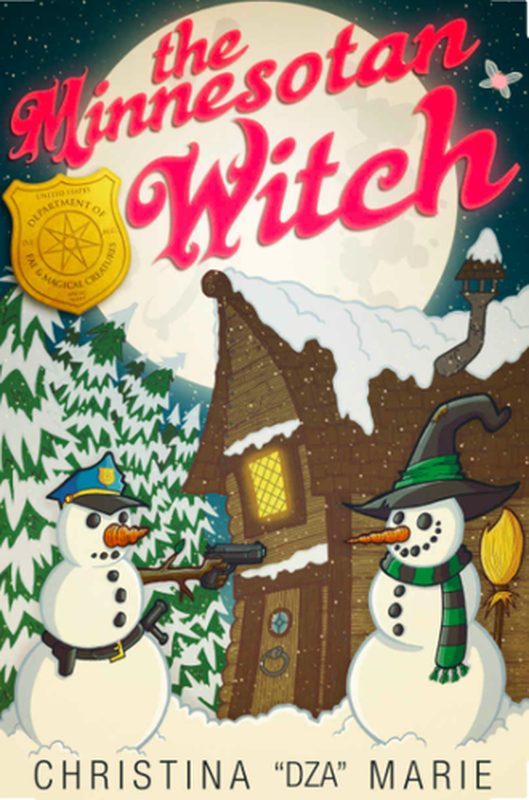
 RSS Feed