Dragons, Zombies and Aliens
:
The Blog
|
|
|
|
The Way of Kings by Brandon Sanderson, book one of the Stormlight Archive
No spoilers. (Promise.)
This was a 1,200 page monster that I just could not put down. Which is impressive considering the fact that I had no idea what was going on for the first two hundred pages. It's not that Sanderson introduced too many people and concepts at one time--he didn't. The pacing of this story and the exposition are excellent. It's just that there's
so much
going on, so many characters in a world that is so unique and alien that it's a lot to digest. But if you can get through those first two hundred pages, then you're all set. And trust me, it's worth it. This book is absolutely stunning.
My attention was drawn to this series by one of my favorite YouTubers, Hello Future Me . In addition to being a super-geek, he also does some writing videos (which is why he's mentioned in my For Writers page). It was during one of these videos--I forget which one--that he mentioned the world-building of the Stormlight Archive . In addition to the unique geography, Roshar also has a social structure I had never seen before. It's a pseudo-patriarchy that is extremely binary, nothing new there. But while men are pushed toward "masculine" traits such as leadership, military, labor, et cetera, the women have their own equally important "feminine" traits, such as architecture, science, engineering. Reading is, in and of itself, a feminine art. None of the men in this story--Kaladin, Dalinar, the king --know how to read! It's hilarious, but it also launches women into leadership roles themselves, as they're the advisors and creators of their society. This, of course, begs the question: what about the people of the LGBT+ community? So far there has been no mention of same-sex relationship or genderqueer people, and I will be disappointed but unsurprised if that holds true for books two and three. But if, by chance, Sanderson has added them, then I imagine they'd be facing a lot of social adversity. On a related note: romantic subplots are near non-existent! There's one with Dalinar and the king's widowed mother that's a little cliched, but it serves as some character development for Dalinar and introduces another awesome woman to the story. Even though he uses the word "beautiful" to describe her way too much. (We get it! You think she's hot! Maybe focus on some other traits, or at least pick up a thesaurus to mix it up a little.) The story, at first, seems to be everywhere. It doesn't help that the novel is chopped up into parts that are divided by short stories. These stories seem random (except the ones about the Assassin in White, as he's very important despite his minor appearances), but they are very helpful in establishing the world itself and the political and social rules that influence the main characters. When one of the short stories includes a couple of scientists studying a type of magic, that type of magic becomes very important later in the book. A couple of servants talk about a mysterious woman who specializes in another type of magic, she ends up being the answer to a mystery that plagues one of the main characters. It's a very handy type of exposition. After about two or four hundred pages, you see how all the different threads--Kaladin, Dalinar, Shallan, the Assassin--all start to weave together. There is some predictability; it's not like Game of Thrones where you have almost no clue which main character is going to get slaughtered next. But it's the good kind of predictability, the kind that drags out the tension. ( Oh no, one of the major characters is in critical danger in the climax of the story, and only this other major character can save them, but only if they get over the major internal issues that have plagued them the whole book...WHY IS THIS TAKING A WHOLE CHAPTER. GO GO GO! ) It helps that all of these characters are very different from each other. Kaladin and Dalinar are probably the tropiest (most trope?) of the bunch, being the depressed hero with rotten luck and the super strict yet kind lord, but they're still extremely engaging. I cared about them, I worried about them, I cried with them through all their ups and downs. (Although, content warning, Kaladin seriously contemplates suicide relatively early in the book, and references it a few times later.) Shallan is a walking mystery; despite hundreds of pages we still know very little about her, and her last few chapters only raise more questions. Hell, the last fifty pages were dedicated to raising more questions and leaving cliffhangers, which is why as soon as I can, I'm purchasing book two. Well played, Sanderson. Well played.
0 Comments
Who Fears Death by Nnedi Okorafor
No spoilers. (Promise.)
I've read and reviewed one of Nnedi Okorafor's other books before: her short sci-fi novel
Lagoon
about mystical aliens touching down in Nigeria. I was enraptured by her storytelling, and when I found out she had other books--many of them bestsellers--I added all of them to my wishlist, and had the opportunity to purchase
Who Fears Death
thanks to a Barnes & Noble gift card I got for Christmas. I had high expectations for
Who Fears Death
because of everything I'd heard, both about it and about Okorafor herself.
And I was not disappointed. It's rare--or at least, rare for me in my little corner of America--to find popular SFF books that have a post-apocalyptic or fantasy setting outside of the U.S., or even Europe. So the setting itself of a fantastical, post-apocalyptic Africa was intriguing to me. I wish Okorafor had gone into just what, exactly the apocalypse was that completely reshaped the world and set up whole new religions and ethnicities, or even just the history of the world in general. We're given the religious version that everyone is told growing up and that main character Onye has little respect for, but not a definitive This is what happened, and this is why the world works this way now . But that's probably just the history major in me. The magic system used is very unique and interesting. It's a soft magic system, which is the kind that basically allows the author to make it up as they go along (kind of like Tolkien or Game of Thrones), compared to the hard magic system where the rules are explained and strictly adhered to (i.e. Avatar: the Last Airbender and Fullmetal Alchemist ). But while Onye and the other sorcerers' powers are many and varied, there's no deux ex machina that goes on. She still has limitations, especially in the beginning when she has no control. The story itself starts out pretty slow. Onye is obviously very special and eventually has to set out to topple the unjust system of oppression and war that her mother's people is subjected to. But she and her friends don't start their journey until halfway through the book. The first half is Onye coming to terms with who and what she is (for the most part, at least), worldbuilding, and describing the struggles and conflicts between Onye, her mother, and everyone around them. So even though the pacing of the overarching story is very slow, there's still a lot that goes on that kept me turning the pages. Oh, and in case you didn't get the hint from the book description, this story is not something to flippantly give to children. More on this later. There are a lot of characters here. While the entire story is told in first person point of view by Onye, she runs into a lot of characters. There's her beau, Mwita, another sorcerer who knows more about magic but isn't as powerful as she is and functions as team healer. She has three best girlfriends, her mentors, her mother, her stepfather, and of course, her rapist father. Who is a real piece of work. Just...wow. All of these characters are deeply flawed. Onye has some severe anger issues that are a direct result of how horribly her society treats her and her mother, leading her to do several things that she almost immediately regrets. The friends she sets out on her journey with turn out to be less than ideal travel companions, given that half of them abandon the quest out of fear. (Though the one that sticks around, while not magical in any way, is a total badass.) Mwita himself has some inferiority complexes. I mentioned that he's not as powerful as Onye is, and while it's clear that these two characters deeply love and go to great lengths for each other, Mwita has some sexist views that come out every now and then. He believes that he should be the sorcerer while Onye hangs back as the healer. Needless to say, this is a bit of a conflict between the two of them. In addition to expert storytelling, captivating worldbuilding, and engaging characters, Okorafor also weaves in several themes throughout this story. And when I say several, I mean all of them . I thought I was impressed by how many topics she was able to cover in Lagoon , but that's nothing compared to when she has an extra three hundred pages to play around with. Who Fears Death unflinchingly talks about rape, war, slavery, genital mutilation, misogyny, racism, religion and tradition used as tools of oppression, love, hope, death, and probably a dozen others that I missed in my first reading or just can't think of right now. Bottom line, this is an amazing book. It is a bold, beautiful story that deserves to be on bookshelves everywhere. How to write a romance that's already started rolling
Romantic subplots (or rom-subs, as I call them) are a huge part of speculative fiction, or any kind of fiction, really. We can't go two feet without stumbling into a pair of characters making out. I've complained about it before, and will continue to complain about it in the future, because it's often poorly handled. I've even written a few articles on the matter to help fellow authors with their rom-subs (see, How to Write a Romantic Subplot Parts
One
and
Two
, as well as
How NOT to Write a Romantic Subplot
).
But for this post, we're going to focus on a very specific breed of rom-subs today: the part of the relationship that comes after "The Big Kiss." We all know this moment. After several episodes/hours/books of flirting, bickering, and saving each others' lives, the characters finally--finally!--acknowledge that they want to be in a romantic relationship and make out properly for the first time. And this is where the majority of romantic subplots end. All of the writing goes into setting up the relationship between our leading man and leading lady, and then...we don't get to actually see the relationship. Which is kind of a bummer. Because it feels like we go through all this work and turmoil without any reward. And as a writer, I get it. Creating a relationship is a lot more exciting and dramatic than maintaining one. However, for the purposes of sequels, second acts, and just for my own peace of mind, we're going to be looking at how relationships are written after they're actually...you know, relationships. Rather than the will-they, won't-they nonsense. But before we begin, I'm going to level with you: I am probably the last person in the world who should be writing this blog post. Not only am I still relatively new to published writing, but my own personal love life is pretty much non-existent. I didn't date in high school and only had one S.O. in college (and we broke up after less than a year). And most of the time, even though I am now getting back into dating, I usually have little to no interest in romance. So I know that I am far from an expert in building and maintaining romantic relationships in real life, and real life is the building blocks of fictional life. However, I can tell you how any type of relationship looks in a story, including how one is done so well that even I think Wow, that looks really cool and realistic. So today, an attempt is made. Whether or not it's actually helpful to your writing, you decide. SFF Characters Suck at Relationships
The first book (or movie, or season, whatever) ended with not only the villain defeated and the day saved, but also with the author's OTP kissing and starting a romantic relationship. It's now book two, and what's one of the characters' main problems? Their relationship is failing! Oh, no!
Seriously. Writers tend to have a really hard time writing functional relationships. The characters are having major problems that one of the characters has to confide in their bestie about (Nyota Uhura and Spock from the Star Trek reboots), or they've even broken up (General Leia and Han Solo in Star Wars: the Force Awakens ). Sometimes, this makes sense. Not every relationship is destined for a fairy tale ending. Real life doesn't work like that, and neither should fiction. But this problem is everywhere . Almost every romantic subplot that gets to continue from The Big Kiss runs into huge issues. And even when they don't, even when everything is fine, we rarely get to see the two characters actually do the relationship thing. Look at Tony Stark and Pepper Potts in MCU. They start a relationship in Iron Man 2 and have some issues that they get to overcome in Iron Man 3 , which is great. But then the next time we hear of their rom-sub is in Civil War , where Tony tells Steve Rogers that he and Pepper are "taking a break." Which is usually code for "breaking up or on the verge of doing so." This comes out of nowhere, since, while she doesn't make an appearance in Age of Ultron , it is established that she and Tony are still going strong. And THEN, the next time we hear from them in Spiderman: Homecoming , they're apparently back together again and Tony's proposing to her, which she accepts. Then in Infinity War , Tony's talking about possibly having kids! Now don't get me wrong: I would much rather watch big explosions and ass-kicking in a superhero movie than dedicate an hour to the romantic subplot. But at the same time, you can't just skip over huge chunks of a character's life and relationship with others and expect everyone else to be able to follow along. You'll just give your readers whiplash. You're the writer. You have to write the damn thing. Writing the Relationship
Because my life experience has left me woefully unprepared for this kind of thing, I'm going to be pulling from two stories that do manage to do the relationship thing very, very well:
Avatar: the Last Airbender
, and Rick Riordan's
Percy Jackson
/
Heroes of Olympus / Trials of Apollo
series. (Minor spoilers for all of them.)
The ATLA show was the set-up for the romantic subplot between several characters, which are then explored in the comics that take place a year after the war. (If you haven't read those yet, please do. They're awesome.) Zuko and Mai do end up breaking up, and while Sokka and Suki seem fine on the surface I personally have been getting the vibe that there are some issues brewing. But Katara and Aang's relationship has been golden. They've continued to travel the world to bring peace and balance to the four nations, and have of course run into several obstacles and issues. Many Fire Nation colonists don't want to leave their Earth Kingdom homes. Aang's trying to preserve Air Nomad culture despite being the only living airbender. The South Pole is trying to modernize to keep up with the rest of the world, which grates on Katara. But through all this chaos, just like all the chaos that happened in the show, Katara and Aang are there for each other. They continue to support one another and watch each other's backs. Only this time there's a bit more kissing and they call each other "sweetie." (Which I personally have a soft spot for because that's what my parents call each other. It's really cute. Fight me.) Then we have Rick Riordan's books. Again, there are a ton of relationships because he went a little overboard in Heroes of Olympus , in my opinion. Piper and Jason, we find out in Trials of Apollo , did break up, but they're still friends. Nico and Will continue to be sickeningly adorable, dorky, and snarky. Leo and Calypso are still figuring it out but have managed to weather the first major test to their relationship: surviving a quest with a de-godified Apollo. But of course, the main couple is Percy and Annabeth. They got together at the very end of the original Percy Jackson series, and despite that one hiccup where Percy was missing and amnesiac for eight months (because Hera is a bitch), their relationship has continued to be solid. They continue to fight bad guys. They continue to snark at each other and occasionally argue. They continue to lead the other demigods on crazy adventures and almost die. Now, this piece of advice and personal wisdom I'm about to give is probably extremely obvious. Especially to experienced authors. But as I've said, most writers seem to be bizarrely incapable of writing the relationship after it gets started, so it needs to be said. The common thread between these stories is simple: the characters in the relationship continue to be themselves . They don't act any differently other than the fact that they trust and rely on each other a little more. At least, the successful ones do. Part of the reason Zuko and Mai didn't work out is because Zuko didn't confide in her, or anybody, as the pressure of being Fire Lord started to get to him. Basically, your characters are always themselves. They just get a little extra spice in their life now that they have a significant other. If they get lost in their relationship or start acting like a completely different character, then they probably shouldn't be in that relationship at all. For an in-depth look at rom-subs as a whole, check out Overly Sarcastic Productions' video here . DZA Marie's personal favorite romantic subplots in sci-fi and fantasy
Ah, early February. Living in Minnesota, I can see why Hallmark decided this was the prime time to start a romantic holiday: it's too cold outside to do anything other than snuggle with your significant other. (-50 degree windchill. Thanks, climate change.)
Now obviously, in the spirit of the holiday, the next couple of blog posts and this month's video will be relationship-oriented. However, I do not read romance novels. I read romance fanfiction , but in my movies and published novels I vastly prefer hard sci-fi and fantasy. Luckily (or unluckily, as this month's YouTube video will argue) you cannot open an SFF book or movie without there being at least a 95% chance of a romantic subplot popping up. And while most of them are very annoying and have no place in the story at all, some of them are downright adorable. So, I have gathered a list of my personal favorite romantic subplots in the sci-fi, fantasy and superhero genres. They're not really in any particular order, and the biggest qualification is it has to make me go "Awwww" with a bare minimum of eye-rolling. Nakia & T'Challa ( Black Panther )
Most blockbuster movies with romantic subplots--especially superhero movies--tend to either ignore the woman's growth and character development, or make said growth and development all about the love and romance she bares for the hero.
This is not the case with Black Panther . Nakia is a fully fleshed-out badass who doesn't have so much of a narrative arc so much as the moral of, "Bitch, you should have listened to me from the start. Would've saved you a lot of trouble and Killmonger wouldn't have had a chance." Also noteworthy is the fact that, at the time the movie starts, Nakia and T'Challa are exes. And while it's clear that T'Challa still has strong feelings for her, he does not whine and cry about it. They both act like adults, both respect each other, and they have a strong friendship that they then use to re-build their romance. (While they never go into it, I'm pretty sure the break-up came from clashing ideologies and world paths. Nakia wanted to go out and save the world, T'Challa wanted to hide behind his vibranium walls. That's not going to create a very stable relationship.) Rapunzel & Eugene ( Tangled )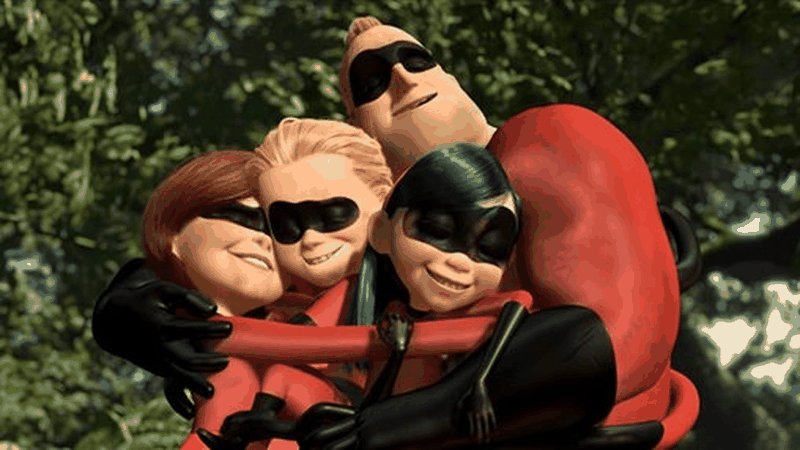
Disney has several really good relationships, especially in recent years: Tiana and Prince Naveen, Kristophe and Anna, Mulan and Captain Shang...but my favorite is Rapunzel and Eugene (a.k.a. Flynn Rider). A lot of it has to do with Eugene's character development. Rapunzel manages to influence and change him into a better person, without going out of her way to "save" him. In fact, no romance starts until most of this change happens. At the same time, Eugene helps and encourages Rapunzel into taking charge of her own destiny.
Then there's the fact that Disney broke its own "married within three days of meeting each other" rule in order to clearly state that Eugene and Rapunzel didn't get married until years after the fact. Rushed marriages rarely work. Cinderella and Prince Charming probably got divorced three months after their wedding. But Rapunzel and Eugene? That's going to last forever. Also, "You were my new dream." *cries* Will Solace & Nico di Angelo ( Percy Jackson series)
Fanart from Kai on Tumblr http://kingofghosts.tumblr.com
This relationship doesn't actually get started until the very, very end of
The Blood of Olympus
(book five in the
Heroes of Olympus
series), and we only see pieces of it in the first
Trials of Apollo
book. It's utterly adorable and one of the few romantic subplots that I really, really want to see more of.
This one gets points for being an LGBT relationship rather than the usual hetero stuff, without it being such a big freaking deal. We find out Nico is gay and had a crush on Percy in House of Hades , both of which he tried to ruthlessly squash down (the kid's from the 1930s, so it was definitely ones of those yikes moments for him). Blood of Olympus is him not only coming to terms with his sexuality, but also coming to terms with who he is as a person. You see, the son of Hades has had it in his head for a long time that nobody likes him, people are scared of him, everyone will be much happier if he just stays away, et cetera. But, by the end of Blood of Olympus , he's come to realize that while some people may be a little scared and even freaked out by him, nobody actually hates him. He can have friends. He can even have a boyfriend. And that's exactly what he gets. Will Solace doesn't get nearly as much character development. He just kind of pops up and calls Nico out on all of his shit, and then enables bad behavior and rule-breaking when they start dating. So if there was one thing I'd change about this relationship, it'd be more insight into Will's frame of mind. Edward & Winry ( Fullmetal Alchemist )
(Please note: I'm going off of the manga and the anime
Fullmetal Alchemist: Brotherhood
. Not the anime that's just
Fullmetal Alchemist.
Yes, they are very different.)
This one is kind of weird. Primarily because, while both characters admit to themselves that they have a crush on the other, they never get to the point where they're actually dating before the end of the story. But while we're not entirely sure how they would act in a romantic relationship with each other, we still get a pretty good idea. Edward would continue to be an obnoxious (short) badass, while Winry would call out his obnoxiousness, fix his metal limb when he breaks it, and also be badass. One of my favorite moments between these two is during Winry's breakdown, when she meets Scar and realizes he was the one who killed her parents. Edward has to stop her from trying to kill him, largely because he knows that she'd never forgive herself for it, even if that execution is arguably well-earned. It's a moment that shows that these two have each other's backs and bring out the best in each other. Tormund & Brienne ( Game of Thrones )
Fun fact: the show's writers never intended for Tormund or Brienne to be interested in each other
at all
. This was purely the actors and how they interacted with each other without any dialogue in season six. The writers saw that and thought, "Welp, guess this is going to be a thing," and wrote it into season seven (and hopefully season eight!).
Tormund is obviously head-over-heels in love with Brienne. She, on the other hand, does not seem to return his affections at all. But I'm really hoping she'll change her mind, and here's why: Brienne has been scorned all her life because she's not beautiful, she's good with weapons, and she doesn't take anyone's shit. She's grown up in a society that idealizes the women who are pretty, demure, obedient, et cetera. Worse, she's learned that any time a man does show interest in her, he's just making fun of her, or (in the case of the books) trying to win a bet. Tormund, on the other hand, did not grow up in that society. In wildling culture (for the most part), the women are encouraged to be big, strong fighters just like the men. No wonder Tormund fell in love at first sight: Brienne is a powerfully-built, amazing fighter who's smart. That is the ideal wildling bride. And hopefully, Brienne will realize that all of the aspects that make southern men hate her are exactly what draws Tormund to her and return his affections. Aang & Katara ( Avatar: the Last Airbender )
I am
not
going to get into the Zutara debate. We're sticking with canon here. (And frankly, I prefer Katara and Zuko as really good friends. He need more friends than girlfriends.)
All of ATLA's relationships (all of ATLA's everything ) are really great: Suki and Sokka, Sokka and Yue, Zuko and Mai...but the one that the writers spent the most time on is, of course, Aang and Katara. For a kids' show (well, "kids' show," just like Pixar is "kids' movies"), their relationship moves at glacial speed, even though it's obvious that Aang's harbored a crush on Katara since the first episode. And while Katara loves him as a friend, she seems pretty oblivious to the romantic side and doesn't seem to reciprocate for a long time. We get a little "did they kiss, they probably kissed" moment in season two, but they don't have a first actual kiss until the Day of Black Sun in season three. And how does Katara react? She slaps the "pause" button like a whack-a-mole because they're in the middle of a war and she doesn't have time for this shit , a decision that Aang--after some minor protest--respects. He doesn't persistently nag her, or keep flirting with her, or spite-date someone else in the hopes that she'll get jealous. He gives her space to work things out, and doesn't make another move until she instigates. Also, in the post-series comics, they call each other sweetie . And my parents call each other sweetie . It's just really cute. Bob & Helen Parr ( The Incredibles )
This relationship is so strong it can handle all of Bob's issues in two consecutive movies. First his overwhelming desire to relive the glory days of his superhero youth, and second his jealousy at Helen being able to do that before him. There's obviously a lot of character development that happens with him--and he would've gotten a divorce at the end of the first movie if there wasn't--but if their relationship and commitment to each other had been any weaker than it was, then they wouldn't have lasted.
Also, these movies get huge props for having the main romantic subplot center around a married couple that have been together for fifteen years. Most romances happen when the two characters are pining for each other and trying to start a relationship, or at the height of "maximum drama" (someone cheated, they just broke up, et cetera). While their relationship has to weather some storms, the relationship itself is not the storm, if that makes sense. There's the minor blip where Helen thinks Bob is cheating on her with Mirage, but for the most part, all the problems they face in The Incredibles and The Incredibles 2 stem from Bob's personal issues and bad guys trying to destroy the world. Which is a good thing, because everyone knows that beating up the villain of the week is great couples' therapy.
What's the best romantic subplot you've ever seen/read in a sci-fi/fantasy/superhero story? Let me know in the comments so I can check it out!
|
What's This?The first Dragons, Zombies and Aliens blog was started in 2015. Somewhere between college coursework, paying rent with door-to-door sales, and keeping up with my sorority sisters, I wrote reviews, rants and commentaries on books, TV shows, and movies. Now, this blog has moved, improved, and the sky's the limit! Categories
All
Archives
July 2020
|
 RSS Feed