Dragons, Zombies and Aliens
:
The Blog
|
|
|
|
Dread Nation by Justina Ireland
Jane McKeene was born two days before the dead began to walk the battlefields of Gettysburg, Pennsylvania—derailing the War Between the States and changing the nation forever.
In this new America, safety for all depends on the work of a few, and laws like the Native and Negro Education Act require certain children attend combat schools to learn to put down the dead. But there are also opportunities—and Jane is studying to become an Attendant, trained in both weaponry and etiquette to protect the well-to-do. It's a chance for a better life for Negro girls like Jane. After all, not even being the daughter of a wealthy white Southern woman could save her from society’s expectations. But that’s not a life Jane wants. Almost finished with her education at Miss Preston's School of Combat in Baltimore, Jane is set on returning to her Kentucky home and doesn’t pay much mind to the politics of the eastern cities, with their talk of returning America to the glory of its days before the dead rose. But when families around Baltimore County begin to go missing, Jane is caught in the middle of a conspiracy, one that finds her in a desperate fight for her life against some powerful enemies. And the restless dead, it would seem, are the least of her problems No spoilers (promise)
As a general rule of thumb, I tend to avoid any and all historical fiction for a variety of reasons. One is the same reason I avoid contemporary fiction or anything else that isn't fantasy or sci-fi: it doesn't interest me. I won't say those stories are boring (they're not, and every now and then I find one that's really good even without supernatural elements), but it doesn't spark my interest the way a fantasy or horror story does.
The other reason I avoid historical fiction is because, as someone who has a bachelor's in history and continues to study it, I usually find half a dozen major problems with the historical setting within the first few chapters. The most common crime is that the time period is very idealized. We're seeing it through the thick lens of nostalgia (specifically, white and/or male nostalgia) rather than how it really was. Basically, the writer just doesn't do their research, which is extremely important even if you're doing an alternative history. Justina Ireland side-steps these problems very neatly. Firstly she brings zombies into the equation, which is a surefire way to get my attention because I love zombie stories. It's rare that a story cannot be improved by adding a bit of the undead into the mix. Secondly, she definitely did her research on the Reconstruction Era. For those who are drawing a blank on what that is, the Reconstruction Era is that bit of time right after the Civil War when the U.S. tried to piece itself back together, fix up the destroyed South, end the slavery thing, and failed horribly on all accounts. Historians disagree on when, exactly, the Reconstruction Era ended--if indeed it's ended at all--and most agree that it could have gone a lot better, especially for the newly freed slaves, many of whom were forced to become indentured servants employed and abused by the very whites who owned them as property a few years ago. Ireland takes that time period, adds a healthy dose of zombies, and goes to town. While it's definitely a YA novel--with the teenage protagonist, lightning-fast speed, critical view of authority and government--it's a story that readers of almost any age can enjoy and learn from. She's also got the language down perfectly. Several historical fiction authors have their characters and narrator talk either too contemporary or too blandly. Jane McKeene--who is both the main character and the narrator--talks exactly the way someone raised in 1870 Kentucky and educated in 1880 Maryland would talk. Jane herself is an awesome character. She's a badass fighter, notorious troublemaker, and is one of those stupidly brave people who you respect for Doing The Thing, but at the same time you kind of want to strangle her because you're going to get yourself killed, you idiot! Kind of like Jon Snow, but more interesting. Playing her foil and partner is Kate, her fellow classmate who is Jane's opposite in every way. Well, not every way, seeing as Kate isn't a horrible racist with dangerous delusions on how a society should overcome the zombies. That position goes to the villain, who we actually don't meet until halfway through the book. I won't go into detail because spoilers, but I will say that he's the perfectly crafted villain, in that I want to beat him over the head several times with a dictionary. He's the guy who just has to die. And I say that as an anti-death penalty advocate and pacifist. The other characters are well-written, too: enemies, allies, the crush and ex-boyfriend who both cause an absolute minimum of tension, thank God. Actually, there's not much of a romantic subplot here, for which I'm glad. The ex--named Red Jack--is someone that Jane sees only as a mistake, refuses to get back together with despite his repeated advances, and while she still has some lingering feelings for him and gets jealous whenever someone else gives him goo-goo eyes, she ruthlessly squashes them down to concentrate on the task at hand. That is an attitude sorely lacking in many YA protagonists that I deeply appreciate, especially in a zombie story, where the most common mistake an author makes is focusing on the petty drama rather than the very real threat of imminent doom. (We also find out about three-quarters of the way through the book that Jane is bisexual, or at least fluid and flexible enough to have made out with a pretty girl. Yay, diverse characters!) My only complaint about this book is that there are a couple of loose ends, namely the fate of one of Jane's friends who goes missing. She spends a good amount of energy looking for him before she's forced to leave, so it's not like Ireland forgot he existed. She just refuses to tell us where he went off to, which is frustrating. Though I think she plans on bringing him back if she ever publishes a sequel, which is a distinct possibility. Watch me not complain about that. So, yeah. Welcome to the Favorites page , Dread Nation ! Please don't eat my brains.
1 Comment
For writers, murdering beloved characters--and sometimes resurrecting them--is not only fun and cathartic, but also an invaluable writing skill. It keeps your readers on edge, establishes a very real risk to your other characters, and makes your plot intense and unpredictable. All of these very good things.
However, a lot of writers don't know how to pull this off. Either they're too heavy-handed with the murder, or don't murder enough, or they do kill a bunch of characters but then they bring them all back in the next chapter, making the whole thing moot and their readers feeling bored and cheated. Part of the difficulty with character deaths and resurrections is that it's been used so many times by so many authors that it can be hard to convince readers that a character is actually dead--even if they really are! But that's just one piece of the puzzle. Another issue is that authors often refuse to kill their characters when they really should, usually because they're too emotionally attached to their characters or want an unrealistically happy ending where everyone lives happily ever after, screw the fact that they started the series with a string of excellently written deaths. This is a problem I had with the otherwise very good Throne of Glass series : Sarah J. Maas had a cast of a dozen major characters in the last book, Kingdom of Ash , and she should have killed at least half of them. Instead she knocked out a handful of minor characters, the impact of those deaths lessened because of the sheer number of survivors. Basically, the "hard-won" victory felt too easy. So don't be afraid to do kill some characters. You just have to make sure you're doing it right and avoiding the common pitfalls. There's a whole jungle of obstacles involved in both convincingly (and correctly) killing off characters, and in bringing them back. So buckle up, because today we're going to be talking about murder. Killing Off Characters
(Spoilers for
Game of Thrones
, up through season seven.)
One of the biggest pitfalls in killing off characters is doing it purely for the shock value. This is wrong for a number of reasons. The first is that it's been done before. Worse, readers will recognize when a character is killed purely for shock value and stop reading, because they don't want to be emotionally manipulated like that. It draws too much attention to the hand of the writer. And I get the temptation to do this. I've done it myself. My novella Homestead Hunts involves a cannibal society, and I killed off two major characters in the first act to help establish this. One of them had to go for story and plot purposes, but the other did not. It was purely shock value, and looking back, I'm not sure I'd kill that character--or if I did I'd do it differently. The second reason, and the biggest problem, is that characters who are killed off purely for the shock value aren't actually characters. They're rarely well-written, because literally their only goal in the story is to die. When they're badly written, readers don't care whether they live or die, and so the shock factor the author was going for in killing them is dramatically reduced. It destroys the whole point of killing them in the first place. Some people think George R. R. Martin kills so many characters for shock value. But that's not true at all. Each character that dies is killed for a reason. Usually it's some sort of character flaw or a fatal mistake (or a string of fatal mistakes, in the case of Robb Stark). Other times they were outmaneuvered by other characters (i.e. Lady Olenna, the Queen of Thorns). Major character deaths are also used as plot points. While the first skirmishes of the War of Five Kings started with Catelyn kidnapping Tyrion, the actual start of the war was the execution of Ned Stark. If he had lived, Robb would have turned the northern armies back, and while things certainly would have been salty between the Starks and the Lannisters for a while, there wouldn't have been a war. This is another thing to consider when killing off a character, either for real or for a fake-out: how do the other characters react? Sometimes the character dying will be well-written, but the aftermath will be glossed over. If this is supposed to be a beloved character with friends and family, then we need to see those friends and family mourn. How do they deal with that person's death? Do they go on a quest for vengeance that ultimately leads to the slaughter of thousands? Completely break down? Actually process it in a healthy way and then get blind-sighted and feel betrayed when the death turns out to be a fake-out? People mourn in all sorts of ways, so you get to play around here. But the first thing you need to consider when killing off a character is if they actually have character, even if they're only going to be around for a handful of chapters. Are the readers emotionally invested in this character's life? Do they care if they live or die? Do the other characters care if they live or die and will they actually mourn the death or shrug it off? If they don't, then you have a major problem with that character that needs to be fixed before you do anything else. But let's say your readers do care about your character. They're invested in their cause and want to see them succeed. The second question you have to ask yourself is Why am I killing this character? If it's purely for shock value, then you need to reconsider. Readers didn't care for that trick when it was new, and it's been used to death already. Instead, consider why, in universe, this character would die. Do they have a flaw that other characters can exploit or that you're trying to explore in your writing? Is there a major plot point coming up that would turn out differently if the character were alive? Is this character's life a natural consequence of the events in your book (like a war), or the consequence of another character's wrath/ignorance/fault? If the answer to any of these questions is yes , then congratulations! You have a legitimate reason to kill your character. Now the question is how . This one is tricky, and honestly not something that can be summed up in a neat little blog post. How you kill a character varies from character to character and story to story. It's a delicate balance between dragging it out for so long that the audience rolls their eyes and mutters "Get on with it" (i.e. Han Solo), and glossing over it completely, sometimes by killing them off-screen. This is where editors and trusted beta readers come in handy. But for some honest advice? Just do what feels natural. Resurrecting Characters
Resurrecting characters is even harder than actually killing them off. First you have to convince your readers that they're really, actually dead, and then you have to find a legitimate excuse to bring them back. If you've killed off multiple characters but only brought back one (either through magic or hand-wavy science or whatever), then readers are going to question why you didn't bring back any of the other characters. If your characters have a habit of faking their deaths, then you run the risk of your readers not believing you when a character actually dies.
I know Avengers: Endgame hasn't come out yet, but we all know that everyone who got dusted in Infinity War is coming back, and not just because we have previews for the next Spider-Man movie and confirmed deals for Doctor Strange and Black Panther sequels. A lot of it has to do with the genre. The only person who ever stays dead in the superhero world is Ben Parker. Everyone else either has a resurrection ability (Loki), enjoys faking their death for shits and giggles (Loki again), or has a hand-wavy serum that allows them to endure a ton of punishment that would be fatal to anyone else (Bucky). There's also cloning, time travel, magic, glowing purple plants, mutant abilities, and a plethora of other methods, each one whackier than the last. So if we all know that Spider-Man, the Guardians, T'Challa, and everyone else will be coming back next week, why did Marvel kill them off in the first place? Well, for starters, it's an emotional gut-punch. Over the last ten years we've become emotionally attached to these characters, which the writers have no suddenly taken away. We're now extremely invested in seeing those characters come back, which is why we're all going to be throwing our money at the nearest movie theater and sitting in the dark for three hours straight. The other reason is for the arcs of the surviving characters. This is the first time the Avengers have well and truly lost . Every other time they've fought, even if they were at each other's throats two minutes ago, they've been able to pull themselves together and defeat evil at the last minute. Except this time, when it mattered the most, they failed. They're going to have to come to terms with that before going anywhere near Thanos. But the main reason audiences tend to call the writers' bluff when it comes to fake-out deaths is more than just the established rules of the genre. The fact is, characters who die and are slotted to be resurrected tend to either a) be too important to actually die, and/or b) have incomplete story arcs. No one wants to get caught up in the trials and mysteries of a character, only to have that character die before they can finish. Readers will just get pissed. It's why everybody knew that Jon Snow was going to be resurrected in season six of Game of Thrones . He was simply too important to the story, and R+L=J was too big of a mystery to leave unsolved. Usually, the best way to convincingly kill off--or make readers think you're going to kill off--your character is to make it look like their arc is complete, or at least that another character will be able to pick it up and continue. Then, when the character is revived/revealed to not be dead at all, you get to introduce a new arc for them. If they really were dead and magically resurrected, what are the psychological implications? How has the experience affected their religious beliefs and that of those around them? Does it make them more compassionate and cautious, or do they go the other way and become reckless and apathetic, or even full-on evil like Pet Sematary ? If they were just playing dead and came back without warning, how does this affect their relationship with the friends and family they lied to? What are the sacrifices they made to pull off the fake death? Was it worth it? While death and near-death experiences are very common--both in fiction and in real life--it's no small thing. You can't just gloss over it; it leaves an impact. Which means it's a new conflict for characters to grapple with, and conflict is a good writer's playground.
What are some of the best deaths/fake deaths that you've seen in SFF? Comment below!
Kim ten Tusscher is a well-known writer in The Netherlands. The characters in her books are not acting as a hero, neither as a villain. They all play their part in the obscure between good and evil. The female characters that play an important role in the epic sagas are strong-willed and show a great psychological and emotional depth.
Kim has published eight books to date, of which four of them have been translated into English. Kim ten Tusscher
What cool and exciting things have been happening in your life recently?
A lot of traveling. I’ve visited the Southwest of the United States last year. It was a road trip of almost a month together with my husband. It was so amazing to see Bryce and Arches and Acoma and all the other National Parks we visited. Even writing this, good memories come back. As if that wasn’t enough, I’ve just returned from a trip with my brother. We went to North Norway: chasing the Northern Lights and sledding with huskies. It was a great adventure. And of course, finishing my ninth book in Dutch and finally have the translation of Born in Light complete. It is always exciting when new books come out and readers are going to continue reading the story. Aww, I want to travel... Is your recent book part of a series? If so, can you tell us a bit about where the story is heading? Born in Light is the finishing part of a trilogy. It’s the story of Lilith, a woman who can change into a dragon. This may seem like a wonderful gift, but to her it’s a curse. There aren’t many fire breathing dragons in the world and surely none of them is fighting in the war. So, whoever wins Lilith's trust, has a powerful weapon. Lilith is tormented by all the death and fear she has spread and she tries to escape from this life that has been forced onto her. But she finds out that it isn’t easy to leave everything behind and start all over. Have you ever written characters that you truly despise? Why or why not? My aim is that every character has it’s good aspects and its flaws. So there are no main characters that I deeply despise. I don’t agree with a lot of them, but I can understand why they do what they do. There are some less important characters that I hate though. My books are grim and realistic. There is always some war going on. People are trying to subdue others. Of course they are not all happy, pleasant people. They have all witnessed a lot of horror and most characters in my stories have done things that were necessary but not pretty. Maybe that is why I have a soft spot for most of them. What do you like best about the books you read? What do you like least? I love stories that are so complete that it feels like you can visit the locations mentioned. I love stories that are kind of slow and not rush from action scene to action scene. I don’t mind reading about somebody’s daily business as long as it adds character to the story. This is why I am a huge fan of Robin Hobb. I don’t like books that you start reading and on the first page you know who is the hero and one page later you know who is the enemy. And you already know who is going to win the fight and who is going to die in the end. Life has more nuances. Books don’t have to be exact copies of life (of course not, I’m reading fantasy!), but I have to be able to believe the stories and the events. So basically, no tropes and cliches? We should start a petition or something, get a crap ton of signatures and send them to Hollywood and major writers everywhere. Maybe then we'd stop seeing the same predictable crap. Where did the idea of your story come from? After I finished Hydrhaga I wanted to write a story about a character who had an awful background. While writing this story I wanted to explore the possibilities to leave ones past behind and create a better life for themselves after shedding so much blood and despair. This character became Lilith. In the first ideas for this story she was an orc. But than my husband bought me a book about dragons and I decided to make Lilith a human who could transform into such a powerful creature. This was a much better idea for the story I had in mind. Because when you come across an orc, you immediately know what creature she is. With Lilith, it isn’t that obvious. People think she is weak and they underestimate her. Which is a nice thing to play with. Lilith uses it sometimes to trick the people she meets. One other goal I had in mind when I started the trilogy was writing a story with no clear distinction between good and evil. 
What did you edit
out
of your book?
Oh, this is kind of a funny story. In the first draft Lilith is brought before the king, because she has broken into somebody’s house to steal food and clothes. When she gets caught, she almost kills somebody while trying to defend herself. As an author I already knew what a horrible life she had had so far and I felt so sorry for her. So the king was all kind and considerate and he didn’t punish her. Instead, he welcomed her into his palace and all was well. I send this to my publisher and he said: “That’s not going to work. This king of yours has a huge problem if he would treat a murderer this way. His people will turn against him. You have to change this.” Of course my publisher was right. So I changed it. Lilith gets flogged and has to work to repay her debt. I sent the revised manuscript to my publisher and now he really felt sorry for Lilith. Problem was, this all takes place in the first 30 pages of the story. I had to rewrite a lot, because the punishment affects a lot more than only this part. But the story became so much better after changing this. It was a very important lesson for me. I think that was the start of writing darker and darker stories. Cheery. Do you have complete control over your characters or do they ever control you? It’s a bit of a mix. When I’m planning a story and am trying to figure out who my characters are and what role they are going to play, I have some sort of control. I decide what the most important aspects of them are. But as soon as I start writing I lose the control and that’s a good thing. I hate to read stories where I can feel within every line that is written that the author has forced its will onto the characters and the events. Creating a strong character means that, as a writer, you must be able to follow the character and let them develop in a convincing way. You can’t make them go left if everything you have written before says the character has to go right. Readers won’t buy that. A lot of authors are frustrated by readers who don’t understand how important reviews are. What would you say to a reader who doesn’t think his or her review matters? Frustration is such a big word, but I know what you mean. Reviews are so important, especially when you are self publishing or your books are small press. I can shout out on the internet that you have to buy my books, but why should you trust an author? If you tell your friends about this amazing book you’ve read, chances are much higher that they will buy the book themselves. Speaking for myself: I write in Dutch and am constantly working on new books. But the market in the Netherlands isn’t really big, so the income from my writing isn’t huge. To reach a bigger audience, I have to get my books translated. I haven’t got the time to do it myself and even if I had, I would be horrible at it. So I have to hire professionals. Not only for the translation, but also for the editing. Translating the trilogy costs me thousands, which is not a problem. But in order for me to be able to translate the other stories I’ve written, this trilogy has to be a success. So, in a sense you are not only doing your favorite author a favor by leaving a review. In the end, you are doing yourself a favor, because the compliments are fuel to keep on writing and the extra income makes sure stories will be turned into real books that you can read. What kind of impact do you want your book(s) to have on readers? Oh, great question. From childhood, I’ve had an aversion towards prejudice. I don’t like that a lot of opinions are about groups or cultures, not individuals. You should judge somebody on their behavior, not on the color of their skin, their background or religion, gender or sexuality. That’s why I write stories about characters who are not simply good or evil. The biggest compliment I have been given, was by readers who told me they changed sides while reading the books. They rooted for Lilith at first, but when I told more about her master, they would understand why he was doing what he did. It is also the reason why I often use religion in my stories. You might find similarities with real religions, but when you progress in the story, you’ll see that every religion has good things and flaws. That’s a thing many people miss in real life. 
If you could go to any fictional world, where would you go? Why?
I’d love to visit Middle Earth and especially Rivendel. I could even speak a little quenya, what would make it a bit easier to visit Elrond's court. The Lord of the Rings (and especially the movies) really sparked my interest for fantasy. It was there before the movies, but hidden. After seeing Middle Earth come to life I wanted to know everything about the story and making the movies. I devoured the extended editions, the Silmarillion and every website I could find about Tolkien's work, etc. That was why I started visiting fantasy festivals as an elf. And why I chose to write fantasy. My first novel has elves in it because of Tolkien. What might we be surprised to know about you? It’s not that this is a secret, but I think you’d like to hear that I am also a costume maker. This started out as a hobby, but I have done some films and web series. When I wasn’t writing yet, my big dream was to work at Weta Workshop when The Hobbit was being made. It never got that far, because by the time I heard about the plans, I was busy writing. But I worked on Born of Hope, Ren – the Girl with the Mark and A Royal Love . The most special project was Hunter’s Prey. The band Seven Waters wrote a song about this story and we decided it needed an epic music video. So we did a crowd funding, found a director and great actors and even a ‘wolf’ to play in the short movie. And of course, I did all the costumes. You must be one of the best cosplayers in town. What are three things you think we can all do to make the world a better place? Use less plastic. I am worried about our planet and try to do as much as I can to make my footprint smaller. My latest discovery: shampoo bars. Love them! Find the courage to do what you love. It will make your life better and as a result make everybody in your surroundings happier. Because happiness is infectious. But most important: really look at each other and really listen. Try to understand somebody when they tell you about their fears and pain. And don’t get offended when it has nothing to do with you. If somebody’s gay, that doesn’t affect you, so why should you bother? Live the life you want to live and give others a change to do the same. Who in your life has truly inspired you? I’ve had some really independent woman in my surroundings when I grew up. Those were my mother, my aunt and my grandmother. I have to thank them for becoming the woman I am today. They showed me you can do anything you want to do. What creature is better: dragons, zombies, or aliens? Dragons, of course. But I only say this to be safe. If I would answer anything else, Lilith would come after me. That's fair. Thank you so much for coming onto my blog! You can learn more about Kim on her website here . The Poppy War by R. F. Kuang
When Rin aced the Keju—the Empire-wide test to find the most talented youth to learn at the Academies—it was a shock to everyone: to the test officials, who couldn’t believe a war orphan from Rooster Province could pass without cheating; to Rin’s guardians, who believed they’d finally be able to marry her off and further their criminal enterprise; and to Rin herself, who realized she was finally free of the servitude and despair that had made up her daily existence. That she got into Sinegard—the most elite military school in Nikan—was even more surprising.
But surprises aren’t always good. Because being a dark-skinned peasant girl from the south is not an easy thing at Sinegard. Targeted from the outset by rival classmates for her color, poverty, and gender, Rin discovers she possesses a lethal, unearthly power—an aptitude for the nearly-mythical art of shamanism. Exploring the depths of her gift with the help of a seemingly insane teacher and psychoactive substances, Rin learns that gods long thought dead are very much alive—and that mastering control over those powers could mean more than just surviving school. For while the Nikara Empire is at peace, the Federation of Mugen still lurks across a narrow sea. The militarily advanced Federation occupied Nikan for decades after the First Poppy War, and only barely lost the continent in the Second. And while most of the people are complacent to go about their lives, a few are aware that a Third Poppy War is just a spark away . . . Rin’s shamanic powers may be the only way to save her people. But as she finds out more about the god that has chosen her, the vengeful Phoenix, she fears that winning the war may cost her humanity . . . and that it may already be too late. No Spoilers! (Promise)
You know those books where, once you finally set them down, you think
WTF did I just read,
but in a good way? That's
Poppy War
.
This was largely because of the book's ending, which I will not get into because I have a strict no-spoiler rule on this blog. Suffice to say, even though the entire book has been leading up to that specific decision of the main character's, it still caught me off-guard. Because I'd never seen a book go that direction without warning before. The Poppy War centers around Rin, and is told almost exclusively from her point of view (third person limited). Right from the start she's an extremely captivating character, despite the fact that most of what she does is react, making her a passive character. Her taking the test, going to Sinegard, becoming a soldier and fighting in a war, all of those are her reactions to what the world throws at her. It's not until the very end that she acts first, forcing the world to react to her. Normally, I hate passive characters. They're boring. Best case scenario, they get dragged along with the plot and their primary function is to complain about how horrible the world is. But Rin is different, and it's the way she reacts that sets her apart. We learn very early that she doesn't do anything half-assed. Her foster parents tell her she's to marry someone three times her age for their criminal enterprise? She risks her life to steal opium to bribe a local tutor to help her study for the exam. Her period cramps are so bad that she's going to miss at least three days of school every month? Better drink a potion to make herself infertile so she doesn't have to deal with it. Enemies attacking the school? Burn the whole place down with newly-discovered magical powers! Rin is impossible not to watch. Half of the time, she knows the thing she's about to do is a horrible decision, but she does it anyway because, in her mind, the alternative is even worse. She's very self-aware, even though, as a teenager, she can still be kind of stupid. She's supported by a wide variety of supporting characters: her teachers, her rivals, and the few friends she manages to make. Several of these people die, because this book is definitely grimdark, and they're all very well crafted. I do wish that I could see more of Rin's young foster brother, largely because she feels guilty for leaving him when she goes to Sinegard and thinks about him later in the book. But we only get one scene with him, and that's when she leaves for the academy. Another scene or two showing them together would have gone a long way toward showing Rin's more human side that she becomes in danger of losing. The worldbuilding leaves something to be desired. Not the magic or the gods, those are fine, but the history and political climate need work. I'm not as well-versed in Chinese history as I should be, but even I knew after one glance that this "fantasy world" is basically 19th-century China. The real world saw two Opium Wars; this world has two Poppy Wars (poppy being the plant that opium is made from). Japan used to be militarily aggressive and constantly fought with China; in this universe they're the Federation of Mugen. China had an ancient strategist named Sun Tzu who wrote The Art of War ; Rin studies a guy named Sunzi who wrote The Philosophy of War, whose lessons and parables match Sun Tzu word-for-word. I am all for using history as a stepping stone in worldbuilding. Hell, I do that all the time! The most famous example is George R. R. Martin, who based his Game of Thrones series off of the Wars of the Roses. But there's a difference between using something for inspiration like Martin and just copy-and-pasting like Kuang. But that's honestly my only real complaint about this book. The characters and plot are both more than strong enough to carry the otherwise weak worldbuilding. The theme is also very well done. Kuang does not shy away from the horrors committed by the supposed "good guys." Considering the atrocities that Rin's nation and, eventually, Rin herself commits, the overall message is "war, oppression, and drugs really suck, guys, so maybe let's not?" But while Kuang's book laments the horrible conditions that war brings out, she doesn't use it as an excuse to dismiss the negative aspects of her characters. She puts the responsibility for the characters' actions squarely on the characters, not letting them fall into the "oh, it was just a bad time, so it doesn't really count as my fault" mindset. Rin herself admits that her actions are inexcusable, morally atrocious, while also, in her mind, necessary. One last thing, and this is probably one of the best things about this book: THERE'S NO ROMANTIC SUBPLOT. You could argue that Rin has a crush on one of her classmates, but that's a lot less romantic and a lot more hero-worship. I mentioned earlier: she destroys her own uterus as a teenager just to stay in school. Romance and family are the last things on her mind. The Poppy War is landing solidly on my Favorites page. I would recommend it to anyone who's looking for a non-traditional military fantasy story, and/or is looking for a femme protagonist of color, and/or likes it when things get set on fire, because that happens a lot .
Wendy Van Camp writes science fiction, regency historical, and scifaiku poetry. No Wasted Ink is her platform featuring essays, poetry, flash fiction, and author interviews. Wendy's stories and poems appear in magazines such as "Quantum Visions", "Scifaikuest", “Lit Up”, “Writing Cooperative”, and “Far Horizons." She has won Honorable Mention in the Writers of the Future Contest and is a graduate of the James Gunn Speculative Fiction Workshop.
Is your recent book part of a series? If so, can you tell us a bit about where the story is heading?
My first and so far, only book is The Curate's Brother . It is a women’s historical fiction based off the characters and setting from Jane Austen’s novel Persuasion . I am not a romance author, per se, but I fell in love with Jane Austen’s work and I couldn’t help myself from writing with her characters and historical setting. My novelette can serve as a prequel to Persuasion , but it is also the first of four books I am writing that will take Austen's characters on a new journey. In the summer of 1806, a young curate is surprised by the arrival of his brother, Commander Frederick Wentworth of the British Royal Navy. All the good commander wants is to flirt and dance with the ladies until he is called back to the sea. He is drawn to a baronet's daughter and pays no heed to warnings that the girl is above his station even as Frederick's flirting with another young beauty infuriates his brother. At the end of summer, a letter and package arrive that will change everything for the two brothers. Which will prevail? The bold actions of the commander or the quiet manners of the curate? Books two through four will take the reader into different historical settings and showcase the English culture of the time. You will get a taste of battle at sea, the marriage mart in London, a sense of the structure of class of the time period, and the plight of women during this era. While the story has sweet romantic elements, it is more a historical drama. Can you tell us about what you're currently working on? The planet Mars has always fascinated me and I want to write stories set on this world. When I start writing about a setting, I write haikus about little moments in time set in the location. It helps me feel grounded with the place on an emotional level. I have a large number of these poems in my files as I research Mars for an upcoming novel series. Eventually, I hope to have both a poetry chapbook and the novel series to publish. Meanwhile, you can see some of my illustrated poetry on my website . I am also at work finishing up the historical regency series. It is the only historical that I have planned currently. The rest of my work is a mixture of science fiction and fantasy stories and poems. Do you write under a pen name? If so, can you tell us why? I don’t believe in pen names. If my work is good enough to publish, it is good enough to have my real name on it. Likewise, I don’t believe in hiding my gender behind initials. Too many women have been forced to do this in the past. I wish to make a stand and be plain about who I am. Besides, in this day and age, it is fairly impossible to hide your identity. If a reader wants to know, there are too many ways to find the information. That works for everyone who is not like me and does not have a surname everyone pronounces wrong. What do you like best about the books you read? What do you like least? I tend to favor novels with strong and memorable characters. A solid plot is good too, but if the people are not someone that I can care about, I tend to lose interest in the story rapidly. I also like a good balance between description and pacing. I have a good imagination and don’t need too many details to bog down a story, but I also appreciate the care that goes into a well-crafted fantasy or science fiction world. Were you “born to write” or did you discover your passion for writing later in life? I must have been born to be a writer because I was telling stories verbally even at a very young age. I started writing my first “book” at the tender age of 4 or 5 years, handwritten in child’s scrawl. I wrote a second novel when I was 16 and sent it in to Ace for consideration. It was rejected and rightly so. It is not readable. In college, I wrote short stories and had my first success of being published in small college chapbooks, but I left it behind when I decided to follow my dream of being a filmmaker. Instead of writing stories, I told tales with a camera. For the next fifteen years or so, I worked in Hollywood as a television producer/director and directed hundreds of television programs. It was my dream and I gave it everything….until I burned out and left the industry. I then started a small artisan jewelry business which grew until I was selling at pricey art shows, conventions, and concerts. Writing was the last thing on my mind. I’m not sure how or why my need for storytelling started again. When I was in my mid 40’s, a character suddenly woke up in me and wouldn’t go away until I started to write his story. I told myself that I was content as an artisan jeweler and that this new urge to write was merely a hobby. I joined Nanowrimo and started to hang out with fellow beginning writers, picking up pointers as I soldiered on, but didn’t take writing seriously. This story is a science fiction steampunk tale and I’m still working on it after all these years. From a single novel, it has blossomed into a full trilogy. I consider it my opus and hope to publish the series one day, but it is still not ready. I work on it from time to time, but usually put it away to work on new projects. A few years after that awakening, I started the women’s historical series and managed to publish book one. It was after I published The Curate's Brother that I realized that somewhere down the road my hobby had turned into a profession. I was a published author and happy to be so I still make and sell jewelry, but most of my focus now is on writing and selling my books, short stories, and poems. Yeah, writing can be like a weed sometimes. You think it's gone and then poof ! It's taken over your life. Where did the idea of your story come from? The idea for The Curate’s Brother started out as a different story that I called “Letters From The Sea” that formed in me a few months after I read the Austen novel and fell in love with the characters in Persuasion . Most of the story was told through the eyes of Anne Elliot and Frederick Wentworth. Only the first chapter was told via Edward Wentworth’s eyes. The chapter simply did not fit with the rest of the book. One day, I thought to myself that I should take this one chapter and turn it into a stand-alone short story. I brought this short story to my science fiction critique group. It did not go well. Half the men refused to read it because it was “romance” and most of the others flat out hated it. Only one writer thought it had promise. She told me “the story needs ten thousand more words” and she outlined the main plot points of my short story for me. I had a plot there. A true beginning, middle and end, but it was lacking in details. Over the next two weeks, I wrote like a demon and the majority of the scenes were added, making the story a novelette in length. I could not get the science fiction critique group to agree to reread my story. I took it to another critique group, one that had a mix of genre. There my new story was greeted with a different tone. Most of the people loved it and several said that they felt it was ready to publish. So a week or two later, that is what I did. The novelette has done well, selling thousands of copies. Are you an early bird writer or night owl? And do you have any must haves like coffee, chocolates, wine, music or something else required for your creative process? I used to be a night owl and did my best writing after midnight until around 3am. The house would be quiet and the phone wouldn’t ring. I felt that I could get work done. I drove my husband crazy with that schedule. Lately, this has changed. I tend to do my best writing on my laptop at the local coffeehouse. I write in the afternoons and enjoy an iced coffee or two as I write. When I am out of the house I am less tempted by the internet, chores, the phone and other distractions. I enjoy the occasional personal interaction at the coffeehouse, but most people will respect that you are there to work and do not trouble you. It also gives my husband a visual cue to know that I am “at work." He is less likely to contact me during my set writing time out of the home. I still work in my home office. I’ve been taking up writing via dictation this year and I find that I do this first thing in the morning. Once I have it transcribed, I still need to work on the rough draft via the keyboard. So this means I get in more drafting time every morning and I continue with my old schedule at the coffeehouse during afternoons on my writing days. It is a new balance for me. No more late nights and I can indulge in more coffee. Win-win. A lot of authors are frustrated by readers who don’t understand how important reviews are. What would you say to a reader who doesn’t think his or her review matters? Reviews matter. Period. Many services will not consider an author until she has at least 50 reviews on Amazon, so even a one or two sentence review is helpful. This is more critical for indy authors such as myself. We make or break it on our reviews. If there is an author that you enjoy, please support this creative with honest and positive reviews. You are performing a wonderful act of kindness for them. Do you have any advice for new authors? Never give up. Never surrender. Seriously. If you have stories inside you, keep on writing them down. This is a great time to be a writer. Never in the history of the world has it been so easy to make a living for yourself with the creative arts. Learn your marketing and the business side of the job, but otherwise write what you love and share it with the world. We are waiting for you.  "Martian hue isn't blue rusty skies in morning light color me pink."
If you could have a dinner with one fictional person, who would it be? Why?
Captain Jean-Luc Picard from Star Trek. First off, I would love to visit the Enterprise and perhaps have dinner in Ten Forward. I envision a fascinating conversation about diplomacy, archeology, life in Star Fleet all delivered by a consummate gentleman. Make the beverage: Tea. Earl Grey. Hot. If you could go to any fictional world, where would you go? Why? The planet Pern, from Anne McCaffery’s Dragonriders of Pern series, would be my first choice. I’d love to visit the mountain Weyrs and see the dragons and their riders. To sit in the audience at a dragon hatching and place bets on who would impress. Harperhall would also be a major pull for me. I’d love to jam on my guitar with Menolly and have Piemur join us on the drums. What a set that would be! If you could have one magical ability/superpower, what would it be? How would you use it? I’d love the ability to travel in time. I don’t want to change things. If there is anything that I’ve gleaned from fiction is that those that go back to change the time stream usually muck things up worse than had they left things as is. Let each generation stand on their own watch. I would love to observe, to see the kings of ancient times, to visit fallen wonders of the world in their prime, or see frontiers before they became civilized. By seeing the beginning, I would gain a better understanding of what we are now. As a history nerd, I fully endorse the use of that superpower. What creature is better: dragons, zombies, or aliens? Dragons, of course! I’m biased since I was born in the year of the dragon. Thank you for coming on my blog!
Avengers: Endgame
is just around the corner. I am both giddy with joy and absolutely terrified for my beloved Marvel characters. My family and I already have tickets for opening night. I know the date of Easter this year only in relation to the release date of
Endgame.
And it's not just me: the whole country is stoked for this movie, even people who haven't been into the Marvel Cinematic Universe. You can tell because this question keeps popping up all over social media:
"Which movies should I watch before Avengers: Endgame ?" It's...a really weird question. This isn't like Black Panther , which you can watch without ever seeing another Marvel movie and you'll still get what's going on without asking any questions. This is the sequel of sequels. The crowning jewel. The very last chapter of a story that's been going on for eleven goddamn years. What movies should you watch before Avengers: Endgame ? ALL OF THEM, YOU IDIOT. This is like asking to jump into Game of Thrones by starting with the season eight opener this month. You'll have no context. You won't know any of the characters, their motivations, or backstories because we've already spent the last decade going through all that. How will you know about the horrible bromantic break-up between Tony Stark and Steve Rogers that they'll have to reconcile in Endgame if you haven't seen Civil War ? How will you know about everything happening in Civil War unless you've seen Age of Ultron and The Winter Soldier ? And let's not forget the Guardians of the Galaxy, considering one of their teammates is Thanos's daughter. Now, I know with over twenty movies, it can be a little overwhelming for those new to the fandom. So here's this handy little chart that someone else made last year in preparation for Infinity War : 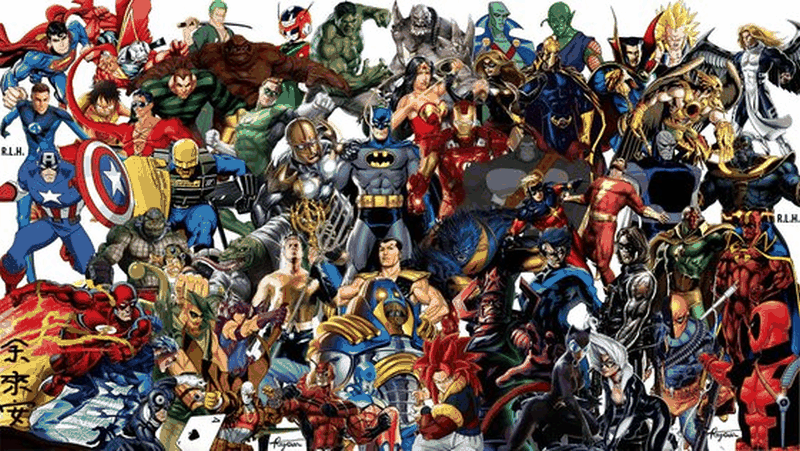
Since we've have a few new releases, I'm rewriting the list as follows:
Iron Man Iron Man 2 Thor Captain America: the First Avenger Hulk (honestly, this one's kind of optional) Avengers Iron Man 3 Thor: the Dark World Captain America: the Winter Soldier Guardians of the Galaxy Avengers: Age of Ultron Ant-Man Guardians of the Galaxy 2 Doctor Strange Thor: Ragnarok Spiderman: Homecoming Black Panther Avengers: Infinity War Ant-Man and the Wasp Captain Marvel So there you go. Every MCU movie you need to see before Endgame comes out. You have three weeks. Enjoy!
J.D. Richards is the author of the space opera
The Blue Jewel
. He works with his wife Corina Richards, founder of
Macska Designs
, who illustrates the book covers and chapter headings.
Sci-Fi Author J.D. Richards
Can you tell us about what you're currently working on?
I’ve been working on a noir-esque novel called The Emerald Princess . It's set in the same universe as The Blue Jewel , though several years later in the timeline and not meant to be a direct sequel. I’m not ready to put my little characters into harm’s way again just yet! Do you write under a pen name? If so, can you tell us why? I write under the pen name J. D. Richards, though my full name is Jeffrey David Richards. I’m a systems engineer by profession, and have always signed engineering drawings and technical reports as J. D., so writing fiction as J. D. felt natural. Have you ever written characters that you truly despise? Why or why not? I’m treading deeper into those waters with The Emerald Princess . There are some true villains in The Blue Jewel , but to write about someone truly despicable requires more of an examination of their inner id which is uncomfortable in general. I feel there is more room for that in a gloomy noir-style of writing as opposed to a more upbeat space opera such as The Blue Jewel . What do you like best about the books you read? What do you like least? I like to read books that challenge my perspective, especially those that explore a character’s dramatic transformation. I love reading about what motivates people, and investigating the cause-and-effect of their lives. If a character is acting contrary to their persona for no reason or without incentive I end up putting the book down. As a writer I try to make a character’s actions and persona congruent over their story-arc. Where did the idea of your story come from? The overarching conflict in The Blue Jewel is rooted in the time period just before the Spanish-American War, but with the story told from the perspective of the Cuban rebels. I love to learn about history, and the late 1800’s / early 1900’s time period is fascinating to me. So much of the post-colonialism era still shapes how our modern world functions - everything from the poor disaster response after Hurricane Maria in Puerto Rico, to Brexit, to the simmering hostility between the US and Iran. The stories remain human, and they remain relevant. What did you edit out of your book? In an early draft I made the mistake of having my main character announce in the beginning of Act III to the other characters what they planned on doing to solve all the world’s problems. My editor was wise to point out that is a good way to write a crummy book. Once my embarrassment subsided, I cleaned up Act III and let the MC’s plan simply unfold step by step to keep the reader in suspense. The book shines a lot brighter now, and Act III is much more fun. Man I felt like an idiot when I got my editor’s markups, but that bit of editing made all the difference. Everyone feels like an idiot once their editor gets done with them. That's what editors do. If you were to write a non-fiction book, what might it be about? Why? I would like to research how the perception of responsibility is shifting contrary to reality with respect to humans and artificial intelligence. It is easy to think that with all the progress in self-driving cars and smart bots like Siri or Alexa we can let the robots do all the work, but we do such a crummy job now of taking care of the dumb machines we already have! How many miles over do we go before finally getting that oil changed? When was the last time we actually checked on the smoke detector battery, or cleaned out our automatic water heater in our house? We still can’t even seem to keep our cell phones charged when we need them. The more we ask our machines to do, the more care and maintenance is required (ever have a dirty back-up camera lens on your car?), but the more I’m afraid the maintenance will go neglected. Maybe I will write about that topic. . . . So, basically a "Here's why the robot uprising is going to happen" textbook. Fun times... A lot of authors are frustrated by readers who don’t understand how important reviews are. What would you say to a reader who doesn’t think his or her review matters? Writers don’t write for the money. Writing is about communicating a private thought with the reader, and being hungry for reviews isn’t about wanting positive affirmation but rather a desire to deepen the connection with the reader. Sending out messages in a bottle is fun, but occasionally getting one back is nice too, even if the ocean between us is big. Even a small review can go a long way to keep the fire burning for the writer. What, in your opinion, is the worst mistake an author can make? Do not assume your imagination as a writer is deeper than that of your reader. Only write what you need to connect with the reader and tell your story. The fun in reading is for the reader to do the rest.  Chapter artwork for "The Blue Jewel"
If you could have a dinner with one fictional person, who would it be? Why?
I would like to have dinner with Arthur Dent from the Hitchhiker’s Guide to the Galaxy series. I feel like we have the same energy and would get along pretty well. If you could have one (real life) skill that you don’t currently have, what would it be? Why? How would you use it? I would like to compose music and write songs. I love playing the guitar, but don’t really consider myself a musician. I just plink along to someone else’s songs, but would love to write my own. What might we be surprised to know about you? I used to be licensed to transport nuclear waste in the State of Texas. What are three things you think we can all do to make the world a better place? 1) Show some grace. 2) Seek to develop empathy. 3) Be more forgiving. 
J. D. Richards lives in southern Arizona with his wife, their son, and their two Russian Blue cats. When he is not writing, he enjoys playing guitar, riding bikes, and watching college basketball.
You can connect with him on his website here , and you can purchase his book The Blue Jewel on Amazon here . |
What's This?The first Dragons, Zombies and Aliens blog was started in 2015. Somewhere between college coursework, paying rent with door-to-door sales, and keeping up with my sorority sisters, I wrote reviews, rants and commentaries on books, TV shows, and movies. Now, this blog has moved, improved, and the sky's the limit! Categories
All
Archives
July 2020
|
 RSS Feed