Christina "DZA" Marie
  • Home
  • About Me
    • Bio
    • Review Policy
    • Contact
    • My Favorites >
      • Books
      • TV Shows
      • Movies
  • Published Works
    • Earth's Final Chapter
    • Novellas & Shorts
  • For Writers
  • Blog

Dragons, Zombies and Aliens ​:
​The Blog

How Bloggers Can Stay Organized

6/28/2019

0 Comments

Blogging is tough.

Well, that's not entirely true. Successful blogging is tough. You need to come up with, write, and edit at least one blog post a week. You have to promote on social media. Put together and send out a newsletter. Keep the rest of your website updated. Connect with guest bloggers, or other blogs where you can be the guest blogger. And this is in addition to the rest of your life: family, friends, hobbies, a "real" job (or two), maybe even school.

So how to bloggers stay on top of it all? The key is organization.

And I can hear my entire family laughing even as I write this. At first glance, I am one of the least organized people out there. But that's not entirely true. I'm messy , for sure. All my crap gets everywhere, I never do chores, and I have a bad habit of procrastination. But I love making calendars and schedules, and I've found ways to cheat my procrastination. This is mostly done by creating little deadlines. For example, I usually make one YouTube video a month. I break that entire process down: one week for making a script, one week for recording it, two weeks for editing. I tell myself "I have to have this one part done by Saturday the 9th," which means it gets done on Saturday. But hey, it works, because I'm not rushing the entire process at the last minute.

Now, organization is a little different for everybody. What works for me might not work for you. So I'm just going to talk about the three things that are critical to my personal success as a blogger and hope that it proves helpful to you.

#1: A Monthly Calendar
Picture
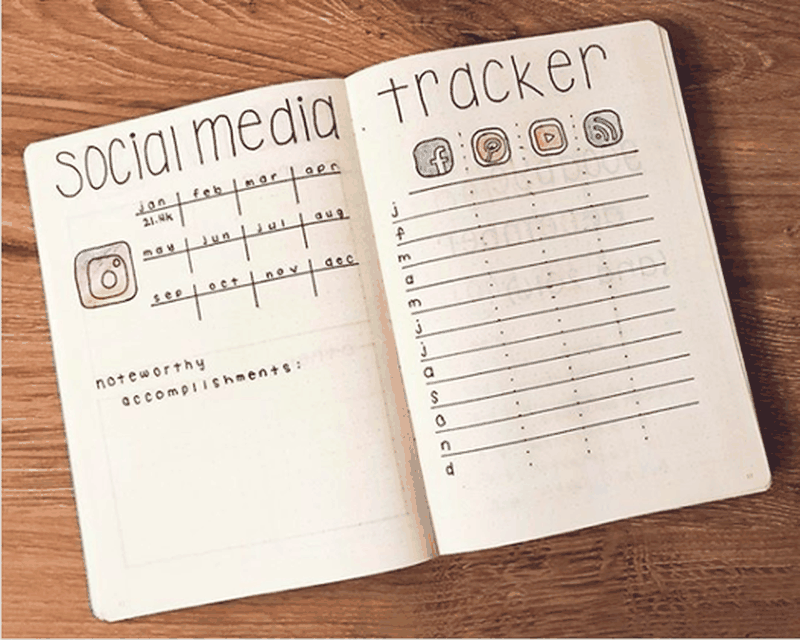
I've tried every type of planner and calendar out there. Bullet journals, school planners, iCal, and I cannot for the life of me stick with them for more than a few weeks. Mostly because they're too narrow. They focus on day-to-day tasks, and that's stuff that I can keep in my head. There's no need for me to write it down, so I don't, and the planner ends up collecting dust.

But I cannot keep more than a few days' worth of tasks in my noggin. Which is why the monthly calendar is ideal for me. I like being able to see what I'm going to be writing about at a glance. The posts I do on this website, my BitchShelf column at Luna Station Quarterly, YouTube, Patreon, and any short stories/novellas/novel due dates I have, all of them are right there.
​

I tend to plan out everything a month in advance, and have at least a vague idea of what's going to happen next month. It saves me a lot of time and headache. I know what all the deadlines are, I know at a glance when I need to promote what, and since almost everything is in pencil I can erase whatever I need and rework it.

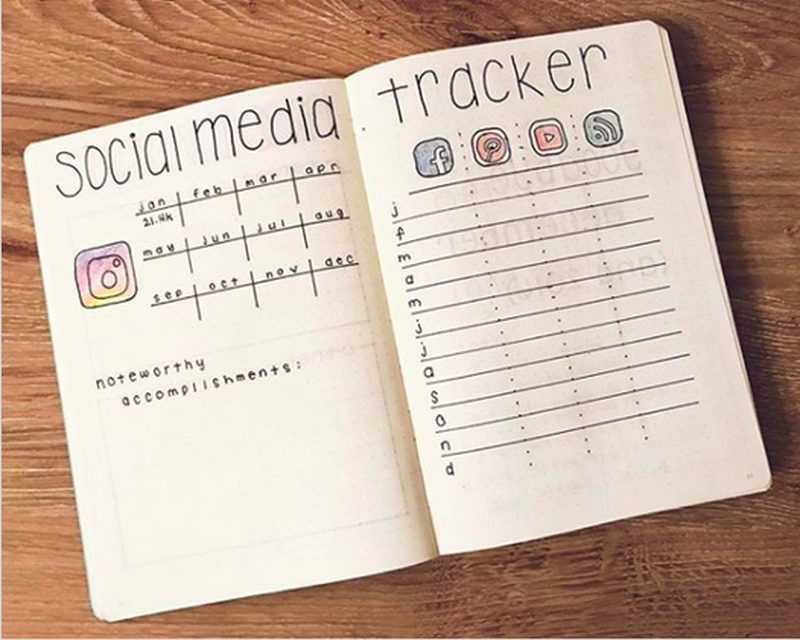
#2: A Journal
Picture
A writer without a journal is like the Doctor without their TARDIS. They just can't work without it.

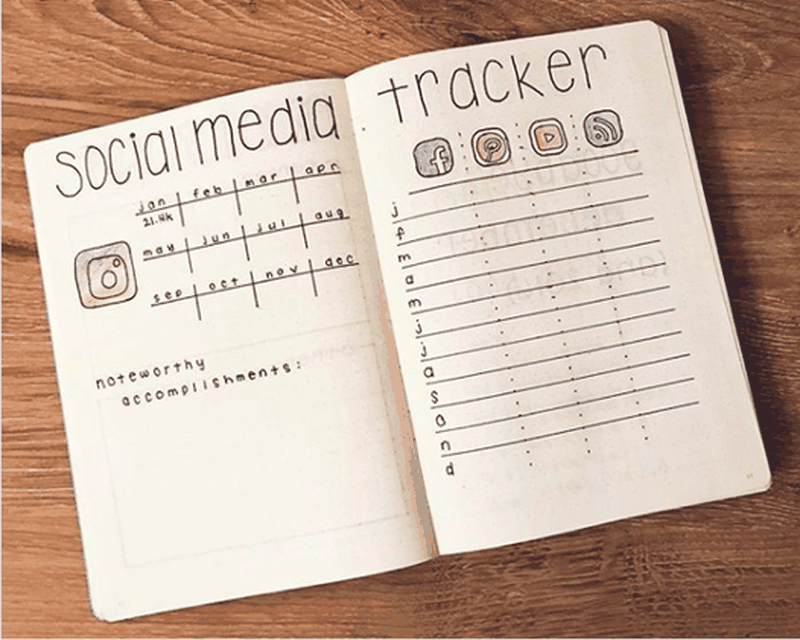
Journals are important for idea-keeping. A possible new blog post popped in your head during your day job? Write it down and then get back to work. Someone suggested a new TV show you might want to watch and review for your blog? Whip out your list and add it. Found a different blogger's post to be really inspiring and/or awful? Write down the topic so you can do it better. Seriously, take this journal with you everywhere ​.

(It didn't work for me, but check out "bullet journaling" on YouTube. If you do it right, then you get this journal and your calendar in one place.)

Eventually, you'll have a whole backlog of ideas that you can go to when it's time to plan next month's posts. Most of my blogging ideas tend to revolve around writing tips, since book reviews are self-explanatory, and I post at least one Writing Tip article a month.

It's hard looking at that blank space and thinking, Shit. What the hell am I going to write about this time? But it's a lot easier if you have a ready-made list of ideas to get you started.

#3: Accountability
Picture
I don't know about you guys, but unless I have someone or something holding me accountable, the thing I want to do almost never gets done.

Accountability has many different forms. For most writers, it's a terrifying creature known as the editor. Editors give hard deadlines, and if writers don't meet them, it's a shit storm.

But bloggers don't usually have editors. Most bloggers, like me, are solo. There is no one person, no authority figure, holding us accountable if we post a day late, or even skip the whole week.

Except your readers.

Once your readers get used to a certain pattern from you (in my case, a blog post every Friday and a guest post/interview every Wednesday), they will wonder if you don't stick to it. One of the biggest "secrets" to a successful blog is consistency. If you're not consistent, you will lose readers.

One thing that I do that keeps me accountable to my readers as well as help me stay organized is I post my monthly schedule to my patrons over on Patreon . Two days from the time this post goes live, I will tell my patrons exactly what's going to happen in August: who the guest bloggers will be, what the regular posts will be about, what the YouTube video is about, as well as any short stories or novellas that get published that month, too.

This way, if I fail to post on time, my most critical readers, the ones who financially support me, will know. And that's an excellent kick in the pants.

What tools do you use to stay organized? Let us know in the comments!

    Never miss a post! Subscribe to the Dragons, Zombies & Aliens weekly newsletter!

Subscribe to Newsletter

Want more? Become a patron on Patreon!

Picture
Support this blog on Patreon to get access to exclusive content and bonus features! Click the button below to join this amazing community.
become a patron
0 Comments

On Writing Sex - Guest Post by Jacqui Greaves

6/26/2019

1 Comment

Picture
Picture
Hi readers! I'm Jacqui Greaves, and I am thrilled to be handed the reins to Dragons, Zombies and Aliens for today. I’m going to take you on a journey to explore the weird parts of my brain that produce my works of sexy science fiction and fantasy. So, if you're under 18, now would be a good time to go and do something else.

I started writing about five years ago after careers in childcare (short-lived and miserable), marine biology, science management, and deer farming. I've published several short stories, two novellas, and a novel (more about that later). Some are science fiction and others are fantasy, but most are weird combinations of the two. What they all have in common in sex. Often very explicit sex.

To be specific, by sex I mean the physical act of sex, not the emotional state of intimacy. In writing sex I’m describing actions, sensations and influences, not feelings. This is why I've stopped saying I write erotica, because there's such a strong association between erotica and romance. I don't write romance, and my works seldom have happy endings. I also don't call what I write porn, because it's not exploitative. Unlike in most porn, the sex I write is part of the narrative, but is not the story. Sometimes I describe what I write as Lusterature, but really I just write explicit sex.

When I started writing I didn't set out to write sex. I wanted to write fantasy and science fiction, the types of stories I like to read. Despite my efforts the sex just crept in, so I let it stay.

Why? Well that’s a fine question, and I’m glad you asked!

Because, while there are some people who don’t (yes, asexuals, I acknowledge you), lots of us engage in, think about or hanker after sex pretty much daily--more for some, less for others. There’s a strong biological imperative to engage in sex, and as humans many of us start to experiment with it earlier than we’d like to admit. For most of us, sex is, and should be, an enjoyable experience without shame. But that isn’t always the case, and for me, as a writer, that’s great.

By adding sex into the mix of my speculative fiction I can explore a whole suite of character traits and behaviours that wouldn’t otherwise see the light of day. It permits me a wider vocabulary and an additional range of sensations and senses to describe. Sex brings with it, its own joys, disappointments, dangers and delights. When mixed into a speculative world, it adds a richness and depth, even an element of reality if you will.
​
So then, what differentiates good sex writing from bad sex writing?

F or starters, sex has to be anatomically and physically possible. It “might” be possible to fuck someone in the arse and suck their clitoris at the same time…but it’s highly unlikely! A scene like that would most likely make you stop reading while you tried to imagine how it could be achieved, but the aim of the writer is to keep you reading. Anything that makes you stop is bad. I once read a scene where the male twisted the woman’s boobs like doorknobs (I’m paraphrasing, but you get the picture). It just made me wince, roll my eyes and stop reading.

Unlike other genres, Science Fiction gives the writer opportunities to stretch what is anatomically possible with the introduction of aliens. The short story, "Spar" by KIJ Johnson, is an award-winning example of great interspecies sex with seemingly incompatible anatomies. The opening line alone tells us so much: “In the tiny lifeboat, she and the alien fuck endlessly, relentlessly.”
(Honestly, do yourself a favour and read the full story, here’s the link: http://clarkesworldmagazine.com/johnson_10_09/ )

Overuse of clichés and euphemisms are also sure signs of poor sex writing. If you read a cock/penis described as a beaver cleaver, love truncheon, or towering pillar of manhood, my advice is to hurl that book away. Unless it’s a parody, in which case giggle on!

Having said that, readers of fantasy are often more accepting of highly descriptive language. As an example, G.R.R. Martin uses more florid descriptors of body parts than I would, but he gets away with it because we expect it of him.


As for any scene in a story or novel, a sex scene must have a purpose. It should reveal something about the plot, characters, or their relationships. Sex can be used to explore power dynamics, reveal secrets, show attitudes, and define moral frameworks. And, unlike other story elements, sex can be used to arouse the reader. This is the magic of sex.

Gods of Fire

Gods of Fire is my first full length novel. A historical fantasy, it centers around Guillaume, an elf of mixed race.

Sentenced to death as an infant by his grandfather then abandoned by his mother, Guillaume grows up with no idea of who or what he is. All he understands is that he has a voracious sexual appetite and the power to render himself irresistible to any woman he desires. His life is thrown into turmoil when his full powers are revealed in a violent display of fire and murder. Forced to leave the only home he has known, Guillaume sets forth to unravel the mystery of his heritage. His quest takes him through France and deep into Africa. As his powers grow, only his lifelong companion, Smoke, can help him control the depraved primal urges that threaten to overwhelm him. When Smoke loses her influence, it’s not only the lives of those close to him that are threatened. Can the world survive the ancient being that Guillaume becomes?

Gods of Fire is on sale at most of your favourite online bookstores via Books2Read.
https://books2read.com/godsoffire/
About Jacqui Greaves

Jacqui has lived an adventure-filled life, spanning a range of careers and countries. She’s wrangled kindergarten children, driven buses, researched humpback whales, spoken at the United Nations, visited Antarctica, farmed deer and, most recently, written strange and sexy fiction. A New Zealander, currently living by the beach in Melbourne but on the move back to NZ, Jacqui has two novella’s published in the PNRLust Anthologies and several short stories in online publications. Gods of Fire is her first full length novel.
​
Connect
Twitter: @JacquiG_Author
Facebook: https://www.facebook.com/profile.php?id=100008782507874
Website: https://www.jacquigreaves-author.com/
1 Comment

"Oathbringer" Book Review

6/21/2019

3 Comments

Oathbringer , Book 3 of The Stormlight Archive , by Brandon Sanderson

Picture
Dalinar Kholin’s Alethi armies won a fleeting victory at a terrible cost: The enemy Parshendi summoned the violent Everstorm, which now sweeps the world with destruction, and in its passing awakens the once peaceful and subservient parshmen to the horror of their millennia-long enslavement by humans. While on a desperate flight to warn his family of the threat, Kaladin Stormblessed must come to grips with the fact that the newly kindled anger of the parshmen may be wholly justified.
​

Nestled in the mountains high above the storms, in the tower city of Urithiru, Shallan Davar investigates the wonders of the ancient stronghold of the Knights Radiant and unearths dark secrets lurking in its depths. And Dalinar realizes that his holy mission to unite his homeland of Alethkar was too narrow in scope. Unless all the nations of Roshar can put aside Dalinar’s blood-soaked past and stand together―and unless Dalinar himself can confront that past―even the restoration of the Knights Radiant will not prevent the end of civilization.

No spoilers!
(Except for Stormlight book 2)

I have to wait a whole fucking year for book four. God dammit.

If you're new to The Stormlight Archive , allow me to direct your attention to the review I did for the first book, The Way of Kings , as well as the second book Words of Radiance and the novella Edgedancer . It's a really great series, so check them out if you haven't already.

While Oathbringer stays true to the Archive's overall positive, fantasy adventure genre, it definitely has some darker moments. Permanent character deaths lie ahead. There are even some grimdark moments, which come up when we dig into Dalinar's past, and...yeesh. No wonder the guy used to drink.

One of the hallmarks of grimdark is the moral ambiguity of the characters, and that is definitely a theme in this book. Dalinar gets his magically-erased memories back and remembers the horrible things he did as a soldier that led him to drink. Humans in general and Kaladin in particular have to come to terms with the fact that they have horribly used and abused an entire race of people who are now justifiably fighting back. Venli--one of the Parshendi (Eshonai's sister and the one who helped create the Everstorm)--slowly realizes her mistake in bringing back the old gods and has to decide whether to remain complicit or fight against the evil deity Odium. By the way Odium thinks he himself is a good guy , and that he's helping the world and humanity by destroying it. Similar to King Taravangian, who's working hard to undermine Dalinar's anti-Odium coalition, "for the good of Roshar." Also we see the mess of a human Szeth--the Assassin in White--who's trying to figure out his own life and find redemption, just like his new teacher, the ancient Herald Nin, who's been murdering petty criminals and all other Knights Radiant in a futile attempt to stop the Desolation.

It's a mess. A glorious, awesome mess.

It's not just the line between good and evil that's getting blurred, either. The strict gender norms that have dominated the first two books are starting to break down as a handful of women reject traditional femininity and join Bridge Four; there is, in fact, a major character halfway through the book who is a female military commander. Sanderson throws in a mention of a couple of men in a relationship together (not enough for me to consider this series LGBT friendly, yet, but it's getting there). And Shallan's sanity starts to break down as she hides behind various personalities she's created, namely Veil and Radiant.

I mentioned this in my Edgedancer review , but it bears repeating: Sanderson is getting really good at talking about mental and emotional health with his characters. Kaladin still has his depression. Shallan is basically developing dissociative identity disorder as a way to cope with her own crippling self-worth and abusive history. Teft and Dalinar are both recovering addicts and both of them, at some point in this book, fall off the wagon as their mental health deteriorates.

On a brighter note, Jasnah and all her bitch-ass awesomeness comes back. We also get more development of the Kaladin and Adolin bromance.

That last one was put in jeopardy for a short time, which I was not happy about. It wasn't threatened because of plot development, or Kaladin's prejudice against lighteyes, or even Adolin's "accidentally a murderer" deal--although, since it was Sadeas he murdered, that probably wouldn't have been much of a threat.

No, this beautiful bromance was jeopardized by the most heinous of villains: a love triangle.

I don't like love triangles on a good day. Not only do I find them unrealistic and tropey as all hell, but it's usually a hallmark of lazy writing, and Sanderon is not a lazy writer. Triangles are a way for the writer to whip up some easy drama, a way to ensure that there's tension between certain characters.

But...I mean...there's already drama and tension. So much of it! Adolin's guilt over killing Sadeas, Shallan's deteriorating mental health, Kaladin's depression and own feelings about the parshmen, and, oh yeah, the freaking Desolation happening around them.

There's plenty of drama. Why are we resorting to cheap gimmicks for more?


Taking out the love triangle would have given Sanderson more time to focus on other aspects of the story, like Navani (Jasnah and Elhokar's mom, Dalinar's current wife). Sure, we the audience know that Jasnah is alive. But she doesn't know that. She was told her kid was killed just a few weeks ago. And what does Navani do?

Get married. Help with the politics. Mention it once while keeping the tears at bay.

Bullshit. That is Navani's dead child . And we don't see her grieve at all. Matter of fact, her grief over Dalinar's fake-out death at the end of The Way of Kings ​is way more realistic and moving than her reaction of Jasnah's fake-out death. After the denial she went through in book two when Shallan first brought her the news, I expected to see other stages of grief: sorrow, anger, and finally acceptance. In fact, Ialai--Sadeas's widow--gets to show her grief for her asshole husband far more convincingly than Navani for Jasnah. And she's the bad guy . I feel more sympathetic for that petty bitch than I ever do for Navani, and that's not good writing.

As a matter of fact, none of the good guys seem to grieve for other good guys who die. There's a part where Szeth--you remember the Assassin in White, the one who killed the previous king, Dalinar's brother --has to work together with Dalinar. And Dalinar...doesn't even mention the assassinations. At all. Even when all the fighting is over and they have a moment to address the huge elephant in the room, nobody says anything. And that's ridiculous! That has huge personal and political ramifications that even someone like Dalinar should be able to see.

This makes no sense because, as previously stated, Sanderson is not a lazy writer. Nor is he a bad one. But sometimes, he focuses on the wrong things when it comes to his characters and their narrative arcs, especially when it comes to non-main characters like Navani. Which is a shame, because she's a great character, and the way Sanderson has been writing her so far hasn't been doing her justice.

The good news is there's still plenty of time to address those issues. There are several more books planned in this series. So the next time a character close to a major character dies, they'll hopefully actually grieve instead of being a robot about it.

    Never miss a post! Sign up for the Dragons, Zombies & Aliens weekly ​newsletter!

Subscribe to Newsletter

Want more? Become a patron on Patreon!

Picture
Patreon allows fans to support their favorite creators while getting free goodies in return! Support this blog for sneak peaks, short stories, exclusive content, and more!
become a patron
3 Comments

Interview with Fantasy Author Laura Kehoe

6/19/2019

0 Comments

Laura Kehoe is a fantasy author from Washington State. When she isn't writing, she loves to read, snuggle with furry creatures, and drink copious amounts of coffee and tea. ​

Interview with Laura Kehoe

Picture
Can you tell us about what you're currently working on?
​

My current project is a fantasy novel, with portals and magic, and possibly dragons. I have just finished the general outline, so it will be a bit before the book is anywhere close to ready. But I think it could turn out really cool!


Do you write under a pen name? If so, can you tell us why?

Sort of. I started publishing books before I was married, so I used my maiden name. Even though my real last name is different now, I didn’t want to confuse anyone by changing my author name, so I stuck with Kehoe.


What do you like best about the books you read? What do you like least?

I love seeing what other creative minds come up with, especially when it comes to world-building. It’s so much fun to see what other crazy, exciting ideas are out there in the world.

​One of the things I like the least, however, is when characters are flat and uninteresting. If I don’t care about any of the characters, no matter how good the plot and world-building are, I most likely won’t like the book.


Were you “born to write” or did you discover your passion for writing later in life?

I do feel like I was “born to write.” Ever since I learned how to form cohesive sentences, I have been making up stories for myself and, later on, for other people.


Where did the idea of your story come from?

My books, Royal Thief and Redemption , were inspired from a mix of a couple different stories. The biggest influences were Christopher Paolini’s Inheritance series and Les Misérables .


Do you have complete control over your characters or do they ever control you?

It’s definitely a mix of both! When I talk to my non-writer friends and mention that my characters have minds of their own, my friends think I’m crazy! But it’s true that sometimes you can’t help following where a character leads you.


A lot of authors are frustrated by readers who don’t understand how important reviews are. What would you say to a reader who doesn’t think his or her review matters?

Reviews are incredibly important! I know a lot of people don’t get that, but to them I would say that reviews are the best way for other readers to learn about a book. Some sites, like Amazon, will give priority to books with a certain number of reviews, but even if that’s not the case, a review can give potential readers a glimpse into what exactly the book is like. They really are one of the most important tools a writer can have.


What, in your opinion, is the worst mistake an author can make?

I think one of the worse mistakes an author can make is writing a book they hate. Sometimes authors will write a book they aren’t interested in, but that they think readers will want to read, or are encouraged to write a book for some other reason. But I think in most cases, the author’s disinterest or dislike shows through in their book. And if they don’t like the book, how can a reader be expected to?


Do you have any advice for new authors?

I’m by no means an expert on writing, but one of the best pieces of advice I ever received is keep writing. What I mean is, even when you feel stuck, or when you can’t think of anything good to write, just write something. First drafts are supposed to be kind of bad. You can always edit things later when you go back through your work.

Picture
If you could go to any fictional world, where would you go? Why?

I know it’s cliché, but I’m going to have to go with Middle Earth. Ever since I was a little girl, I have dreamt of traipsing through The Shire, exploring the magical forests of Lothlórien, and just going all over that land. It all seems so magical.


I’d go just to hang out with Eowyn.

If you could have one magical ability/superpower, what would it be? How would you use it?

There are a lot of superpowers and magic abilities I wish I had! But I think the one I want the most is invisibility. I think it would be so fun to just watch people go about their lives without anyone judging me for staring too long at complete strangers. (I promise I’m not a stalker). Plus then I could get some quality, uninterrupted reading time without trouble!


What is your Hogwarts House and why?

I’m not at all embarrassed to say I’ve spent a bit of time thinking about this question! I have waffled between Hufflepuff and Ravenclaw, but I think I lean more towards Hufflepuff.

​
Saaame!

What creature is better: dragons, zombies, or aliens?
That’s such a tough one! I have always loved dragons and aliens, but if I had to choose one above the other, I have to go with dragons.


Connect with Laura!

You can find Laura on her blog here .

She's also on social media!
Facebook
Twitter
Tumblr
and Instagram .

Thank you for joining me on my blog, Laura!

Picture

    Never miss a post! Sign up for the weekly Dragons, Zombies & Aliens newsletter!

Subscribe to Newsletter
0 Comments

How Writers Can Come Up with Story Ideas

6/14/2019

0 Comments

Picture

Your Book Idea Does (Not!) Suck

"Where do you get your ideas" is a hated question in the writing community. Most authors just do . Ideas just kind of appear from the nether, or are gifted from "the muse," or hit us like a train while we're taking a shower. It's widely accepted in the writing community that story ideas are random. That they're rare golden nuggets that only a lucky few get to uncover.

But. Did you know that you can actually generate story ideas at will?

The process tends to be a little different for each author. But it exists. Career authors, or anyone who wants to write more than a handful of original stories, need to be able to generate story ideas at will.

But how do you do that? How do you "tame the muse"?

​Here are some ideas.

Creativity Begets Creativity

One of my favorite sources of writing ideas is other stories. This is true for a lot of writers. Read the ancient classic Beowolf and then Tolkien's The Hobbit , and you'll see what I mean. Creativity begets creativity. It's really fun to watch a movie or read a book and think "Well, what if the characters had done this instead," or "How would the story change if the main character had fire powers instead of ice powers," or even, "What's going to happen in this world in the next generation? What if the child or grandchild of our rightful-heir-turned-king is a total dick?" Etc.

Recently, many people will ask these questions, like, "What if Harry Potter was sorted into Slytherin instead of Gryffindor," and stop right there. They'll write a fanfic story about that. Which is totally fine, and as both a reader and writer of fanfiction I'm not in any position to argue this. But if you want to be a professional author--that is, someone who gets paid for writing original stories--then you're going to have to get original.

Let's take that Harry Potter idea and break it down. The idea is that there's a new kid on the block--we'll call him Barry--who's going to a fantastical world that separates people into groups. Each group has its own stereotype: the brave ones, the smart ones, the nice ones, and the evil ones. Obviously it's a lot more complicated than that (and as a Huffleclaw, I have a few choice words about how "awesome" and "good" Gryffindors are supposed to be), but that's the impression Barry and the readers are getting, at least in the first book. Note that in this story, you don't need four groups. We can have three, seven, twenty, whatever.

So what happens if Barry ends up in the "evil" group, rather than the "good" group like he wanted, like everyone around him expected? You get a hell of a lot of character development is what you get.

The world-building is completely up in the air. It could be a magic school, but everyone's going to see it as a Hogwarts knock-off, so maybe avoid that. Instead, we could make it a superhero academy, or a science fiction setting where the school is in outer space, or, if you really want the fantasy school setting, a school of werewolves (werepuppies!), or demon-hunters, or whatever.

The story itself would focus on Barry, who now has to interact with people he initially thought of as jerks but turn out to actually be pretty awesome, proving that the "evil" house is really not evil, just stereotyped. He'll probably have to save the world, since this is a YA novel. And confront some parts of himself that he'd really rather not examine, like his tendency to let his ambition cloud his friendships, or how he feels he always has to be in charge even to the detriment of others.

Basically, you ask a question of a story that you really like, and then create new characters and worlds to answer that question. The story will then write itself.
Picture

Turn Your History Geek On

It's now a widely-known fact that George R. R. Martin's Game of Thrones series was largely inspired by the real-life War of the Roses, which took place in England in the 15th Century. He basically just added ice zombies, direwolves, and of course, dragons.

Studying history is a good idea for a variety of reasons, especially for writers, but it can also be a wellspring of inspiration. Especially when you take in ancient religious beliefs and mythologies. What if the ancient Aztec gods were real, and pissed at the recent lack of blood sacrifices? Can you create a space empire modeled after Imperial China? Maybe model one of your characters after an unknown or overlooked historical figure.

And it's not just history. Science--especially biology--is another really great source of inspiration. Creatures of the deep blue sea are the stuff of nightmares, so stick them in a horror setting! Take a crack at paleontology to see what extinct animals you can dust off and use in a fantasy world. Hell, there's even a bestselling series out right now that's basically Game of Thrones with dinosaurs.

The Internet!

I'd be remiss if I didn't acknowledge the internet. There are hundreds of websites specifically designed to cough out writing prompts. These can be serious to just plain silly. But they work. Google "writing prompt generator" and you'll see what I mean.

The internet also has an endless stream of art, which in and of itself can be turned into a writing prompt. This can be for a full-blown story or just a basic writing exercise to get the juices flowing. (See last week's "Rustic Pursuits" for an example.) But google something like "dragon art" or "post-apocalyptic setting," choose an image, and write a story about what that image is about.

Don't Sweat It. (Seriously, Don't.)

In the end, the concept (or idea) of your story doesn't actually account for all that much. It might encourage people to pick up your book, but if it's not written well--that is, has engaging characters and an intriguing plot--then readers are going to drop it like a hot brick. Conversely, you can have the most over-used story idea of all time--say, a chosen one selected by a prophecy to defeat the dark lord--and if it's written really, really well, then you're fine.

Your story idea may be the most ridiculous idea ever. But story ideas are really just the start. It's all in the development and execution of that idea that a writer's skill is judged.


How do you come up with story ideas? Share your inspiration tips in the comments!

    Never miss a post! Subscribe to the Dragons, Zombies & Aliens weekly newsletter.

Subscribe to Newsletter

Want more? Support this blog on Patreon!

Picture
become a patron!
0 Comments

GP by Jeannette Bedard: Day 115 on an Alien World

6/12/2019

1 Comment

Jeannette Bedard is a blogger and science fiction author whose book Day 115 on an Alien World is a futuristic mystery. In this guest post, she shares her journey in becoming a writer.

Sci-Fi Author Jeannette Bedard

Picture
It was a dark and stormy night...

This was the first line of the first piece of fiction I ever wrote. I think I was about ten at the time and the story was about a wizard in his tower working on potions. This wasn't my first foray into imaginary worlds, just the first one I wrote down--sadly, I don't have a copy now.

As long as I can remember, my imagination has been swimming with stories—almost always set in a fantastical world (futuristic or fantasy) filled with adventure. But, I've never considered myself much of a writer, being mildly dyslexic and a non-linear thinker.

A few years later, when I was in high school, I started mulling over a new story idea and I started writing it down. The story was military science fiction – a genre I’d never read any books in at the time. At that point in my life, I don’t think I’d even read any science fiction then either beyond A Wrinkle in Time . But, I kept at it, taking the manuscript with me to university—two years later it was done.

I don’t remember the full plot of my book, just snippets of a post-apocalyptic Earth, space ship battles and a futuristic prison. My original idea included pegaus-style horses with wings, but couldn’t come up with any reasonable explanation of how they could possible generate enough lift to get off the ground so I edited them out. The title was Twilight – chosen over a decade before that title was linked to vampiric romance.

I still have a copy of this one. The stack of printed pages are thick enough to be roughly 70,000 words, an okay length for a novel. I’ve been debating if I should read it or not. Over the years after that, I wrote two more novels that are still stashed (un-read) in binders on my shelf along with notebooks full of ideas.

To my surprise, when I started grad school in a mathy, science discipline, the first piece of advice my supervisor gave me was to start writing--and he wanted to see my early drafts. I handed in a potential thesis chapter right away with my non-linear thoughts and taciturn writing on full display.

He was brutally honest about the state of my writing, but he was also clear that the mechanics of writing could be learned. He pointed out that writing about science is an exercise in storytelling (or at least it should be) and that the only way to become a good storyteller was to practice.

After our conversation, I walked out his office and started a blog ( Tangent Ramblings ) to write about science. I didn't think I had more than a half-dozen posts in me—that was in 2011 and I've been writing posts ever since. I think I'm up over 300 now.

Fast forward a few years, and I realized I liked the mechanics of telling as story, and I was getting better at it.

Then I read The Martian , which I enjoyed greatly. It was the first science fiction I’d read in years and it set gears into motion in my head pondering my own fiction again. This is the scenario I started with:

You are in an atmospheric suit on an alien world and there’s a leak in it. Alarms are blaring as your bubble of breathable air is bleeding away. Slap a patch on the leak and you’d be good to go. Mark Watney managed it – but you’re not this lucky. What if the suit was also covered in mud? How would you find the leak then? Muddy gloves wouldn’t get far in cleaning the suit off. But it still could be worse, what if the mud was about to freeze? What if you’re completely alone?

Ideas flowed from there and grew into an entire novel. This time, I didn't put the book on the shelf after the first draft. Instead, I kept working on it. First by dissecting its structure, morphing my non-linear thoughts into a logically flowing story. I shared it with as many people who would read it and incorporated their feedback.

Three years later, I bit my lip and released the completed novel to the world-- Day 115 on an Alien World .  The book is widely available both in ebook and print format and I've been amazed at the all the positive feedback! Here's my favourite review so far (from Amazon): “I'm a sucker for well-written sci-fi adventure novels, and boy, did this one deliver!”

I think I can declare myself officially bitten by the writing bug as book 2 in the series ( Far Side of the Moon ) is also now out and book 3, Abandoned Ships; Hijacked Minds , is in its final stages on track to be released early summer.

I'm still debating if I dare to read my first novel. Perhaps someday I'll make up my mind—until then it'll remain stashed on my shelf.

    Never miss a post! Subscribe to the Dragons, Zombies & Aliens weekly newsletter.

Subscribe to Newsletter

Want more? Support this blog on Patreon!

Picture
Patreon.com allows you to support the creators you love in exchange for free goodies! DZA patrons get sneak peaks, first dibs on published stories, and free copies of my writing.

Click the button below to join this amazing online community!

become a patron!
1 Comment

"Edgedancer" Book Review

6/7/2019

0 Comments

Edgedancer , a novella by Brandon Sanderson

Picture
(Book 2.5 of The Stormlight Archive .

Book 1 is The Way of Kings .

Book 2 is Words of Radiance . )


Three years ago, Lift asked a goddess to stop her from growing older--a wish she believed was granted. Now, in Edgedancer , the barely teenage nascent Knight Radiant finds that time stands still for no one. Although the young Azish emperor granted her safe haven from an executioner she knows only as Darkness, court life is suffocating the free-spirited Lift, who can't help heading to Yeddaw when she hears the relentless Darkness is there hunting people like her with budding powers. The downtrodden in Yeddaw have no champion, and Lift knows she must seize this awesome responsibility.

No Spoilers (Promise!)

"Novella" my ass. This thing is 250 pages.

Unlike all the other books in The Stormlight Archive, Edgedancer is a huge departure from form in that it focuses exclusively on one character, with no detours or side-stories. It's actually kind of nice. Simple in a way this series isn't. And the character Sanderson chose--Lift--is phenomenal. She's extremely whacky, impulsive, and doesn't care about any kind of rules or structure. But she's also kind and compassionate, doing her best to keep people safe even as she goes to great lengths not to get attached to anything or anyone.

If you're reading The Stormlight Archive and are wondering who the hell this Lift character is, she's the thief who can turn Slick, has an obsession with food, and her spren Wyndle is the one that's made out of vines. If you're still drawing a blank, the short story that she first appeared in in Words of Radiance --where she helps a bunch of other thieves break into the Azish palace and ends up accidentally making one of them the new emperor--acts as the prologue to Edgedancer , so you get a nice refresher.

That's one of the things that's a downside to Sanderson's work. This series is incredible, the world-building is insane, and there's so much going on. Too much. More than once I've come across a name or place or concept that we've seen before, and it's supposed to be this big reveal, but I'll be drawing a complete blank because the thing was last seen a thousand pages ago and I have no idea what's going on. When book four comes out, I'm probably going to have to re-read the first three books to have half a chance of keeping everything straight.

Also in Edgedancer , Sanderson touches on mental health. Lift gets some food at an orphanage in the city of Yeddaw and befriends one of the other kids, who has a cognitive disability because of head trauma (i.e. head smacked bad, make brain sad). This is something I've noticed Sanderson doing more and more of, which is really good. Mostly. So far, every physical disability that's popped up--lack of limbs, paralysis, head trauma, etc.--has been fixed via magic. That's kind of a bummer, because we have people running on walls and flying and whatnot, and I would've loved to see a guy in a tricked-out wheelchair doing that, or a deaf bridgeman teaching everyone sign language so all the Windrunners can communicate in the sky, or someone with chronic pain calling the shots at a war meeting. Stuff like that. But no; magic glowing light fixes all that before it can become plot-relevant.

However, mental health has been handled better and more realistically; that is, it doesn't get a quick fix like a missing limb in this world. Kaladin still has seasonal depression, which is a pretty big deal considering the fact that he's one of the main characters. One of the men of Bridge Four is revealed to be an addict who keeps falling off the wagon. Shallan...probably should be more messed up than she is, but her development in light of her abusive family life is pretty true to form.

Anyway. Back to Edgedancer . According to Sanderson, this was more of a fun side-quest than anything else, as he loves the character of Lift and wanted to explore her more in depth. But in the main series, she barely pops up, and when she does it's after most of her character development. So basically, this was an author just having fun showing us the backstory of a minor character in a great series. And it shows. It's probably not critical ​to read this book to understand the series as a whole, but it's definitely worth the read.

    Never miss a post! Sign up for the Dragons, Zombies & Aliens ​weekly* ​newsletter!

    *I send out the newsletter every Friday, with the week's two blog posts, and any other articles/videos/stories that come out that week.
Subscribe to Newsletter

Want more? Support this blog on Patreon and get access to free goodies!

Picture
become a patron
0 Comments

Interview with Fantasy Author Jordanna Max Brodsky

6/5/2019

0 Comments

Last month, I reviewed the grimdark historical fantasy book The Wolf in the Whale , which combines Inuit and Norse mythology and stars a gender non-binary character. This week, I got to interview the author, Jordanna Max Brodsky.

Interview with Jordanna Max Brodsky

Picture
You’ve written a lot of stories based on ancient mythology. What inspired your interest in that?

Like so many people, my first exposure to mythology came with D’Aulaires Greek Myths when I was a kid. One of the last pages shows a nighttime scene of broken columns and toppled statues and reads, “All things must come to an end. So too did the reign of the Olympians.” I always found that heartbreaking. But the beauty of writing is that you can create the world you want, not the one you have, so I decided to imagine a universe in which the gods hadn’t all died out after all. That became the Olympus Bound series.

Once you start writing about mythology, it’s hard to stop. Most fantasy authors have to construct their worlds from scratch, but myth provides settings, costumes, ancient languages, poetry, legends, and religions. I didn’t need to invent places like Nunavut or Iceland or Athens—I could actually visit them. Yet, myths that exist in so many different versions that there’s plenty of room to find your own stories as well.

The gods themselves, whether or Inuit or Norse or Greek, are quite different from our amorphous modern conceptions of the divine. They’re capable of supernatural feats but still profoundly human: full of rage, despair, love, jealousy, and laughter. It’s a fascinating paradox, the same one that draws us to superhero movies. At the same time, there’s a reason humanity has retold myths for so long. They touch on themes as compelling today as they were a thousand years ago: loyalty and betrayal, metamorphoses and murder, family and exile.


Can you tell us about what you’re currently working on?

I’m experiencing an authorial evolution. The Olympus Bound series is contemporary fantasy, a Percy-Jackson-for-adults thriller about the Greek goddess Artemis in the modern day. The Wolf in the Whale moved into historical fantasy, exploring both Inuit and Norse myth in their ancient context. Now I’m embarking on my first purely historical fiction project, with no fantasy in sight. But I’m still focusing on the challenges that women face when they defy their culture’s norms. The new book is set during the Civil War, and it follows an Irish immigrant who disguises her gender to enlist in the Union Army. It’s inspired by the true stories of hundreds of women who did the same thing, the vast majority of whom have been forgotten by history.


There are unfortunately very, very few SFF stories that star a trans/non-binary character. Was making Omat, the main character in The Wolf in the Whale , trans/non-binary a conscious decision to combat this, or was it just a natural happenstance?

Omat’s gender was actually one of the reasons I chose to write about Inuit culture in the first place. In the historical record, most of the conflicts during the Viking expeditions to North America occurred between Norsemen and the Beothuk Indians. There’s only a brief reference in one saga to a group who were likely Inuit. But that one evocative verse led me to start researching Inuit culture, and as soon as I learned about their conception of what scholars call the “Third Sex,” I knew I had my protagonist. It’s an identity that is not exactly the same as what we call transgender. Instead, Inuit children in traditional culture possess the name-soul of an ancestor. In rare occasions, the child was then raised in that ancestor’s gender, even if it didn’t correlate to their biological sex. This is something decided at birth by the shaman and the community, not an understanding that the child themselves comes to at some point later in life.

To me, The Wolf in the Whale is more a story about an individual who wants to defy gender roles—the same way strong women have been doing forever—than it is about being specifically transgender. Perhaps gender non-binary is a more appropriate term for my protagonist, as Omat definitely lives in both genders, but it, too, implies a modern conception that isn’t entirely applicable to this ancient story. At the end of the day, I simply hope that The Wolf in the Whale can serve as yet another reminder that our understanding of gender and sexuality is infinitely varied and constantly evolving.


Inuit and Norse mythology are two things that usually don’t mix. Why did you decide to bring them together in The Wolf in the Whale ?

I’m always fascinated by the forgotten moments in history. Too often, we only learn the same few fundamental stories in school—America’s founding myths, you might say—and we forget that other cultures lived in this land long before our own. Few people even remember that the Norse “discovered” America five hundred years before Columbus. Even fewer know that one of the leaders of those Norse expeditions was a woman—Leif Eriksson’s sister, Freydis Eriksdottir. And almost no one talks about the fact that the Norse settlement eventually failed in part because the indigenous people, including Inuit hunters, successfully fought them off.

Once I knew I wanted to write about the Norse and the Inuit, pairing their mythologies seemed only natural. Because both cultures evolved in similar maritime Arctic environments, their stories have some striking similarities. Both see the Sun as female and the Moon as male, an inversion of the Classical tropes. And both are full of ravens, wolves, and sea monsters. One fought with iron, the other with bone and slate, but these two parallel cultures make both well-matched adversaries and surprising allies.


You’ve done a lot of traveling in order to research for your stories. What are some of the favorite places you’ve visited?

For pure, unadulterated pleasure, I’d have to pick Crete, which I visited when researching Artemis’s ancient sacred sites for The Immortals and the Olympus Bound series. It’s hard to beat crystalline lagoons, pine-scented gorges, and the original Labyrinth.

But for sheer awe, I’d go with Nunavut in subarctic Canada, where I traveled last year for The Wolf in the Whale . Granted, the temperature was near forty below with the wind chill, but watching the Northern Lights shimmer overhead in a psychedelic ballet of orange and purple and green made me forget the cold. I learned things on that trip that I didn’t realize I didn’t know. The Internet can show you how to construct an iglu, but it’s not until I actually snowmobiled onto the sea ice to build one with an Inuit elder that I appreciated the view from inside—like a perfect spiraled sea shell, with each snow block limned in sunlight. I’d watched half a dozen videos on lighting a traditional Inuit oil lamp, but never smelled the nutty, soothing scent of the burning moss wick, nor known the pleasure of staring into the steady mountain peaks of flame.


The Wolf in the Whale examines sexual violence, but not just from the survivor’s side, it also explores the guilt and impact of the perpetrators of sexual violence. Why is that?

I know many readers would prefer not to read about sexual violence, and I completely respect that position. For this particular book, however, I wanted to acknowledge that sexual violence was (and is) very much a part of many women’s lives—especially in the medieval world when their bodies and rights were even less valued than they are today. The fundamental Inuit myth I explore in the book—the formation of the Sun and the Moon—centers on an incestuous rape, so sexual violence necessarily plays a role in the larger story.

When creating my male Viking protagonist, I definitely toyed with the idea of making him a pure soul who completely defied the stereotype of a raping marauder. But it simply didn’t ring true. Not all Norsemen were Vikings (a point I make clear in the book), but those that were certainly showed little mercy to the villages they attacked. They regularly took women as slaves and concubines. To ignore that fact was to ignore reality. So I decided the more interesting choice was to try to understand how a culture can teach a man to be a predator—and then to explore how he can come back from that.


If you could have one (real life) skill that you don’t currently have, what would it be? Why? How would you use it?

The ability to type for more than two hours at a time. Since writing my thesis in college, I’ve been plagued by tendonitis in my hands and wrists, making typing for long periods quite painful. I would write far faster if I could write for longer each day. So a note for aspiring authors: get yourself an ergonomic typing setup and keep stretching! You don’t want to wind up like me!


Who in your life has truly inspired you?

Juliet Marillier. Her Daughter of the Forest is what made me become a writer in the first place. I found that book so profoundly engrossing and emotionally gut-wrenching that I knew I had to try my hand at creating a world that could do the same for other readers.


What creature is better: dragons, zombies, or aliens?
​

Definitely aliens. Dragons and zombies, I’m afraid, just don’t exist. The fact that aliens actually might makes them infinitely more fascinating to me. I prefer to work reality into my fantasy.  Also, since there’s nothing to say that aliens can’t take the form of zombies or dragons, you can have your cake and eat it too!


A big thank-you to Jordanna for coming onto my blog for this interview! Check out my review for her book The Wolf in the Whale . And I don't know about you guys, but I'm adding the Olympus Bound series to my Amazon wish list.

    Never miss a post! Subscribe to the Dragons, Zombies & Aliens newsletter!

Subscribe to Newsletter

Want more? Become a patron on Patreon!

Picture
Patreon allows fans to support the work of their favorite creators, and get sneak peaks and free goodies in return! Become a patron on Patreon to support this blog!
become a patron
0 Comments

      Subscribe to the DZA newsletter!

      You'll get weekly updates of blog posts, videos, and news, right in your inbox!
    Subscribe

    What's This?

    The first Dragons, Zombies and Aliens ​blog was started in 2015. Somewhere between college coursework, paying rent with door-to-door sales, and keeping up with my sorority sisters, I wrote reviews, rants and commentaries on books, TV shows, and movies. Now, this blog has moved, improved, and the sky's the limit!

    RSS Feed

    Categories

    All
    Book Reviews
    Demonology Files
    Fantasy
    Giveaways!
    Good News!
    Guest-posts
    Horror
    Interviews
    Movies
    Race & Ethnicity
    Sci Fi
    Sci-Fi
    Sexism & Feminism
    Superheroes
    TV Shows
    Writing Tips

    Archives

    July 2020
    June 2020
    May 2020
    April 2020
    March 2020
    February 2020
    January 2020
    November 2019
    July 2019
    June 2019
    May 2019
    April 2019
    March 2019
    February 2019
    January 2019
    December 2018
    November 2018
    October 2018
    June 2018
    May 2018
    April 2018
    March 2018
    February 2018
    January 2018
    December 2017
    November 2017
    October 2017
    September 2017
    August 2017
    July 2017
    June 2017
    May 2017
Proudly powered by Weebly
  • Home
  • About Me
    • Bio
    • Review Policy
    • Contact
    • My Favorites >
      • Books
      • TV Shows
      • Movies
  • Published Works
    • Earth's Final Chapter
    • Novellas & Shorts
  • For Writers
  • Blog