Christina "DZA" Marie
  • Home
  • About Me
    • Bio
    • Review Policy
    • Contact
    • My Favorites >
      • Books
      • TV Shows
      • Movies
  • Published Works
    • Earth's Final Chapter
    • Novellas & Shorts
  • For Writers
  • Blog

Dragons, Zombies and Aliens ​:
​The Blog

Book Review: the Diviners Series by Libba Bray

7/19/2020

0 Comments

A spoiler-free review of Libba Bray’s 1920’s historical fantasy series “The Diviners.” Think occult horror + the Devil Wears Prada + several romantic subplots.

If you’ve read “The Diviners,” what did you think?
If you haven’t read them yet, what historical fantasy novels have you enjoyed?

--

A list of my favorite books:
http://www.dzamarie.com/favorite_books.html

--

Follow me on Social Media!
Twitter: https://twitter.com/CM_DZA
Instagram: https://www.instagram.com/dza_marie/
Facebook: https://www.facebook.com/ChristinaDZAMarie

--

Patreon:
http://www.patreon.com/dzamarie
0 Comments

Guest Post: 10 Amazing Sci-Fi/Fantasy Books by Women

6/28/2020

0 Comments

Hello DZA readers! My name is Dan Ruffolo, and I’m the writer for the SFF review/article site Strange Currencies . Christina got in touch with me to see if I was interested in doing an exchange of guest posts with her, and this being my first chance to do something like that, I jumped at it. So here we are!

In light of the recent dialogue around publishing as an industry and a highlight of the ways in which advances and marketing budgets are leveraged primarily to the benefit of male, white authors, it becomes incumbent on us as reviewers to take up some of the slack on the marketing front and make sure our readers are made aware of the fantastic genre writing that already exists by women and WOC.

In the hopes of maybe encouraging you to branch out and explore inside the genre, I here and Christina over on my blog will each present a list of 10 great sci-fi or fantasy novels written by women (view her 10 picks here ). If we can encourage you to branch out to femme authors if you haven’t been, or help you discover some new authors, we can help change the idea that publishers are ‘taking a risk’ by supporting, marketing and selling authors like them, and instead make it business as usual.

A note on the list: For the most part I’ve either picked a specific book I particularly enjoyed by that author, or the first book in a series/their first novel. Almost all of these authors are still actively publishing new work, so don’t necessarily take my touting of a book from 20+ years ago as an indicator that they’re not still creating all kinds of excellent work, just as a pointer to the starting place if you want to get into their creations. A few of them link to reviews I’ve written on my site.

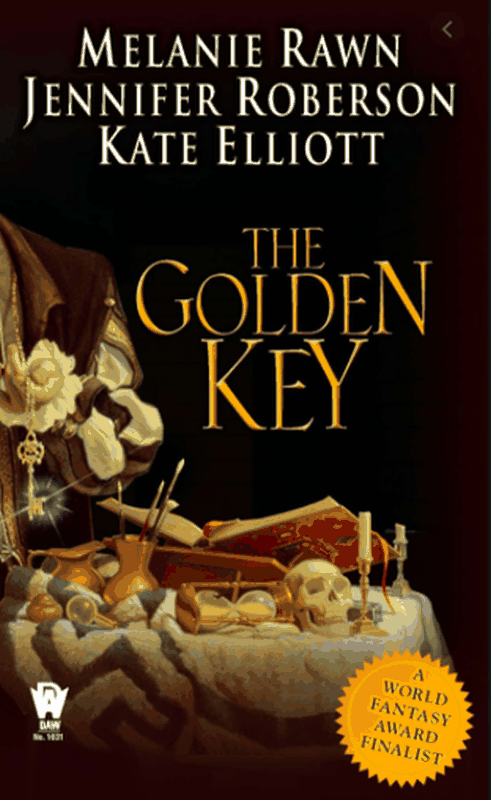
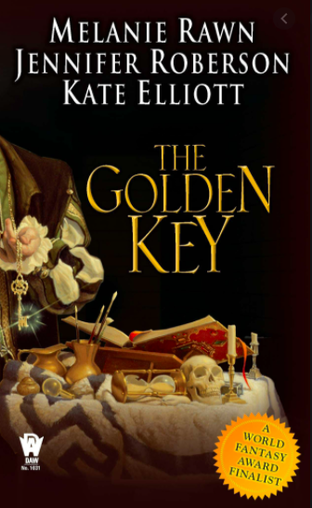
The Golden Key by Kate Elliott, Jennifer Roberson, and Melanie Rawn
Picture
While the list here is not actually ranked, I am starting with my favourite book on the list, and one of my favourite books of all time, the co-written Fantasy novel of epic proportions (running to nearly 800 pages): The Golden Key .

Telling the generations-spanning story of the Grijalva family, a family of painters with many subtle secrets, it includes one of the most interesting systems of magic I’ve ever seen. Melanie Rawn would go on to write another novel in this setting, T he Diviner , and to have collectively stopped at only two novels feels like a horrible waste, so incredible is this world and this novel.

Who Fears Death by Nnedi Okorafor

Picture
The first adult fiction novel by Dr. Okorafor, Who Fears Death was nominated for the Locus, World Fantasy and Nebula awards for Best Novel, winning one and surely deserving of the other two.

Handling the difficult themes of race, oppression, and weaponized rape with a grace and aplomb that would almost astound if she hadn’t made it look so easy, the story of Onyesonwu’s coming of age, coming to terms with her world, and quest for justice made this book...you don’t want to use a word like ‘enjoyable’ for a story dealing with such serious themes. I suppose I would say ‘compelling.’ But it was a journey I absolutely had to finish as soon as I started it.

A Darker Shade of Magic by V.E. Schwab

Picture
(A note on the linked review: As it says, it was based on a preview copy of only the first quarter of book one, and I was fairly unimpressed with it based on that. I went on to buy and read the full novel, and both of the others, and absolutely enjoyed the crap out of them, so take the review with a hefty dose of salt.)

One of the best examples of a parallel worlds fantasy I can think of, Victoria Schwab’s A Darker Shade of Magic is an absolutely fascinating look at London through the lens of Kell and Lila, denizens of the magic-rich Red and mundane Grey versions of the city. Fantastic pacing, a deep and rich story and an absolute top 5 ‘best female protagonists’ entry in the form of Delilah Bard, the three books of the Shades of Magic trilogy were a wonderful introduction to a great author.

Brightly Burning by Mercedes Lackey

Picture
While coming quite a bit later in the overall widely-spanning Valdemar series (being the 18th book chronologically and the 24th book by publication in a staggering 45-books-and-counting series) I’ve always held a special place for Brightly Burning both as a book in general, and a suggested entry point into the Valdemar world.

​In addition to being a stand-alone in what is often a sea of trilogies and duologies, the story of Lavan Firestorm is a deeply emotional and impacting one for anybody who has ever been an outsider. One of the first times I ever cried reading a book.

Fool’s Assassin by Robin Hobb

Picture
Robin Hobb was one of those authors that I knew for years and years I should read, and just never got around to. Another example of starting late in a series, Fool’s Assassin is the first of a trilogy, but the 14th in the larger Realm of the Elderlings . I gather for people who’d been reading the whole series, the eponymous Fitz of this Fitz and The Fool trilogy was the draw, but for me the show was completely and absolutely stolen by the character of Bee. She was an absolute frigging delight, and the primary push for me to continue on with the trilogy. I’m sure I’ll end up going back to read the rest of the Fitz-based novels, they really are excellent and he’s a great character, but what I really want is more Bee!

Parable of the Sower by Octavia E. Butler

Picture
An extremely topical novel for our current times, Parable of the Sower really highlights the degree to which Octavia Butler exemplified the foundational aspects of science fiction: using imaginary worlds and future settings to mirror the very real issues of the world, and provide a framework for thinking about how to approach that future with hope and aspiration.

​A post-, or really mid-apocalypse of climate change, corporate greed, and racism backdrops a young woman’s vision for a better future. Even if Butler weren’t a phenomenal writer in her own right, the sheer volume of contemporary parallels in this, and its sequel Parable of the Talents , should make this mandatory reading.

Valor's Choice by Tanya Huff

Picture
The first installment of, for my money, one of the best boots-on-the-ground military sci-fi series ever made, Valor’s Choice introduces Staff-Sergeant Torin Kerr, also one of my favourite protagonists as well. Huff does an incredible job keeping Torin bad-ass and unwilling to take any shit, and do anything to preserve the safety of her team, while also keeping her empathetic, reasonable and incredibly human, a task at which a lot of authors, especially with male protagonists, fail miserably.

​The eight-book series is finished, making it a safe dive-in for people who worry about starting series that aren’t done yet. For those who are less interested in sci-fi, I can also highly recommend her Quarters series (4 books, high fantasy) as well as the Keeper Chronicles (3 books, urban fantasy).

Flesh and Fire by Laura Anne Gilman

Picture
A completely random pick-up at my local library that turned into an absolutely amazing trilogy, and a strong entry in the list of ‘best magic systems,’ as well as as one of the very few books I’ve read that starts with a young chosen one with incredible powers that doesn’t turn into garbage.

​Instead, the Vineart War trilogy intimately captures the combination of fear, anxiety, and pride that accompanies anybody who has the pressure of presumed greatness hanging over their heads. You pretty much couldn’t ask for a more realistic and human ‘chosen one.’ And when you combine the novelty of a wine-based magic system, you’ve got the makings of something really excellent, and Gilman didn’t disappoint at all.

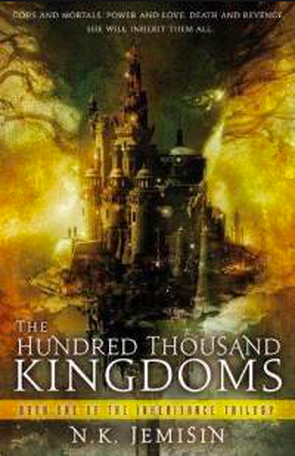
The Hundred Thousand Kingdoms by N. K. Jemisin

Picture
The debut novel for the woman who would go on to become one of the most award-winning SFF authors in the history of the genre, barely a decade into her career. You can see in The Hundred Thousand Kingdoms the seeds of the brilliance and skill that would lead her to become the only author to win three Best Novel Hugos in a row, and one of only five authors to win three total in their lives.

A fantastic...not so much subversion as innovation...of the otherwise tired trope of “young person goes to big city, gets embroiled in big city politics and learns dark secrets.” The idea gets new life breathed into it with some amazing conceptual world building and a unique narrative style. While it’s never good to get into the practice of canonizing authors where you “have to” read them to be considered well-read in the genre...after 3 Best Novel wins in 4 nominations in less than 10 years, the importance of Jemisin to modern SFF really can’t be understated.

The Ghost Bride by Yangsze Choo

Picture
One of the biggest advantages to branching out from the industry-dominant ‘US/UK White Dudes’ when it comes to reading fantasy is getting to experience all of the cultural myths and spiritualities of other cultures and how they interact with the fantasy genre.

The Ghost Bride takes a long-standing tradition and then steeps it in the fantastical in probably my favorite method of doing historical fantasy. The both figurative and literal spiritual journey that Li Lan undertakes is heartfelt, genuine, and just superbly executed upon.

And in doing a bit of back research to refresh myself on this title, I’ve discovered that Choo has another book out just last year-- The Night Tiger-- which looks to build upon the same themes.
Dan is the creator of the review and article website Strange Currencies . A lifelong reader of almost exclusively Sci-fi and Fantasy, he has been reviewing since 2011. In addition to reviews, he is a freelance editor, and game designer and is going back to school in September to become a Paralegal and Law Clerk. You can find him in various social media places:

Website: www.strangecurrencies.org
Twitter: @sff_writer_dan
Facebook: https://www.facebook.com/StrangeCurrenciesReviews
What are your favorite sci-fi/fantasy books written by women? Tell us in the comments!

    Never miss a post! Sign up for the weekly Dragons, Zombies & Aliens newsletter:

Subscribe to Newsletter

Thank you, patrons, for making this blog possible!

Picture
become a patron
0 Comments

Deathless Divide - Book Review

6/17/2020

0 Comments

Deathless Divide by Justina Ireland

The sequel to the New York Times bestselling epic Dread Nation is an unforgettable journey of revenge and salvation across a divided America.

After the fall of Summerland, Jane McKeene hoped her life would get simpler: Get out of town, stay alive, and head west to California to find her mother.

But nothing is easy when you’re a girl trained in putting down the restless dead, and a devastating loss on the road to a protected village called Nicodemus has Jane questioning everything she thought she knew about surviving in 1880s America.

What’s more, this safe haven is not what it appears—as Jane discovers when she sees familiar faces from Summerland amid this new society. Caught between mysteries and lies, the undead, and her own inner demons, Jane soon finds herself on a dark path of blood and violence that threatens to consume her.

But she won’t be in it alone.

Katherine Deveraux never expected to be allied with Jane McKeene. But after the hell she has endured, she knows friends are hard to come by—and that Jane needs her too, whether Jane wants to admit it or not.
​

Watching Jane’s back, however, is more than she bargained for, and when they both reach a breaking point, it’s up to Katherine to keep hope alive—even as she begins to fear that there is no happily-ever-after for girls like her.
Picture

Spoiler-free review

Note: while there are no spoilers for Deathless Divide here, there are spoilers for the first book Dread Nation . So if you're interested in Justina Ireland's work but don't want to get spoiled, click on the Dread Nation ​review here .
A little while ago I reviewed the first book in this series, Dread Nation , which followed Jane and Kate from Miss Preston's zombie-killing school to the wild west racist playground of Summerland, in 1880.

I re-read Dread Nation before getting into the sequel, Deathless Divide , and it gave me whiplash. You would think that Justina Ireland could see into the future: replace "zombies" with "COVID-19," and "Survivalist" with "Trump-supporter," and you've got 2020 in a nutshell. It's a little eerie. But it's a necessary read for any fans of speculative fiction who want to better understand race relations, because Ireland does her research. While there's the obvious fantasy element of zombies that throws American history on a different track, it's still grounded in reality, and there are direct parallels between the heroes' plight and our modern-day racial discrimination.

Deathless Divide picks up right where Ireland left off in Dread Nation : Jane, Kate, and their friends let Summerland get devoured by zombies while they try for the fortified town of Nicodemus. The big problem here is that's where a lot of other Summerland survivors are heading, and you'll recall they're all white supremacists. As soon as Jane arrives she spends the next several chapters in a jail cell for murdering the last book's villains: Sheriff and Pastor Snyder.

Deathless Divide is all about consequences. Not only do Jane and Kate have to wrestle with them, but so does this book's villain: Gideon Carr. If that name sounds familiar, it's because he was one of Jane's allies in Dread Nation, and also helped come up with the ineffective "vaccine." He turns villainous because he doesn't have regard for the consequences of his actions. He's consumed by the goal of finding a cure or effective vaccine for the zombie plague and makes horrible, devastating mistakes that cost Jane dearly.

He has several parallels to Victor Frankenstein: he's sympathetic in that he doesn't
mean to be evil, and in fact sees himself as the good guy (re: "it'll all be worth it"). At the same time, I don't feel bad for him in the least because he should've learned his lesson the first time a hundred people died. He's a rich scientist who doesn't care about the trail of bodies he leaves in his wake; the zombies aren't nearly as dangerous as he is.

While Gideon goes full on evil, Jane skirts that line herself. In Dread Nation she was already something of an anti-hero, with all of her lying and not particularly going out of her way to save other people, just herself and her frenemy Kate. But when Gideon triggers a vengeance quest within her in Deathless Divide , she goes a little nuts, turning reckless and vicious. While she never hurts an innocent, she does put a few in direct danger and develops taste for torture.

We also get Kate's point of view. This gets irritating because her chapters, like Jane's, are all first person POV. Dread Nation was told purely through Jane's eyes, which worked beautifully. In Deathless Divide , each chapter alternates: chapter one is Jane, chapter two is Katherine, chapter three is back to Jane, etc, much like the last two books of Tiana Warner's Eriana Kwai Trilogy . And just like that series, it can get confusing as to whose head we're in. As much as I appreciate getting into Katherine's mysterious backstory, there were probably better ways to go about it.

Having said that, Katherine's chapters are just as good as Jane's. We learned already that Katherine is asexual and aromantic, a fact that remains true throughout this sequel--none of that ace character getting "fixed" nonsense. Now we learn that she also has anxiety and fierce loyalty. While Jane's romantic subplot(s) are very light, Ireland goes ham on the Power of Friendship, and I love it .

This is an intense story. A major character from the previous book dies in the first fifty pages. People lose limbs and break hearts. One of the main characters is in very real danger of turning full villain. But it is absolutely worth it.

Deathless Divide is an excellent sequel, tying up all the loose ends from the previous book and building upon the established characters' arcs. We also got to see a lot more worldbuilding in zombie-infested 1880 America: the Wild West, California, and New Orleans. If you like zombies, Westerns, and black characters, you're going to love this.

    Never miss a post! Subscribe to the Dragons, Zombies & Aliens newsletter:

Subscribe to Newsletter

Thank you Patrons for supporting my blog!

Picture
Become a Patron
0 Comments

The Bird King - Book Review

5/24/2020

0 Comments

The Bird King by G. Willow Wilson

From award-winning author G. Willow Wilson, The Bird King is an epic journey set during the reign of the last sultan in the Iberian peninsula at the height of the Spanish Inquisition.

G. Willow Wilson’s debut novel
Alif the Unseen was an NPR and Washington Post Best Book of the Year, and it established her as a vital American Muslim literary voice. Now she delivers The Bird King , a stunning new novel that tells the story of Fatima, a concubine in the royal court of Granada, the last emirate of Muslim Spain, and her dearest friend Hassan, the palace mapmaker. Hassan has a secret—he can draw maps of places he’s never seen and bend the shape of reality. When representatives of the newly formed Spanish monarchy arrive to negotiate the sultan’s surrender, Fatima befriends one of the women, not realizing that she will see Hassan’s gift as sorcery and a threat to Christian Spanish rule. With their freedoms at stake, what will Fatima risk to save Hassan and escape the palace walls? As Fatima and Hassan traverse Spain with the help of a clever jinn to find safety, The Bird King asks us to consider what love is and the price of freedom at a time when the West and the Muslim world were not yet separate.
Picture

Spoiler-Free Review

The alternative title for this book is How the Spanish Inquisition Ruins Everything. I'm horribly undereducated about Muslim Spain, knowing only that it existed and practiced near unheard-of religious tolerance at the time before Isabelle and Ferdinad showed up. I'm pretty sure they didn't have magic mapmakers, but don't quote me on that.

Fatima is the sultan's concubine, and while she has every luxury imaginable at the start of the novel, she's still a slave. So trigger warnings for that, and an attempted rape later in the novel. She best friends with Hassan, the magic mapmaker who's also gay. They love and adore each other like siblings, so when the Inquisition comes knocking and decides Hassan needs to be tortured to death, Fatima doesn't hesitate to get him out of dodge at the risk of her own life. They then spend the rest of the novel being absolutely terrified, chased across the peninsula and seas by the Inquisitors, talking to jinns with ambiguous morals, and overall being in a hot mess.

Fatima herself is a complicated character. Yes, she loves Hassan and continuously pulls him out of danger at the risk of her own life. But she's also selfish, craving freedom and control over everything else. Not that anyone can blame her, seeing as she's spent the majority of her life as a sex slave. On top of that, her relationship with Hassan is somewhat toxic, especially as the novel progresses and they get more codependent. His friendship is the only thing she's been able to choose for herself, so when he starts flirting with other characters she gets jealous and possessive. Part of her arc is learning to let him be his own person separate from her.

She's also quite a badass. Sure, she has no combat training and zero idea what she's doing. That doesn't stop her from stabbing at various bad guys and jumping off of cliffs. She basically spends the entire story throwing herself into crazy, dangerous situations and hoping for the best, and she survives either because of the magical intervention of her jinn allies, luck, or her own stubbornness.

The magic system is extremely soft, in that there are no clear rules. Narratively it makes sense. Fatima is one of the few major characters with no magic, so it gives the story a very ethereal feel as she navigates both the regular world and magical world, neither of which she understands.

The soft magic system and somewhat cheesy, open ending both combine to keep this book off of my Favorites list . But that's pure personal preference. I would recommend this book to anyone who likes historical fantasy, power of friendship, and women of color being awesome.

    Book Giveaway is Still Open for Entries!

    The 3rd Anniversary Dragons, Zombies & Aliens Giveaway is officially in its last week! Everyone who signs up for the weekly DZA newsletter has a chance to win four ebooks. Click here for more info. You can also enter your email below to sign up for the giveaway and newsletter!
Subscribe to Newsletter

Thank you Patrons!

Picture
Patreon ensures that this blog keeps going. Patrons also get access to sneak peaks and early access to my podcast. $5+ patrons get free copies of my ebooks. Click the button below to join this exclusive community:
become a patron
0 Comments

Mermaids of Eriana Kwai Trilogy - Book Review

5/10/2020

0 Comments

This Mothers' Day, here's something that has absolutely nothing to do with mothers!

Ice Massacre , Ice Crypt , and Ice Kingdom by Tiana Warner

A mermaid's supernatural beauty serves one purpose: to lure a sailor to his death.

The Massacre is supposed to bring peace to Eriana Kwai. Every year, the island sends its warriors to battle these hostile sea demons. Every year, the warriors fail to return. Desperate for survival, the island must decide on a new strategy. Now, the fate of Eriana Kwai lies in the hands of twenty battle-trained girls and their resistance to a mermaid's allure.

Eighteen-year-old Meela has already lost her brother to the Massacre, and she has lived with a secret that's haunted her since childhood. For any hope of survival, she must overcome the demons of her past and become a ruthless mermaid killer.

For the first time, Eriana Kwai's Massacre warriors are female, and Meela must fight for her people's freedom on the Pacific Ocean's deadliest battleground.

Spoiler-Free Review

A long, long time ago, I reviewed the first book of this amazing trilogy, Ice Massacre . I even interviewed the author, Tiana Warner .

Then I got distracted by other shiny books for three years until quarantine forced me to face my ever-growing reading pile. Now I'm reviewing the entire trilogy at once.

​ Mermaids of Eriana Kwai is a "What if flesh-eating mermaids existed in the modern day" story, complete with a forbidden romance, violent war, and a taste of political intrigue. Mermaids exist peacefully all over the world, but for some reason they're targeting this one island--Eriana Kwai--in a ruthless war of extermination. They're overfishing the waters so the humans starve, destroying any and all boats that leave shore, even going onto the beach to kill people who stray too close to the water. In response, the people of Eriana Kwai do the yearly Massacres, where twenty men go out on a war ship to kill as many mermaids as possible. This hasn't had much luck, given that mermaids have a siren-like ability called the lure that hypnotizes men. So, at the start of book one, the island gets over its sexism, wises up, and sends out women.

This is a problem for a variety of reasons, the largest being that Meela--the main character--has a mermaid friend named Lysi who eventually becomes her girlfriend.

As it turns out, the mermaids are being ordered to Eriana Kwai by their tyrant king, Adaro. Lysi and several rebel groups don't want any part in this war and are trying to overthrow Adaro. So after the first book, which is focused on Meela trying to survive the Massacre, she and Lysi try to kill Adaro through a variety of assassination attempts, including unearthing a horrifying living weapon of mass destruction: the Host of Eriana Kwai.

The trilogy is mostly first person POV, but it gets complicated after Ice Massacre . In the first book, it's exclusively Meela's point of view. In Ice Crypt and Ice Kingdom , the POV flips from Meela to Lysi. Then we get a third person POV, an American soldier named Ben, in Ice Kingdom to get the broader, global perspective of the mermaids' actions. It gets a little confusing at times, and I wish Warner--and every other writer who had multiple POV characters--would just stick with third person POV so we know whose head we're in.

Because the POV is also limited to these characters, we miss some of the action in the final book, Ice Kingdom. There are several political factions working to get rid of Adaro and bring peace to the oceans for their own reasons. While Meela and Lysi are doing their mission, these factions are doing their own thing, but we don't actually see it. Which is a small problem, because it's vital to the plot. I'd have liked to see all these interesting, intense scenes myself rather than hearing about it second-hand. But while those scenes are important to the plot , they're not important to the story , so I can see why Warner elected to cut them out.

The emotional center of the story is, of course, Lysi and Meela's relationship, as well as Meela's character development. Lysi doesn't change much over the course of the trilogy, but Meela does. She has to reconcile her people's hatred of and hurt from mermaids with not only her personal feelings for Lysi, but also the fact that mermaids are people, too. Then, when Adaro starts acting more dickish than usual, she struggles between her desire for revenge and what's best for the world, both human and mermaid.

While I have my complaints about this trilogy, I will never complain about Warner's characters or her writing. These books are intense , and as Warner is very liberal with the character deaths, you're very quickly worried about the fate of major characters. She also throws in some excellent plot twists in Ice Crypt and Ice Kingdom , so I'm always kept on my toes.

This is technically a YA novel, but it can be read by anyone ready to see blood, gore, and tyranny overthrown by more than a band of plucky eighteen-year-olds. And it's landing solidly on my Favorite page.

    Never miss a post! Sign up for the weekly Dragons, Zombies & Aliens newsletter!

    The Dragons, Zombies & Aliens anniversary giveaway is still going on through May 30th 2020. Sign up for the newsletter for a chance to win four free ebooks:
Subscribe to Newsletter

Huge thank-you to my patrons on Patreon!

Picture
For sneak peaks and free goodies, join this exclusive community of awesome people by clicking the button below:
become a patron
0 Comments

The City in the Middle of the Night - Book Review

4/12/2020

0 Comments

The City in the Middle of the Night by Charlie Jane Anders

Picture
"If you control our sleep, then you can own our dreams... And from there, it's easy to control our entire lives."

January is a dying planet—divided between a permanently frozen darkness on one side, and blazing endless sunshine on the other. Humanity clings to life, spread across two archaic cities built in the sliver of habitable dusk.

But life inside the cities is just as dangerous as the uninhabitable wastelands outside.

Sophie, a student and reluctant revolutionary, is supposed to be dead after being exiled into the night. Saved only by forming an unusual bond with the enigmatic beasts who roam the ice, Sophie vows to stay hidden from the world, hoping she can heal.

But fate has other plans—and Sophie's ensuing odyssey and the ragtag family she finds will change the entire world.

Spoiler-Free Review

The City in the Middle of the Night is a book that needs to be digested after reading it. It covers a lot of ground with a lot of different themes, bad guys and good guys swap roles so often it's like they're playing hop-scotch, and it pulls directly from real-world issues and re-examines them through a science fiction lens.

What I'm trying to say is, it's awesome.

First, a crash course on astronomy. Not all planets rotate. Earth rotates, allowing almost every part of our planet to be warmed by the sun and then cool off. This allows us to survive, not being burned alive or frozen to death. But when a planet is tidally locked, only one side of the planet ever faces the sun. That side of the planet is literally on fire, as the surface temperature is hot enough to cook anything less sturdy than a rock. The side of the planet facing away from the sun, meanwhile, is a total frozen wasteland. The only way human life could survive is by staying in that thin habitable layer between the two extremes, and that's where the people of January make their homes.

The story is told through two different perspectives: Sophie and Mouth. Sophie's chapters are all first person POV while Mouth's are third person POV, and I have no idea why Anders did it this way. (Honestly, it's my only real complaint. Just use third person POV for both so we don't get confused and move on.) Sophie's a student who is executed for stealing a few dollars, the police tossing her out into the night. Luckily, she runs into a "crocodile"--a creature of the night a lot more intelligent than people assume--who saves her and takes her back. Sophie is traumatized by her execution and spends the book trying to heal and move past it. Problem is she can't, because she keeps getting dragged into social uprisings and revolutions. (Damn politics.)

Mouth is a smuggler, and the last survivor of a race of nomadic people called the Citizens. When she's not moving questionable goods and people between the cities in the habitable zone, she's working through a whole cocktail of issues centered around the ghosts of her past. One of the other characters accuses her of valuing the ghosts of the dead more than people who are alive, and that sums her up pretty well.

The emotional core of the story is the relationship between Sophie, Mouth, Bianca, and Alyssa. Sophie has a huge crush on Bianca, who is a radical revolutionary roping Mouth and Alyssa into her schemes, while Mouth is trying to use Bianca to get a lost artifact from the Citizens even though she knows it'll get Bianca killed, and Alyssa just wants to retire but she's Mouth's best friend and also really believes that Bianca can make positive change, and it's all a big, beautiful mess.

Despite the fact that it opens with Sophie's execution, the story itself is relatively slow. Act One is spent in Xiosphant, Bianca and Sophie's home city. Tidally locked planets don't have sunrise, noon, sunset, midnight, etc. So Xiosphant created their own time system and makes everyone stick to it religiously. It's so strongly enforced that even uttering the phrase, "Sleep when you're tired, play when you want" is enough to get you executed. Through various shenanigans, all four characters get kicked out and go to the city of Argelo, which is the exact opposite. There is no time measuring, and there is no authoritarian government, so the entire city is run by crime families.

While the characters are running around from various authorities, building and re-building their lives as fugitives, Anders also has them deal with really harsh themes of grief, trauma, extremism, authoritarianism, poverty, hope, environmentalism, and our responsibility to other people. It's not a happy story, but it's not a tragedy, either. It's a bittersweet tale with the moral of the story being, Horrible things happen, and they will continue to happen unless you break the cycle.

Welcome to the Favorites List , City in the Middle of the Night !

    Never miss a post! Sign up for the weekly Dragons, Zombies & Aliens newsletter:

Subscribe to Newsletter

Want more? Become a patron!

Picture
Patrons get access to free ebooks, early access, surveys, and more. They also allow me to continue to put out good content on my blog and podcast. Click the button to become a patron:
become a patron
0 Comments

Book Review: Witchmark

2/16/2020

0 Comments

Witchmark (The Kingston Cycle Book 1) by C. L. Polk

Picture
In an original world reminiscent of Edwardian England in the shadow of a World War, cabals of noble families use their unique magical gifts to control the fates of nations, while one young man seeks only to live a life of his own.

​Magic marked Miles Singer for suffering the day he was born, doomed either to be enslaved to his family's interest or to be committed to a witches' asylum. He went to war to escape his destiny and came home a different man, but he couldn’t leave his past behind. The war between Aeland and Laneer leaves men changed, strangers to their friends and family, but even after faking his own death and reinventing himself as a doctor at a cash-strapped veterans' hospital, Miles can’t hide what he truly is.

When a fatally poisoned patient exposes Miles’ healing gift and his witchmark, he must put his anonymity and freedom at risk to investigate his patient’s murder. To find the truth he’ll need to rely on the family he despises, and on the kindness of the most gorgeous man he’s ever seen.

(Spoiler-Free) Book Review

TW for Witchmark: violence, murder, mentions of suicide and drug/alcohol abuse

All right, I'll admit it: I judged the book by its cover.

In my defense, the info on the back cover of my copy is very different from what I just copied and pasted from Amazon. It led me to believe that this would be a charming British tale with whimsy and a cute heteronormative romance. A nice break from Black Leopard Red Wolf , and ultimately forgettable.

Nooope.

This book is officially on my Favorites page . We have a murder mystery, gay fae romance, in-depth themes of classism and mental health, and an adorable cinnamon roll of a protagonist who is also a badass. Five stars. Love it. Pre-ordered the sequel as soon as I could.

The world is basically Victorian England ("Aeland") with magic. The only acceptable form of mage are the Storm-Singers, hiding in plain sight and exclusively upper class. They control the weather. Everyone else, that is, anyone whose magical ability is not in league with X-Men's Storm...well, if you're upper class, you get to be a Secondary, paired with a Storm-Singer as their personal battery pack. Any mage who isn't upper class is called a witch and sent off to an asylum because "witches" go crazy, but "mages" are totally fine.

(There's literally no difference. Except the difference in paycheck. I wasn't kidding when I said this book tackles classism like whoa.)

Unlike other books that pull this type of worldbuilding stunt, the copy-and-paste history is very limited. Our setting is the very British-like city of Kingston (London), in Aeland. There's a queen who bears a strong resemblance to Queen Victoria. Aeland is a new imperial power, just about to colonize Laneer. And...that's about it. There are strong elements of British history, but it's not cut straight from a textbook, especially since most of the focus is on magic and its impact on the country.


We're told the story through the first person POV of our protagonist, Dr. Miles Singer, who was born a mage into an upper class family. But, since his magical ability is healing rather than Storm-Singing, he is condemned to be a Secondary, basically slavery with golden chains. So, he ran away. We meet him after he's been "dead" for about a decade and acting as a psychiatrist in a veterans' hospital, trying to find out why so many vets suddenly snap and murder their whole families, then themselves. And since this is pseudo-Victorian England, he's not getting a whole lot of help.

Miles is a self-sacrificing, overly-polite gentleman whose biggest fear is being bound as a Secondary, a possibility that becomes more and more likely when he suddenly runs into his sister Grace, who is a Storm-Singer. Grace is an interesting character, because while she wants to help Miles and all the other Secondaries, she still wants Miles bound to her. She thinks the only way to help them is her way, that is having Miles bound to her but with a loose chain so he can continue being a doctor and living his own life.

Basically, Grace is toxic. But because she has good intentions and genuinely cares about Miles, nobody thinks she's toxic. She's just looking after her brother. What's wrong with that?

(Many things. There are many things wrong with it.)

There are several other characters--Miles's asshole father, the love interest Tristan, the patients and medical staff at the hospital--and they all feel real and distinct. The book itself is relatively short (300 pages) and very fast-paced. I finished the whole thing in about four days, and that was only because I had to work.

Overall, this is an excellent read, and I really hope the sequel lives up to it.

    Never miss a post! Sign up for the Dragons, Zombies & Aliens newsletter below:

Subscribe to Newsletter

Get more on Patreon!

Picture
Patrons who support my Patreon page get access to sneak peaks, free goodies, and exclusive content. So hit the button below and join this excellent community!
become a patron
0 Comments

Book Review: Black Leopard, Red Wolf

2/9/2020

0 Comments

Black Leopard, Red Wolf by Marlon James

Picture
Tracker is known far and wide for his skills as a hunter: "He has a nose," people say. Engaged to track down a mysterious boy who disappeared three years earlier, Tracker breaks his own rule of always working alone when he finds himself part of a group that comes together to search for the boy. The band is a hodgepodge, full of unusual characters with secrets of their own, including a shape-shifting man-animal known as Leopard.

As Tracker follows the boy's scent--from one ancient city to another; into dense forests and across deep rivers--he and the band are set upon by creatures intent on destroying them. As he struggles to survive, Tracker starts to wonder: Who, really, is this boy? Why has he been missing for so long? Why do so many people want to keep Tracker from finding him? And perhaps the most important questions of all: Who is telling the truth, and who is lying?

Drawing from African history and mythology and his own rich imagination, Marlon James has written a novel unlike anything that's come before it: a saga of breathtaking adventure that's also an ambitious, involving read. Defying categorization and full of unforgettable characters,
Black Leopard, Red Wolf is both surprising and profound as it explores the fundamentals of truth, the limits of power, and our need to understand them both.

(mostly) Spoiler-free Review

Where to start.

You know when you read a book that you don't particularly like , but it's still a really good book that needs to be talked about and read? That's the category I would put Black Leopard, Red Wolf .

This story has been called "the African Game of Thrones ," and since I love GoT (before HBO ruined the last season, anyway), I picked it up. What followed was a harsh yet engrossing read, and I think what's got me so put-off about this story is that it doesn't have a happy ending. Matter of fact, it gives our lead character--Tracker--a happy ending, and then takes it away so he can spend the last two chapters on a vengeance quest. Because Marlon James is a very talented asshole.

Since we're told at the very beginning that the boy he's searching for is dead, and that Tracker is in a prison cell (he's the narrator, telling the story to a priest), we know that something bad happens. I was expecting him to fail his quest and then get betrayed, but as Bruce Banner so wisely said, "No, this is much worse."

Sue me: I want my happy ending. Doesn't matter how dark the beginning or middle of a story is, there should at least be a bittersweet tone in the end. And believe me, the middle of the story is very dark. We're talking torture and gang rape of the main character, frequent cannibalism by a variety of terrifying monsters, and the death of children. There are about eighty trigger warnings that should be put on this thing.

Some positives:

The worldbuilding is absolutely incredible. Each city and landscape has its own distinct culture and dangers. I am sorely lacking in education when it comes to the hundreds of cultures, mythologies, and histories of Africa, so I don't know how much of it is pulled from real life, how much is mythology, and how much is just James messing around, but it works, and all fantasy authors should take note.

The characterization is on point. Tracker is our main character and narrator, so everything we see is seen through his eyes (first person POV), and that man is a hot gay mess. Matter of fact, all of the major characters are hot gay messes. The Leopard, Tracker, Tracker's first boyfriend, Tracker's second boyfriend, they've each got a bouquet of issues. Mossi is the only one with any sense of emotional stability, and he doesn't show up until halfway through the story.

The pacing is slow. Though it's an intense read from beginning to end, Tracker doesn't even hear about the boy he's supposed to find until over a hundred pages in. This works, because there's a lot of information that needs to be given and processed concerning the world and Tracker himself. There are also frequent time skips and flashbacks, which can get confusing, but it also presents the story in a way to maximize the tension.

One of the most unique aspects of the story is the prose. If you've ever read Nnedi Okorafor ( Who Fears Death ), it's similar to that, except with a lot more swearing. It's difficult to understand at some points, especially to a pasty-White reader like myself. But once you get the hang of it, it makes the story flow like melted butter.

So, yeah. African-based grimdark novel with excellent characterization and worldbuilding, with a ton of gay and a sharp, memorable story. It'd be one of my favorite books if James would just let Tracker have his happy ending , for fuck's sake .

I ask for so little, James. Christ.

    Never miss a post! Sign up for the weekly Dragons, Zombies & Aliens newsletter:

Subscribe to Newsletter

Patrons get free goodies!

Picture
Click the button below and find out how you can get sneak peaks, early access, free stories, and more!
Button Text
0 Comments

Book Review: Dealing in Dreams

1/26/2020

0 Comments

Dealing in Dreams by Lilliam Rivera

At night, Las Mal Criadas own these streets.

Sixteen-year-old Nalah leads the fiercest all-girl crew in Mega City. That role brings with it violent throwdowns and access to the hottest boydega clubs, but Nalah quickly grows weary of her questionable lifestyle. Her dream is to get off the streets and make a home in the exclusive Mega Towers, in which only a chosen few get to live. To make it to the Mega Towers, Nalah must prove her loyalty to the city's benevolent founder and cross the border in a search of the mysterious gang the Ashé Ryders. Led by a reluctant guide, Nalah battles crews and her own doubts but the closer she gets to her goal the more she loses sight of everything--and everyone--she cares about.

Nalah must choose whether or not she's willing to do the unspeakable to get what she wants. Can she discover that home is not where you live but whom you chose to protect before she loses the family she's created for good?
Picture

Book Review (no spoilers)

Dealing in Dreams is a very unique, intimate dystopian/post-apocalyptic YA novel. Several tropes get turned on their head, and we get a good look at how beauty can be found in even the worst of circumstances.

Nalah--who usually goes by the name Chief Rocka--is born into the brutally violent matriarchal Mega City, where seven-year-old girls are recruited into military camps and teenagers being beaten to death is the norm. It's a TERF's* paradise, and Nalah has swallowed the lies fed to her hook, line and sinker.

We get a handful of very distinct, diverse characters. Each crew has a maximum of five members, and Nalah encounters maybe half a dozen more named characters in her journey. Several of these characters fall into the LGBTQ+ category, including a genderfluid singer who has several things to say about how Mega City is structured. Nalah interacts with all of them, getting more angry and confused as their lives directly contradict what she's been told by Mega City.

Everything is told through Nalah's points of first, in first person. This means she dominates the prose, and the whole novel is told in short, direct, punchy sentences. There's hardly any metaphors and no flowery prose because that's not how Nalah talks. She's direct and to the point.

Nalah herself is a contradictory character. She's a gang leader, which makes her violent and cut-throat. But she's also got a softer side as she tries to protect her crew and bring all of them to the Towers so they can all have a better life. She's shrewd and calculating, as she has to maneuver a couple of political situations on top of everything else, but her goals and dreams are plain for everyone to see.

Most dystopians have a problem in that they put their characters in only one or two types situations, thus limiting how many different sides of a character the reader gets to see. Rivera circumvents this problem by putting Nalah in several different situations: in a physical fight, negotiating a ransom, relaxing in a bathhouse/strip club, in the presence of her hero, in the presence of her blood relatives, winning, failing, everything.

Honestly, my only serious complaint about this novel is that the resolution was too long. After the climax, it needed only two chapters, max: immediate fall-out and recovery. But the story itself is a difficult one to end, so I'm not torn up about it. Rivera did not write a traditional dystopian novel where the spunky group of protagonists work to topple the evil overlord and put someone else in charge. That's not the central conflict, and it's not what we as readers are necessarily waiting to happen. The core of the story is entirely on Nalah: can she accept the reality of the world, and can she keep her crew safe?

I would recommend this novel to anyone who enjoys YA dystopians, but is tired of all the whitewashing (everyone here is Latino), the unrealistically sudden end to all-powerful authoritarian regimes (doesn't happen), and/or tiring romantic subplots that take up too many pages (there is none where Nalah is concerned).
*TERF: stands for "Transgender-Exclusive Radical Feminist." Basically, they're transphobes who pretend to be feminists.

    Never miss a post! Sign up for the weekly newsletter here:

Subscribe to Newsletter

Patrons get free goodies and exclusive content!

Picture
Click the button below and gain access to sneak peaks, early access, and free goodies!
BECOME A PATRON
0 Comments

Book Review: The Tyrant's Tomb

1/12/2020

0 Comments

The Tyrant's Tomb: Book 4 of The Trials of Apollo

Picture
It's not easy being Apollo, especially when you've been turned into a human and banished from Olympus. On his path to restoring five ancient oracles and reclaiming his godly powers, Apollo (aka Lester Papadopoulos) has faced both triumphs and tragedies. Now his journey takes him to Camp Jupiter in the San Francisco Bay Area, where the Roman demigods are preparing for a desperate last stand against the evil Triumvirate of Roman emperors. Hazel, Reyna, Frank, Tyson, Ella, and many other old friends will need Apollo's aid to survive the onslaught. Unfortunately, the answer to their salvation lies in the forgotten tomb of a Roman ruler . . . someone even worse than the emperors Apollo has already faced.

Spoiler-Free Review

Note: while there are no spoilers for The Tyrant's Tomb in this post, there are spoilers for book three, The Burning Maze . You can read the spoiler-free review for book three  here  .

Is there really anything new I need to write? My love for Rick Riordan and The Trials of Apollo series is well-documented on this site. The Tyrant's Tomb came out a few months ago and once again, he nailed it.

It looks like Apollo's narrative arc and character development is almost complete. In Book One, he went from I am the most amazing thing in the cosmos to eh, I guess I have some work to do. In Book Two , he moves on to huh, looks like I've made some pretty big mistakes . And while his scope of compassion and empathy had gradually increased thanks in large part to his friendship with Meg, it exploded with the death of Jason Grace in Book Three .

This book, unsurprisingly, deals with the immediate aftermath. Apollo and Meg take Jason's body to New Rome for funerary rites and deal with the fallout. For Apollo specifically, it's a heaping dose of guilt and self-loathing. He blames himself for Jason's death. It gets worse as he explicitly runs into more demons from his past: a prophet he cursed, a minor god he bullied, and an ex-girlfriend he had killed. Whereas in previous books he brushed those events off as part of his I'm a god, they're mortals schtick, here he fully understands the scope of his actions and what a dick he really was.

What packs an emotional punch is that he's not a dick anymore, meaning he's essentially already learned his lesson but he still has to face consequences. And while he kind of deserves it, at this point the majority of his allies are thinking that he's been through enough and it'd be great if they could save the world without all this extra drama. Apollo has also been reflecting on why he acted the way he did, and a lot of it stems from Zeus's abusive parenting. While he never uses it as an excuse (especially not with Meg around), it's going to make for a very interesting confrontation in Book Five.

On top of that, there are several parts in The Tyrant's Tomb where he straight-up believes he's going to die, and he's okay with it so long as his friends are safe. So basically, his character arc is 90% complete, as no self-respecting YA hero can call themselves a protagonist without at least one heroic act of self-sacrifice.

There is one bone I have to pick with this particular book. When Riordan killed off Jason in The Burning Maze , he set the precedent that almost any character could die. Not Apollo, as he's the main character and also the narrator; probably not Meg since she has an unresolved arc; and not Percy because then his fans would straight-up murder him. But any of Apollo's allies could get a sword in the back just like Jason did, including the other Seven.

Several minors characters do die in the epic battle at the end of The Tyrant's Tomb , more than one delivering an emotional gut-punch on the way out, but none of the major characters die with them. There's one who should have died, but they turn out okay because magic. Not quick-thinking on their part, not because someone else saved them, not even because of sheer dumb luck. They're saved via ill-defined magic and the power of narrative theme.

As a writer, I understand. Riordan wants to give us a break after Jason, and this way we have the chance to get all the rest of the Seven--plus Reyna, the Hunters, and Nico--together in Book Five. But as a reader, I feel cheated. Fake-out deaths are hard to do right, especially since they're usually only there to emotionally manipulate the reader. While the whole reason we read books is to be emotionally manipulated, this one fell just a little short off the mark.

On top of that, it seems like Riordan forgot about Hazel's powers over the Mist. You know, those illusion-like abilities that she spent a good chunk of The Heroes of Olympus series learning and using? I can think of at least two major instances where she could have at least tried to use them. They wouldn't have had to work, even a quick throwaway line like "they have some sort of anti-Mist enchantment" would have sufficed. But it's never mentioned.

That said, it's still an amazing book, an amazing series, and I'm once again counting the days to Riordan's next release. Because I need to see Nero die, more demigods be awesome, and Apollo tell Zeus that while he's grateful for this experience, this whole thing was messed up.

    Never miss a post! Sign up for the weekly newsletter:

Subscribe to Newsletter

Patrons get free goodies!

Picture
get your free goodies
0 Comments
<<Previous

      Subscribe to the DZA newsletter!

      You'll get weekly updates of blog posts, videos, and news, right in your inbox!
    Subscribe

    What's This?

    The first Dragons, Zombies and Aliens ​blog was started in 2015. Somewhere between college coursework, paying rent with door-to-door sales, and keeping up with my sorority sisters, I wrote reviews, rants and commentaries on books, TV shows, and movies. Now, this blog has moved, improved, and the sky's the limit!

    RSS Feed

    Categories

    All
    Book Reviews
    Demonology Files
    Fantasy
    Giveaways!
    Good News!
    Guest-posts
    Horror
    Interviews
    Movies
    Race & Ethnicity
    Sci Fi
    Sci-Fi
    Sexism & Feminism
    Superheroes
    TV Shows
    Writing Tips

    Archives

    July 2020
    June 2020
    May 2020
    April 2020
    March 2020
    February 2020
    January 2020
    November 2019
    July 2019
    June 2019
    May 2019
    April 2019
    March 2019
    February 2019
    January 2019
    December 2018
    November 2018
    October 2018
    June 2018
    May 2018
    April 2018
    March 2018
    February 2018
    January 2018
    December 2017
    November 2017
    October 2017
    September 2017
    August 2017
    July 2017
    June 2017
    May 2017

Proudly powered by Weebly
  • Home
  • About Me
    • Bio
    • Review Policy
    • Contact
    • My Favorites >
      • Books
      • TV Shows
      • Movies
  • Published Works
    • Earth's Final Chapter
    • Novellas & Shorts
  • For Writers
  • Blog