Dragons, Zombies and Aliens
:
The Blog
|
|
|
|
Dealing in Dreams by Lilliam Rivera
Book Review (no spoilers)
Dealing in Dreams
is a very unique, intimate dystopian/post-apocalyptic YA novel. Several tropes get turned on their head, and we get a good look at how beauty can be found in even the worst of circumstances.
Nalah--who usually goes by the name Chief Rocka--is born into the brutally violent matriarchal Mega City, where seven-year-old girls are recruited into military camps and teenagers being beaten to death is the norm. It's a TERF's* paradise, and Nalah has swallowed the lies fed to her hook, line and sinker. We get a handful of very distinct, diverse characters. Each crew has a maximum of five members, and Nalah encounters maybe half a dozen more named characters in her journey. Several of these characters fall into the LGBTQ+ category, including a genderfluid singer who has several things to say about how Mega City is structured. Nalah interacts with all of them, getting more angry and confused as their lives directly contradict what she's been told by Mega City. Everything is told through Nalah's points of first, in first person. This means she dominates the prose, and the whole novel is told in short, direct, punchy sentences. There's hardly any metaphors and no flowery prose because that's not how Nalah talks. She's direct and to the point. Nalah herself is a contradictory character. She's a gang leader, which makes her violent and cut-throat. But she's also got a softer side as she tries to protect her crew and bring all of them to the Towers so they can all have a better life. She's shrewd and calculating, as she has to maneuver a couple of political situations on top of everything else, but her goals and dreams are plain for everyone to see. Most dystopians have a problem in that they put their characters in only one or two types situations, thus limiting how many different sides of a character the reader gets to see. Rivera circumvents this problem by putting Nalah in several different situations: in a physical fight, negotiating a ransom, relaxing in a bathhouse/strip club, in the presence of her hero, in the presence of her blood relatives, winning, failing, everything. Honestly, my only serious complaint about this novel is that the resolution was too long. After the climax, it needed only two chapters, max: immediate fall-out and recovery. But the story itself is a difficult one to end, so I'm not torn up about it. Rivera did not write a traditional dystopian novel where the spunky group of protagonists work to topple the evil overlord and put someone else in charge. That's not the central conflict, and it's not what we as readers are necessarily waiting to happen. The core of the story is entirely on Nalah: can she accept the reality of the world, and can she keep her crew safe? I would recommend this novel to anyone who enjoys YA dystopians, but is tired of all the whitewashing (everyone here is Latino), the unrealistically sudden end to all-powerful authoritarian regimes (doesn't happen), and/or tiring romantic subplots that take up too many pages (there is none where Nalah is concerned).
*TERF: stands for "Transgender-Exclusive Radical Feminist." Basically, they're transphobes who pretend to be feminists.
0 Comments
Anna Stephens
is the author of the fantasy grimdark
Godblind
trilogy from the UK. She's come onto the blog to write about what exactly goes into writing a trilogy without going insane.
Note: her post has been edited for clarification. 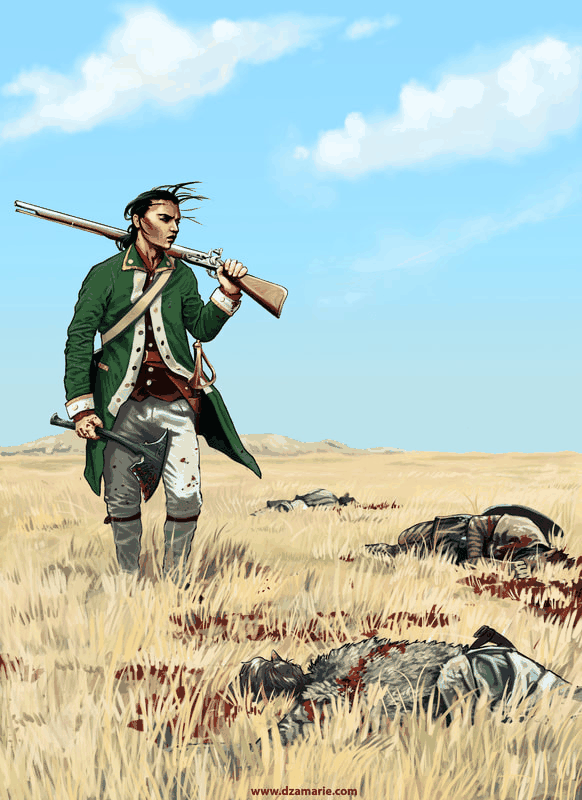
On Finishing a Trilogy - or Attempting To
I’ve recently completed my debut epic fantasy/grimdark series – the
Godblind
trilogy.
I say recently – it’s published in the UK and Commonwealth on 5 September, so in fact I finished it at the start of the year and then just had copy-edits and proofreading to complete. That said, it feels as if I’ve only just finished it, and I think that’s mostly because it’s still sitting there in my head, poking my brain with a stick and making unhelpful suggestions like “why don’t you rewrite chapter 7?” and “but what if he lived instead?” Writing a book is tough – I think we all know that. Writing a trilogy is…well, the logical answer is three times as tough, but it doesn’t quite work out like that. Most days it felt 30 times as tough; others it felt only a third as tough. But one thing is certain: when it comes to that last book, you better get it right. You better find every last one of those dozens of plot threads and throw-away comments and surmises and write them to a satisfying conclusion. Because if you don’t, there will always, always be an eagle-eyed reader who gets in touch – probably publicly on social media – to tell you what you’ve missed. Aside from the little details, there is, of course, the rather larger issues and challenges of the main and sub-plots, not just the story but all the stories woven through it. Not just the hero’s quest but their character development and inner journey. Not just who wins, but how and why – and what it means for the world and all your named and unnamed secondary characters. The more I think about it, the more astonished I am that – according to my publishers, at least (review copies are yet to go out at the time of writing this) – I’ve managed to pull it off. But it was not easy. Getting a publishing contract for my debut novel, Godblind , was a dream come true. Having spent a good 13 years perfecting that – or making it as good as I could; we still went through a few rounds of edits – it was a pretty terrifying proposition to discover I had only nine months to write Darksoul , the sequel. And, in the end, while I did draft it in time, it needed so much work that my publication date was pushed back a few months so that I could work with my editors to refine the plot and pacing issues – of which there were many. Second book syndrome is real and it is ugly. It’s so ugly, in fact, that when I came to draft book 3, Bloodchild , I had a major crisis of confidence. I’d spent some time convinced I’d torpedoed my writing career before it even got off the ground, that Darksoul had been such a disaster from the publishers’ perspective – not the final product or the sales, but the amount of work they had to do with me – so all of a sudden I decided I had no idea how to end the trilogy. I knew what needed to happen, but I didn’t have a clue how to get there. I was paralyzed with doubt for weeks – and the countdown to my deadline was ticking ever louder in my ears, which didn’t help. Eventually I started to write and there were days, even weeks, when I galloped along and everything was going brilliantly. Other times when every paragraph had to be dragged kicking and screaming from my brain. It was the difficulty of writing a novel plus the anxiety of finishing the trilogy off with the right impact, the right outcome for the characters, the story, the world. And when the draft was done, I had exactly zero idea if it was any good. That’s not an exaggeration. It was 143,000 words and I couldn’t have told you if any of them were good. I simply didn’t know: that second book crisis of confidence had lingered into the third and didn’t seem to be inclined to leave. The only way I was going to know if it was good was if someone else told me it was – I didn’t trust my own judgment. (Aside: do I sound as crazy to you as I do to myself? What a fruitcake.) So, anyway, what did I do about this crisis? The biggest thing is that I admitted it. I spoke to my family and a few clever and supportive friends. I ranted about my lack of ability and how I’d ruined my lifelong dream, about how I’d never get another publishing deal. I had a couple of tearful breakdowns. I also sent it to my agent and got some brilliant feedback and suggestions for changes. It was just the right mix of praise and critique and it told me that I was, in fact, on the right path and it was, after all, a good book. And so I reread the draft and then rewrote it, incorporating a lot of my agent’s feedback and refining the rest of it so that it better fitted in with where I saw the story ending. And it was better. I could see straight away it was better. Knowing that gave me the impetus to send it off the publishers and my editors. And then it was time to wait again. And while I was waiting, I continued working on a new book. That’s the thing with publishing: you’re constantly leap-frogging between projects. Here I am, doing promo work for Bloodchild (well, this is supposed to be promo, though I suspect I’m just making myself sound like a crazy person) while at the same time waiting to hear back on a new project AND writing the second installment of that new project. Last year, I was building on the success of Godblind by promoting Darksoul while drafting Bloodchild . The book you’re promoting is always at least one book before the one you’re currently working on; it gets rather confusing at times. When my first round of edits for Bloodchild came back I was terrified. The email sat in my inbox unopened for four hours while I paced up and down and chewed my nails and contemplated cracking open the gin. It was going to be another Darksoul ; I knew it. It wasn’t. Sure, there was work to be done and stuff that needed to be changed, but the edits were extremely positive. Perhaps I had learnt all the lessons inherent in second book syndrome after all. Maybe I really could do this, be a trilogy author! There were still a couple of small battles to be had over character arcs and the number of living and dead main protagonists (I had to sacrifice one to save another; it was like choosing which of your dogs to give away. Monstrous), but in all, I’d been on the right path and done a bloody good job. And yes, perhaps that sounds arrogant, but one thing I have learnt from all this is to have at least a little faith in myself. It wavers on occasion, but if I don’t think I’m any good, I’ll never get the draft into my agent’s hands, let alone anyone else’s. Fast forward four months and the book is done: edited; copy-edited; proofread. The next time I see it will be in its final form, out of the chrysalis and spreading its red-soaked wings. And I couldn’t be prouder. It’s been a tough road, but one that I know I’m very privileged to be able to walk. Not everyone gets a publishing deal. Not everyone gets the levels of support I’ve had. Believe me, I know I’m lucky. The Emotional Fallout
Not that it ends there, of course. Oh, no. That would be too easy.
I’ve spent at least 15 years with these characters. They’ve been, without hyperbole, both friends and family to me – yes, even the terrible, evil ones. And now I have to say goodbye, not just to the ones who didn’t survive to the end of the trilogy, but to all of them. I don’t think it’s too strong to say that once I handed back the proofread and knew that that was it that I went through a period of mourning. (Again, fruitcake. I know). But to know that I don’t get to hang out with my buddies anymore, that I don’t get to hear Ash’s jokes or Tara’s terrible ideas, Rillirin’s earnest and burgeoning self-belief, Crys’s reluctant heroism, makes me genuinely sad. I guess the only thing I can do now is wish them well and go on an adventure with some new friends and family. It feels a bit like a betrayal, but as much as I could write their shenanigans and romances and escapades forever, it’s time to move on. Time to challenge myself with something new, something broader and different and other. Time to get stuck into my next series. I wonder how hard this one will be.
Anna Stephens is the author of the Godblind trilogy, the final book
Bloodchild
having been released in September of 2019
. Translation deals for French, German, Dutch, Polish and Czechoslovakian versions have all been agreed.
A literature graduate from the Open University, Anna loves all things speculative, from books to film to TV, including classic Hammer and Universal horror films, as well as the chameleon genius of David Bowie. As a beginner in Historical European Martial Arts, with a focus on Italian longsword, and a second Dan black belt in Shotokan Karate, she’s no stranger to the feeling of being punched (or stabbed) in the face, which is more help than you would expect when writing fight scenes. Twitter: @AnnaSmithWrites Website: http://anna-stephens.com The Tyrant's Tomb: Book 4 of The Trials of Apollo
Spoiler-Free Review
|
What's This?The first Dragons, Zombies and Aliens blog was started in 2015. Somewhere between college coursework, paying rent with door-to-door sales, and keeping up with my sorority sisters, I wrote reviews, rants and commentaries on books, TV shows, and movies. Now, this blog has moved, improved, and the sky's the limit! Categories
All
Archives
July 2020
|
 RSS Feed