Dragons, Zombies and Aliens
:
The Blog
|
|
|
|
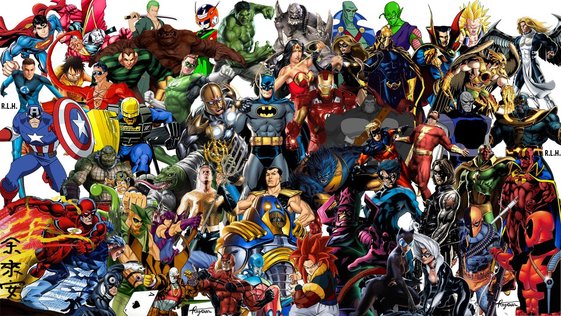
Awesome superheroes are awesome.
Everyone in my family loves superhero movies. In the last ten years we’ve seen almost every one of those blockbusters in theaters. If it’s a Marvel movie, we dutifully sit in the dark for twenty minutes for the end-of-credits scene. When we leave, we geek out in the car and argue over which was the better fight scene.
I loved seeing Steve Rogers get crammed into a tiny elevator with a dozen bad guys and say, “Before we get started, does anyone want to get out?” My heart was broken by Captain America: Civil War and again by Logan . I was enraptured by Heath Ledger’s performance in The Dark Knight . I saw Wonder Woman on opening day and am counting down the hours to Justice League . It doesn’t matter if it’s Marvel or DC. Superhero movies are just awesome. They also destroy young men by promoting toxic masculinity. Whoops! I'm a man-hater.
Before you start blowing up the comments, let me clear up some confusion. Everyone has their own personal definition of what is “masculine” or “feminine.” However, broadly speaking, masculinity is the cultural norm of how men “should” act. It’s
purely a social construct
. What’s considered masculine in China is going to be different from Rwanda, which is different from Brazil. Even within the United States there are differences. For example, the average guy from San Francisco is going to have a different idea of what it means to be a man than a guy from rural Texas.
Masculinity is constantly changing, but it has undergone its most dramatic change in the last few decades. For centuries, Western nations have defined a man’s role as being dominant, aggressive, the provider, the protector, and stoic. Compare this to a woman’s supposed role of being submissive, meek, weak, nurturing, emotional, etc. But with the invention of effective birth control, the women’s rights movement, the work of the LGBT+ community, and now third wave feminism, we’re in a gender limbo of sorts. People of my generation (re: millennials) are having a tough time figuring out the new gender norms . 
Hmmm...needs more muscle.
With me so far?
Masculinity in and of itself is not a bad thing.
It’s the defining characteristic of most men on the planet. When it’s defined to mean protecting loved ones, taking responsibility, and wearing sexy lumberjack shirts, it’s great (don’t judge me for my lumberjack love; I’m from Minnesota).
Let me repeat: being masculine or feminine is not a bad thing. And, conversely, being both or neither is not a bad thing. They’re just a part of human culture, a way to navigate gender. Most of us incorporate both aspects into our personalities. I use the thin line dividing the two as a jump-rope: my knitting and karate; the mixture of dresses and men’s pants in my wardrobe; my equal love for Metallica, Imagine Dragons, Avril Lavigne, and Florence + the Machine. But like all things, there is a dark side to masculinity. The gross, shadowy corner we’re going to be exploring is called toxic masculinity. What is toxic masculinity, anyway?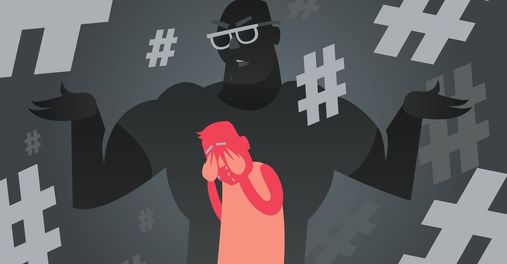
I'm too afraid of what my peers will say if I cry, so I'm going to be an asshole instead.
Toxic masculinity, otherwise known as hypermasculinity, is all the negative traits of what it means to “be a man” boiled together in a thick, nauseating soup. If masculinity is an apple, then toxic masculinity is a rotten apple. This is an excellent definition from
the Good Man Project
:
“ Toxic masculinity is a narrow and repressive description of manhood , designating manhood as defined by violence, sex, status and aggression. It’s the cultural ideal of manliness, where strength is everything while emotions are a weakness; where sex and brutality are yardsticks by which men are measured, while supposedly “feminine” traits – which can range from emotional vulnerability to simply not being hypersexual – are the means by which your status as “man” can be taken away.” Here’s another one from Yan Roblou’s article, “Complex Masculinities: the Superhero in Modern American Movies,” found in Culture, Society & Masculinities, Vol. 4 : “To be ‘masculine’ is not to be ‘feminine’, not to be ‘gay’, not to be tainted with any marks of ‘inferiority’—ethnic or otherwise.” This is the attitude most closely linked to domestic and sexual violence . The idea that emotions are “feminine,” therefore a weakness, is a big contributor to the suicide rate of men , which is three times higher than that of women. It’s the club that has all the “rotten apples” and “not all men, just those men” as members, all those “isolated” incidents that we like to think are just one-offs, when in reality they’re part of a much bigger problem. So what does this have to do with superhero movies?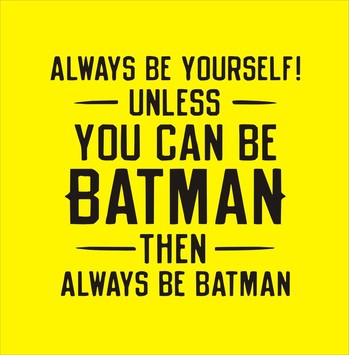
I prefer my parents alive, thank you.
Icons like Captain America and Batman are what set the standard for what it means to “be a man.” They’re our role models, our ideals. How many boys dress up as superheroes for Halloween? How many products read, “Always be Batman?” How many comparisons and compliments are given to men for looking or acting like Superman/Batman/Whateverman?
My recent articles, “Starfleet Miniskirts: Really?” and “How Sexism in Speculative Fiction Contributes to Rape Culture,” received a lot of criticism by men saying that Star Trek , James Bond, and Bruce Wayne are not real, that they’re just movies, so it’s not a big deal. But it is. What we see on screen, we emulate in real life. Hollywood has more power over our cultural and social norms than the White House. If the “ideal man” as seen on TV bottles up his emotions, solves problems with his fists, and interacts with women only for sex, then that’s what the fans are going to do . Don’t believe me? 1980s Ireland had horrible censorship laws, and a writer who grew up in that environment said: “In this fairly bleak landscape there were moments of brilliance that to this day stand out in my mind with crystal clarity. TV programmes that somehow escaped through the web of censorship and repression and talked about difference, love, equality, social justice and inclusion. Almost invariably, these programmes were science fiction, embodying an almost impossible vision of Utopian society and optimism about humanity. Hulk; Spiderman; Batman; Wonder Woman and of course, Star Trek. For better or for worse, my personal ideals and values and social justice dreams were set by utopian science fiction and the superhero genre , and I have never doubted the hugely important power of the media to teach and model.” As much as we try to deny it, we surrender an awful lot of power to our televisions. This is why we need to pay special attention to the messages it sends to us and our kids. Movies that promote toxic masculinity: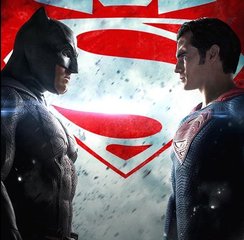
There's no way we can talk this out like rational adults, so we're going to try to kill each other instead.
Marvel and DC teach us that all problems are solved by punching each other in the face:
“A staple of the superhero genre is the tendency to concoct these elaborate scenarios in which the iconic “good guys” end up having to fight each other for some reason or another. This is often framed as a way to resolve their interpersonal issues before they can go beat up the “bad guys” and save the world. Look no further than Hulk’s rampaging brawl with Iron Man in the second Avengers film, or Batman’s upcoming cinematic showdown with Superman. They’re the blockbuster versions of kids arguing in the schoolyard about which superhero would win in a fight. The ultimate macho pissing contest. Who’s the toughest tough guy of them all? This is evidenced by the showcasing of fights between Thor and Iron Man, Bucky Barnes and Captain America, and so on and so forth. Heck, now we even have Kirk and Spock throwing punches at each other on the bridge of the Enterprise in the rebooted Star Trek movie, Starfleet protocols be damned.” ( Pop Culture Detective Agency ) The movies mentioned above (in order) are Avengers: Age of Ultron , Batman v. Superman , The Avengers (2012), and Captain America: the Winter Soldier . We also have the horrible Spider-Man 3 where Peter and Harry have to brawl each other before going after Sandman (I’m sorry, did I just remind everyone that this film exists? My bad). Oh, and there’s Ant-Man . His first interaction with Falcon was a fistfight, after which Sam Wilson apparently decided, “Yeah, he’s cool enough for #TeamCap.” Guardians of the Galaxy is another. All five of them were trying to kill each other before they teamed up to break out of prison. The list goes on. The Dark Knight Trilogy manages to avoid this trope, but it has an arguably worse flaw. Batman is supposed to be untouchable and stoic, being a symbol of justice and awesomeness and whatnot. Bruce Wayne, on the other hand, is a human being. And the only emotions we ever get from him as an adult are anger, occasional dry amusement, and...yeah, that’s it. The rest of the time he’s pretty much emotionless with a resting bitch face. We get one tiny scene of sadness after Rachel’s death (no tears, of course), and that’s it. Other action movies pose the same problem: the Die Hard series, the Fast and Furious franchise, the John Wick movies, etc. These men are getting shot and watching friends get killed before their eyes, yet they only dwell on it for a few seconds before moving on to the next bad guy. The message is loud and clear: if you have a problem, your first reaction should be to kill it, and you’re not allowed to cry, be cutely happy, be afraid, or be anything other than angry. Unless you have a vagina. Movies that fight toxic masculinity:
Always look for the silver lining.
Counter to Batman v. Superman , Captain America: Civil War at least ended on a realistic note. All the problems that started the inter-Avengers war are still there at the end of the movie, and they’re exponentially larger because of the fighting. It also does a much better job of coming up with a reason for why these two otherwise intelligent, adult men would want to beat the crap out of each other, unlike BvS . But even then, the only “acceptable” way to handle the situation as it escalates is anger and violence. Honestly, if Black Panther had done two seconds of research, he would’ve realized there was no way the Winter Soldier would be caught on camera during a mission, and was therefore framed. It’s been argued that Man of Steel takes a small step in the right direction. Earlier versions have Clark Kent erase Lois Lane’s memories whenever she finds out he’s Superman (because, apparently, he can do that?). In this version, however, he does not. He respects her enough and trusts her not to blab to the media, even as she works for the media and is in fact a better reporter than him. More than that, we see Clark get bullied and picked on, both during childhood as well as adulthood. Instead of stomping on those puny mortals to prove he’s tough, he stays rational and deals with it without resorting to violence. Iron Man 3 gave Tony Stark PTSD, which is an incredibly realistic response to trauma. You can’t tell me Hawkeye doesn’t have the same problem after Loki took over his mind. Tony’s breakdowns do not emasculate him. They show us that he’s human. They present a harsh reality that many real people go through and, if anything, they make us respect him more. But the real progress has been Wonder Woman . Granted, it certainly helps that it centers around Diana rather than the male lead, Steve Trevor. But Steve and his peeps are great around their Amazon ally. They help her rather than try to one-up her. Sameer flirts with her, but never crosses that line that separates “playful flirt” from “creep.” Charlie has two PTSD flashbacks, but his friends don’t see him as weak because of it. Even the villain, General Ludendorff, views his female partner Dr. Poison as an equal who deserves respect, and they’re not even romantically involved. What arguably does an even better job than Wonder Woman is Pixar’s The Incredibles (which came out in 2004) . Bob Parr (Mr. Incredible) is an emotional wreck, and it’s completely understandable. He loses the life he loves, has a chance to get it back, gets betrayed, then is told that his entire family is dead. Of course he’s going to break down. And of course he’s going to be remorseful when they’re all taken captive. Later, he tries to convince his wife to stay out of the fight because he’s afraid of losing her again. That plans lasts all of five seconds before the whole family takes down the giant killer robot. Is Mr. Incredible any less of a man for crying over his “dead” family, emotionally apologizing for screwing up, and then working with his wife to save the day? I don’t think so. 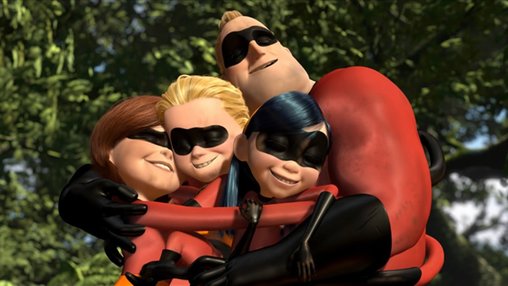
Pixar: showing us how it's done since 1984.
Now what?
Am I suggesting we have our heroes try to talk about their feelings with the Joker, or try to hug it out with Ultron? Of course not. The last time someone tried that with Joker, she ended up as his psychotic girlfriend, and if there weren’t big explosions and epic villain defeats we wouldn’t have these movies in the first place.
The problem is that so many of these male characters are essentially robots. They do all these great things, go through so much trauma, and the vast majority of them don’t even blink. If they do have an emotional response, it’s anger. These are the kinds of characters held as role models to modern men and young boys. Do we really want a twelve-year-old boy scolding his friend for crying because his heroes on screen never shed any tears? Do we want the ten-year-old dressed as Batman for Halloween to try to go through life alternating between emotionlessness and anger? Do we want these boys to learn that the only way to solve their problems is with their fists, or a bomb? Because that’s what they’re learning.
2 Comments
Kam
4/21/2019 05:19:28 pm
The person who wrote this article has a fundamental lack of understanding of how filmmaking works. Movies might teach our youth "lessons," but that is not their intent. Most movies exist just to be an outlet for the filmmaker's creative vision. We can like or dislike that vision, but wanting it to be censored because "but but but young boys might copy this" isn't a road you want to go down. Because it's conservatives who do that. They're the ones who have been preaching for decades about how art should only promote positive messages.
Gues
5/11/2019 01:41:17 pm
It seems it is you who has a fundamental lack of comprehension of what the author of the piece wants to convey. Nobody speaks of censorship or positive messages, it is the images, role models, and 'solutions' that we as a society expose our children to via these movies.
Leave a Reply. |
What's This?The first Dragons, Zombies and Aliens blog was started in 2015. Somewhere between college coursework, paying rent with door-to-door sales, and keeping up with my sorority sisters, I wrote reviews, rants and commentaries on books, TV shows, and movies. Now, this blog has moved, improved, and the sky's the limit! Categories
All
Archives
July 2020
|
 RSS Feed